

Want to bookmark your favourite articles and stories to read or reference later? Start your Independent Membership today.
Already a member?
Log in
Your support helps us to tell the story
From reproductive rights to climate change to Big Tech, The Independent is on the ground when the story is developing. Whether it’s investigating the financials of Elon Musk’s pro-Trump PAC or producing our latest documentary, ‘The A Word’, which shines a light on the American women fighting for reproductive rights, we know how important it is to parse out the facts from the messaging.
At such a critical moment in US history, we need reporters on the ground. Your donation allows us to keep sending journalists to speak to both sides of the story.
The Independent is trusted by Americans across the entire political spectrum. And unlike many other quality news outlets, we choose not to lock Americans out of our reporting and analysis with paywalls. We believe quality journalism should be available to everyone, paid for by those who can afford it.
Your support makes all the difference.Read more
Facial recognition technology could mean Britons no longer need to show their passports at e-gates when they fly back to the UK.
Passengers would still need to travel with their passport in order to check in and board planes but new “contactless borders” are expected to be introduced at Birmingham and East Midlands airports in the coming weeks in an effort to reduce queues, it has been reported.
This would then be extended to all e-gates, already in operation at Birmingham, Bristol, Cardiff, East Midlands, Edinburgh, Gatwick, Glasgow, Heathrow, London City, Luton, Manchester, Newcastle and Stansted airports, by early next year, according to The Times.
The system is currently expected to work for British passport holders, but could be extended to other nationalities with biometric passports allowed to use e-gates, the publication reported.
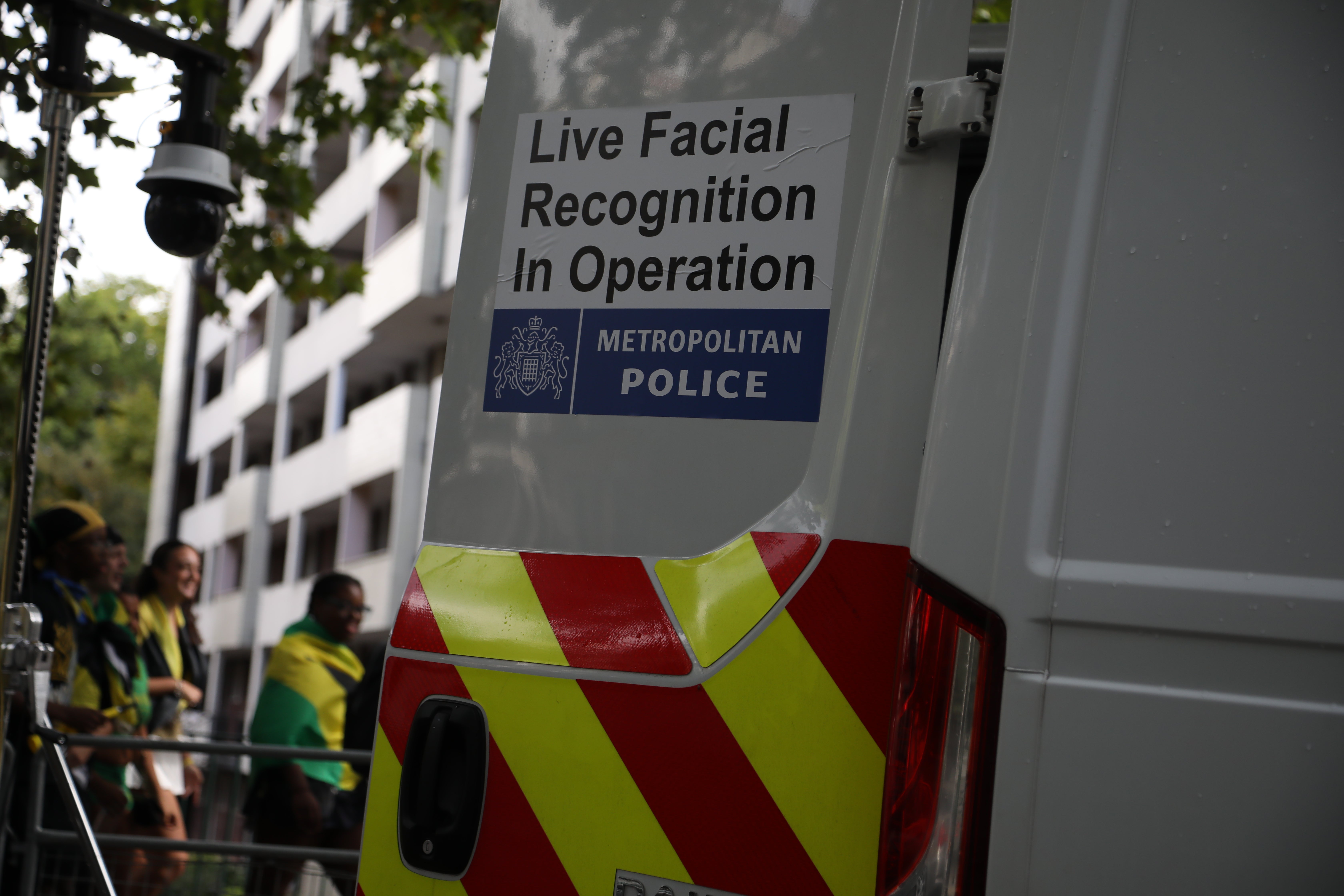 Facial recognition cameras have been deployed by the police (Getty)
Phil Douglas, the director general of Border Force, told the paper that the move could speed up border control by 25 per cent.
“It will mean we have a more secure border and a much faster transit through the airport. It’s quicker, it’s more modern, it’s more secure,” he said.
The paper reported that the current process, which aimed to speed up border checks, often was held up because of problems with the chip on the passport being dirty or even people who didn’t place their passports in the machine correctly.
The system would see a gallery of passport photos of British passengers arriving that day transmitted by each airline to Border Control.
Those not recognised by the e-gate they will be asked to scan their passport, according to the report. If that fails, they would then be directed to a Border Force officer at a manned desk.
 The border force chief said the technology would speed up border checks (Jordan Pettitt/PA) (PA)
It’s the latest proposal for facial recognition technology which has so far been deployed by the police forces, Sainsbury’s and Revolut.
Privacy activists have warned that the technology is error-ridden and risks the UK becoming a surveillance state as there are no laws in place to protect citizen privacy.
Sainsbury’s was forced to apologise after a 42-year-old man was wrongly identified as an offende. Staff approached him, asked him to leave and took his shopping in January.
Big Brother Watch has reported 80 per cent of people misidentified by facial recognition in London in 2025 were Black, warning the technology discriminates against women and people of colour.
Already, the Metropolitan Police has used the technology to monitor Oxford Street, tube stations and Notting Hill carnival.
The biometrics and surveillance camera commissioner warned in May that the technology was not “fool proof” and could land forces in legal difficulty as “misidentified” members of the public could sue the police for breaching their fundamental rights.
Revolut now allows customers to pay with a biometric face scan, linked to their app, which meant customers did not need a phone or bank card to make a payment.
The Independent has contacted the Home Office, Birmingham and East Midlands Airport for comment.