
Amazon is delivering more than parcels in Stockton-on-Tees, where its new £40 million station puts lower-carbon construction at the heart of its UK logistics ambitions and sets new standards across Europe.
KEY TAKEAWAYSThe Stockton-on-Tees delivery station is designed to meet the UK Net Zero Carbon Buildings Standard, a framework Amazon helped create. It is also the first building in Amazon’s global network to pursue version 1.1 of the Living Future Institute’s Zero Carbon Certification.Lower-carbon steel, mass timber, cement-free paving, and carbon-storing concrete are expected to cut construction emissions by at least 20 percent compared with the original design.The £40 million site has created around 100 local jobs and is part of Amazon’s commitment to invest £40 billion in the UK between 2025 and 2027. A NEW BLUEPRINT FOR LOGISTICS
At the edge of Stockton-on-Tees, where the A66 meets the Teesside industrial heartland, Amazon’s newest delivery station stands apart from the familiar image of a logistics building.
Its timber-and-steel frame signals a different approach. Low-carbon concrete, wall panels and roofing materials reinforce the idea: this site was designed not only to move parcels, but also to set a new standard for low-carbon construction in Europe.
The 10,800-square-metre station officially opened on October 21. From the outset, it was designed to meet the UK Net Zero Carbon Buildings Standard, a low-carbon construction framework that Amazon helped develop.
It also marks a global first for Amazon: the first building in its network designed to meet the latest version of the Living Future Institute’s (ILFI) Zero Carbon Certification (v1.1). This updated standard builds on an earlier certification already achieved by several Amazon buildings worldwide.
The station will serve customers across North Yorkshire and County Durham, joining Amazon’s UK network of more than 100 operations sites, including fulfilment centres and delivery stations. Yet its significance goes beyond expanding that network: it sets a new benchmark for how these facilities can be designed and how they can perform.
BUILDING MORE WITH LESS
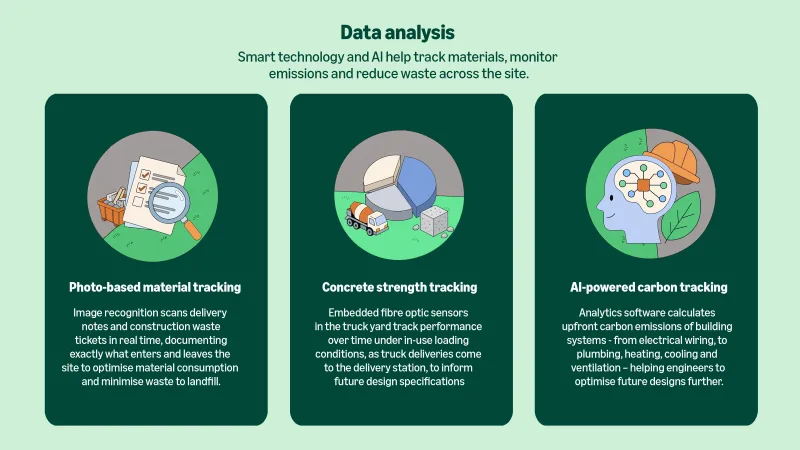
The Stockton-on-Tees delivery station was designed to reduce emissions at every stage of its life – from the materials used to build it to the energy that powers its day-to-day operations. By testing these technologies on site, Amazon hopes to identify approaches it could eventually adopt across its wider network.
The building and its parking structure use nearly 1,500 tonnes of lower-carbon steel, much of it recycled and produced using renewable electricity.
Alongside the steel frame, more than 200 tonnes of mass timber beams help reduce the carbon footprint compared with conventional building methods.
The project also incorporates more than 4,400 cubic metres of lower-carbon concrete, along with lower-carbon wall panels and roofing materials. Together, these choices support a construction approach that prioritises locally sourced materials and shorter supply chains.
By combining lower-carbon materials with more efficient sourcing, the project is expected to produce at least 20 percent fewer construction-related carbon emissions than Amazon’s previous design standards.
 WORKING SMARTER
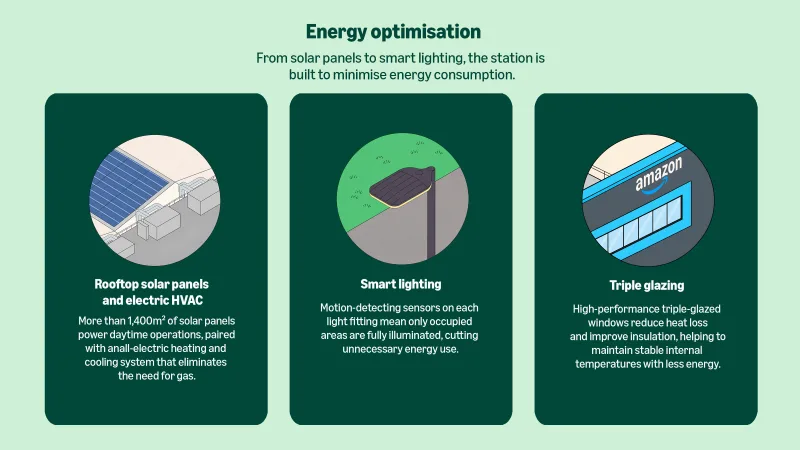
Now operational, the station brings together all-electric systems and rooftop solar panels to help minimise its carbon footprint.
As a result, it is projected to use around half the energy of a typical logistics building – nearly three times the reduction required for its net-zero carbon certification.
That efficiency comes from several features working in tandem. High-efficiency electric heat pumps replace gas heating, whilst energy recovery systems capture heat that would otherwise be lost through ventilation. At the dock doors, air curtains help maintain stable indoor temperatures despite the constant movement of delivery vans.
The station also includes water-saving plumbing fixtures, expected to reduce water consumption by about 20 percent compared with conventional designs.
ZEROING IN ON CERTIFICATION
The Stockton-on-Tees delivery station has been designed to meet the UK Net Zero Carbon Buildings Standard. It is also the first building in Amazon’s global network designed to meet the latest version of the International Living Future Institute’s Zero Carbon Certification (v1.1).
The station joins other Amazon buildings worldwide that have already earned – or are pursuing – ILFI Zero Carbon Certification, with each project reflecting the version of the standard in place when it was designed.
Once the building has completed a full year of operations, third-party assessors will review its performance data to determine whether it qualifies for formal certification in 2027. In the meantime, Amazon will track and share lessons from the process to help shape its approach to future projects.
 DELIVERING LOCAL OPPORTUNITIES
The delivery station has created 100 jobs in the local area, spanning roles for managers, supervisors and associates.
For full-time operations roles, competitive pay starts at £31,000 a year. Employees also receive a comprehensive benefits package, including private medical insurance, life assurance, income protection, an employee discount and a company pension plan. In addition, more roles are advertised at jobsatamazon.co.uk.
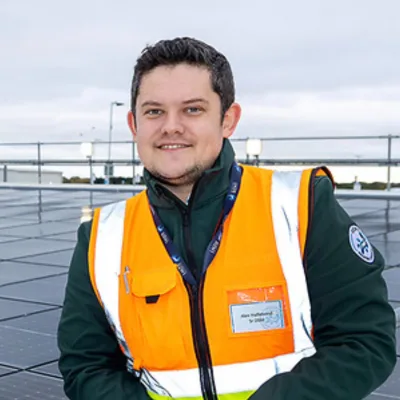
Amongst the station’s leaders is Alex Hallimond, its Senior Operations Manager, who has worked at Amazon for more than seven years. Originally from Sunderland, Alex has held roles at several Amazon sites across the Northeast before taking up his current position in Stockton-on-Tees. For him, the building represents more than a new delivery station: it reflects the region’s ongoing evolution.
Alex was drawn to the role by its sustainability ambitions.
“This area was previously really heavy industry – the Transporter Bridge, chemical plants, coal mining. A lot of that’s gone now, but it’s being replaced by something different. You’ve got automation, innovation, and now a really sustainable version of what will hopefully become a worldwide design. If we replicate this build across the world, the benefit is huge. I’d heard about the sustainability side of the building, which I thought was really impressive. To see a site like this go up in the Northeast, especially one that’s pushing the boundaries of what a delivery station can be, was the biggest opportunity I could see,” excites Alex Hallimond, Senior Operations Manager, Amazon
Alex Hallimond, Senior Operations Manager, Amazon
During his time at Amazon, Alex completed a chartered management degree through the company’s apprenticeship programme and is now finishing an MBA.
He says opportunities to learn and develop continue at every stage of a career. He also describes Amazon as a fantastic place to work – particularly at smaller sites, where colleagues can enjoy a strong sense of community and a real family feel.
That sense of local connection is reflected in Amazon’s wider contribution to the region. The company has invested more than £4.7 billion in the Northeast since 2010. Separately, an independent report by Public First found that Amazon contributed £300 million to the Teesside economy in 2024 alone.
The report also found that nearly half of entry-level employees at the Stockton-on-Tees site had previously been unemployed or had joined straight from education.
A PRIME INVESTMENT
Over the past five years, Amazon has invested £3.5 billion in the UK across carbon-free energy, transport electrification and sustainable packaging. According to an independent study by Frontier Economics, these investments support up to 34,000 jobs and generate billions more in economic value.
The new delivery station accounts for £40 million of that investment. It also forms part of Amazon’s plans to invest £40 billion in the UK between 2025 and 2027, the largest investment in the company’s history outside the US. The funding will support jobs, infrastructure and technology across the country.
More broadly, Amazon has invested over £80 billion directly in its UK operations since 2010, creating tens of thousands of jobs in logistics, technology and corporate roles.