
Located at over 1,000 ft in altitude, this is Scotland’s most elevated spirit producer; and, with its whitewashed walls, the pagoda-shaped roofs of its old maltings, and the backdrop of blue Cairngorm mountains, it could be an idealized painting of a remote Scotch malt whisky distillery. Especially when it has snowed.
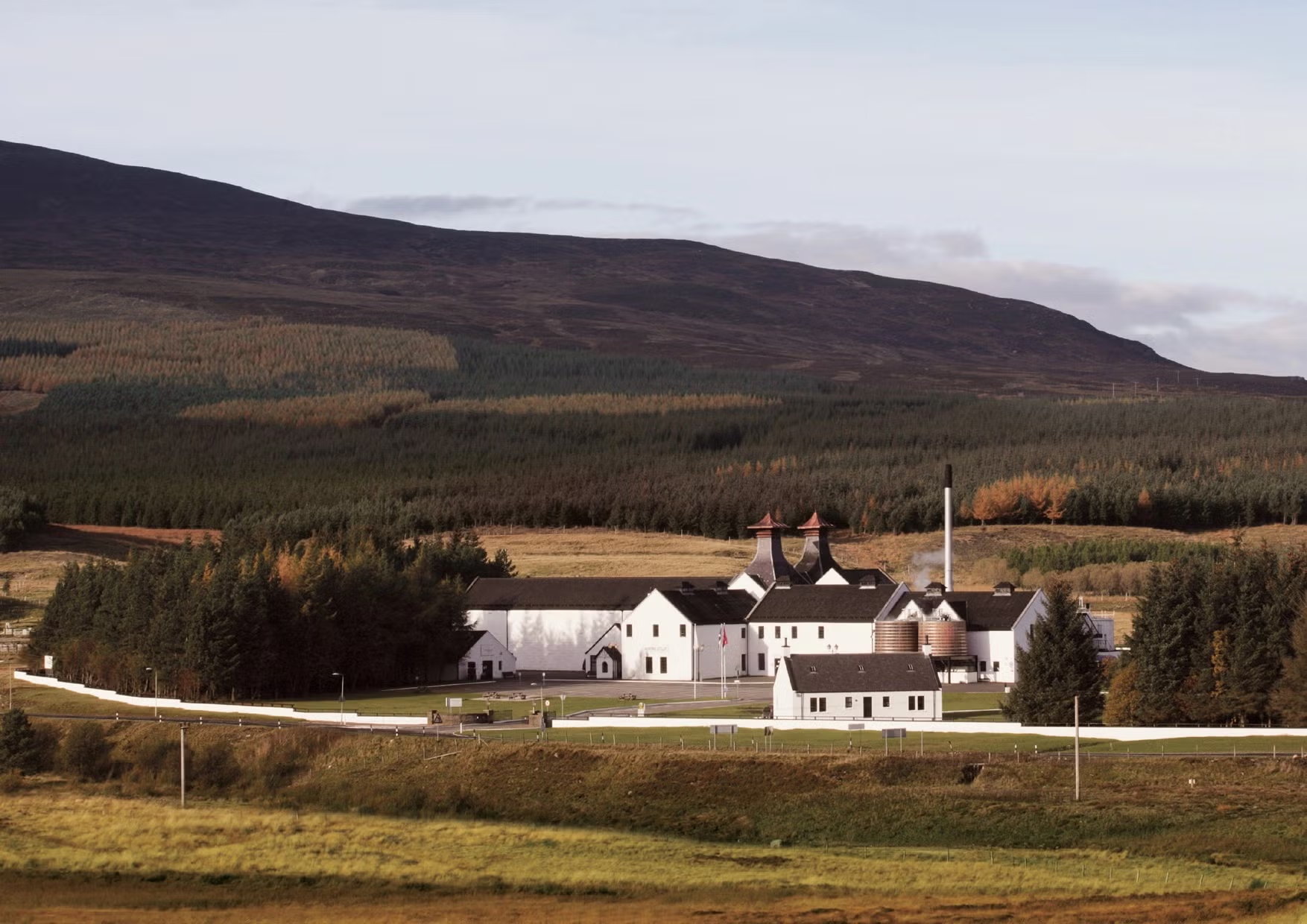 High up in the Cairngorm mountains, Dalwhinnie is one of the coldest and highest working Scotch distilleries
Diageo’s Rare Series of Single Malts is the liquid expression of unique locations such as Dalwhinnie, represented by a newly released 36-year-old Single Malt from 1989. So far, only seven whiskies have been bottled in the evolving collection, in limited numbers, from Diageo’s inventory of nearly 11 million casks. They originated in the drinks group’s portfolio of 31 currently operating Scottish distilleries, as well as some “ghosts”, spreading from Edinburgh to the Isle of Skye.
Ewan Gunn, senior global brand ambassador for Diageo’s luxury Scotch whisky, often travels on that train from his home in Inverness to Edinburgh or London, or on the A9 road through the same pass: “In the summer, it’s gorgeous: rolling hills, heather and beautiful sunshine. But, in winter, it’s an isolated and cold place to be. There’s a weather station there and the average annual temperature is 43°F – really, across the year. When it snows, it lies deep and for days; when I go through, I’m grateful for the snow poles.”
Gunn is not simply conveying the romance behind the whisky. Every distillery’s specific location and individual design has an effect on the spirit produced – even before it goes into cask. Gunn, who is also a Master of the Quaich (an honor accorded to few in the whisky industry), says Dalwhinnie is a prime example: “Outside temperature affects how quickly vapor from the still condenses. That makes it a bold, heavy spirit that ages over a long period into a lovely, unctuous, honeyed whisky.”
 Rare Series’s understated packaging emphasizes on liquid quality
Rare Series whiskies not only capture a sense of place but also a particular time. As vintage whiskies (i.e. from a specific year on the label, rather than blended with a minimum age statement), they are a snapshot of the day they were distilled and filled into oak. Again, this is not wistful nostalgia with a bagpipe soundtrack; the era defines the liquid.
Gunn says, “Between 1986 and 1995, the distillery was using a style of condenser which increased the vapor’s contact with copper and resulted in a slightly lighter, more elegant style. This 1989 Dalwhinnie is from that period and it’s not replicable now.”
As well as being from that outlying spell of production, this whisky’s maturation is a first for the distillery too… after 32 years in the original refill American oak barrels, they were transferred by Diageo master blender Dr Craig Wilson into amoroso-seasoned hogsheads for a further four years. Despite the long finish, the amoroso, also known as cream sherry, adds only a subtle sprinkling of spice, but elevates the floral notes. It’s a riot of honeysuckle and honeycomb.
Among the uncovered artefacts in Rare Series are whiskies that take scarcity to a higher level because the distillery that made them has gone. Diageo has a dwindling number of casks from these ghosts, including the Speyside distillery, Convalmore, which closed in 1985. It was located in Dufftown, a small burgh with around 1,500 people and an incredibly high concentration of distilleries.
 Dalwhinnie 1989 Rare Series is the product of one of Scotland’s most remote Highland areas
Gunn says, “Dufftown is known as the capital of whisky – Diageo alone has the Dufftown [or Singleton of Dufftown], Mortlach and Glendullan; and we used to have Pittyvaich there too. In the late 1800s, a lot of distilleries popped up there because the new Keith and Dufftown railway connected it to the wider world. That, as well as being surrounded by great farmland for growing barley, and plentiful water supplies.”
Some of the Convalmore buildings still stand, on the road north out of Dufftown, used as warehousing by other distilleries. It’s a more dignified physical monument than Glenury Royal, in Stonehaven, on the Aberdeenshire coast, of which only a chimney base remains, with the rest razed to make way for housing. In both cases, however, a more fitting memorial comes in liquid form. A 1970 Glenury Royal (aged for a total of 55 years, first in American oak, then European puncheons) was released earlier in 2026. Now comes a 41-year-old Convalmore, drawn from four refill American oak hogshead casks filled in the winter of 1984, just weeks before the distillery closed.
Gunn points out, “At the time Convalmore closed, there were a few companies marketing Single Malts; most distilleries’ malt whisky was destined for blending. There wasn’t the culture we have now of exploring different single-malt characteristics. Diageo has bottled Convalmore very infrequently and you don’t see many independent bottlings either, so the rarity is undeniable. This is likely to be the first time people have tried Convalmore, which is exciting, because it is absolutely spectacular.”
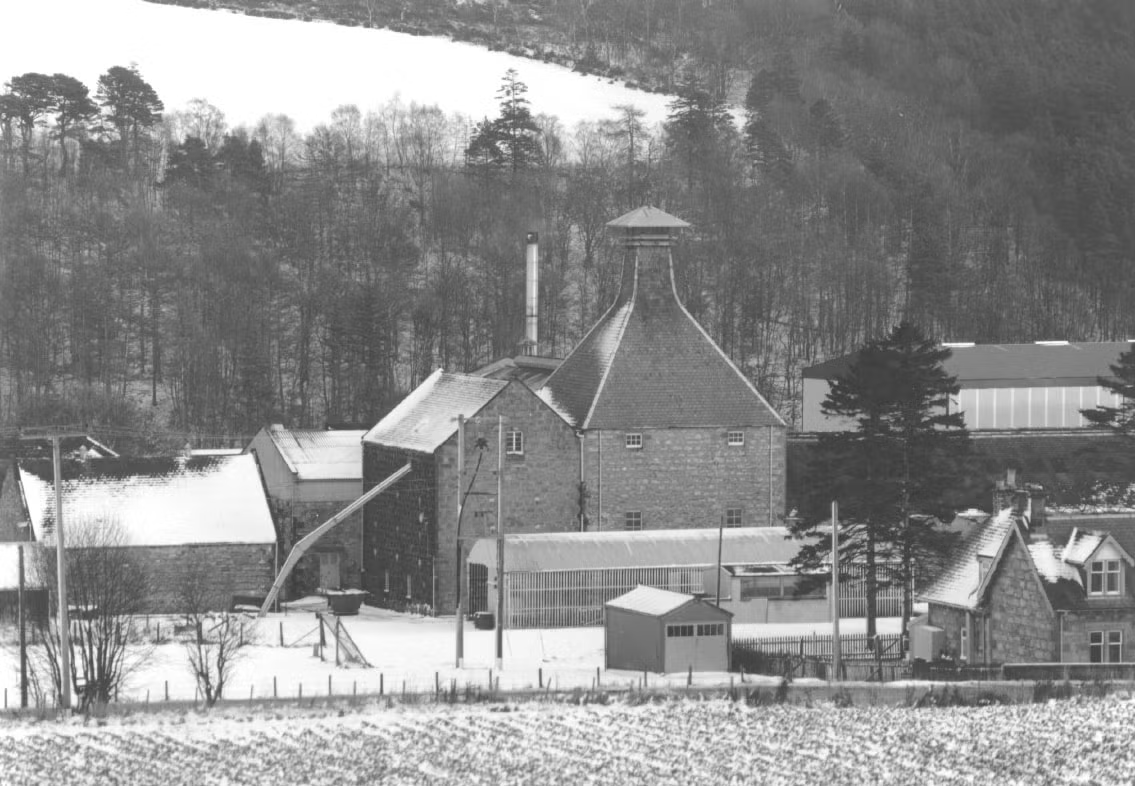 Convalmore, photographed here in 1989, was located in the Speyside ‘whisky capital’ Dufftown
Even though the typical whisky drinker back in 1984 wouldn’t have known what the Convalmore character was, blenders certainly did – they used it for its combination of tropical fruit notes and for its waxy mouthfeel. This Rare Series release clings to the palate to deliver ripe mango and papaya, green banana and freshly squeezed orange juice, before drying into a long, peppery finish.
There is no set schedule for Rare Series releases. When potential releases are identified, they are allowed to reach their pinnacle before being bottled. The understated packaging – etched glass bottles with a granite stopper, inside a simple, secure casing – emphasizes that it is the liquid that matters here.
So far, the search for these scattered treasures has uncovered other gems from the wild Hebridean isles of Skye (Talisker) and Islay (Caol Ila); the pretty, ivy-clad Blair Atholl in the forest south of Dalwhinnie; and the county of Sutherland in the far north-east (Clynelish); with more promised in 2027. Each location, and each whisky, reveals yet one more argument for the endlessly explorable regions of Scotland, and its single-malt Scotch.
See more here.
Convalmore 1984 Rare Series 41-Year-Old; 45.6% ABV ; limited to 310 bottles; $3,000 (ex tax). Dalwhinnie 1989 Rare Series 36-Year-Old: 49.9% ABV; limited to 305 bottles; $1,300 (ex tax). Because of the extreme rarity of these liquids, Rare Series bottlings are available exclusively through Diageo’s Private Client team, including the specialists at Justerini & Brooks which recently returned to its townhouse at 61 St James’s Street in London. To register interest in acquiring bottlings from the Rare Series, visit rare-series.com.