

Want to bookmark your favourite articles and stories to read or reference later? Start your Independent Membership today.
Already a member?
Log in
UK should grow more of its own food, NFU chief says, warning that falling output has left the country exposed to global shocks.
Tom Bradshaw set out his case at a conference in London, where he described the food system as “already under attack”.
He said: “We have seen access to grain restricted, global supply routes disrupted and attacks on the infrastructure that stores and distributes food.
“We have seen how quickly a conflict thousands of miles away can drive up the cost of producing food here at home.
“For many years, food security has been treated, by governments of all colours, as something we don’t need to worry about – we’ve taken it for granted.
“Those assumptions have shaped the UK’s food policy for decades. They are no longer fit for purpose.”
 Tom Bradshaw told a conference in London the food system was ‘already under attack’, and the UK’s declining production levels had left it vulnerable to global shocks (Getty)
The address was delivered at the Royal United Services Institute’s Long War Conference on Tuesday.
Mr Bradshaw used it to call on Andy Burnham to include a target for domestic food production in the 10-year plan he is expected to set out by the end of the year.
Farms needed to be able to produce enough goods when it was needed, he stressed, and that required action now.
He said: “Government cannot create the resilience I’m talking about today all on its own.
“It relies on farm businesses being profitable now, rather than expecting them somehow to reappear when the country needs them.”
Speaking to the Press Association after his address, he suggested the Government should seek to return to the UK producing 70% of its food domestically – from its current level of below 60%.
One route, he suggested, could be a return to “seasonal eating” and a “less exotic diet”.
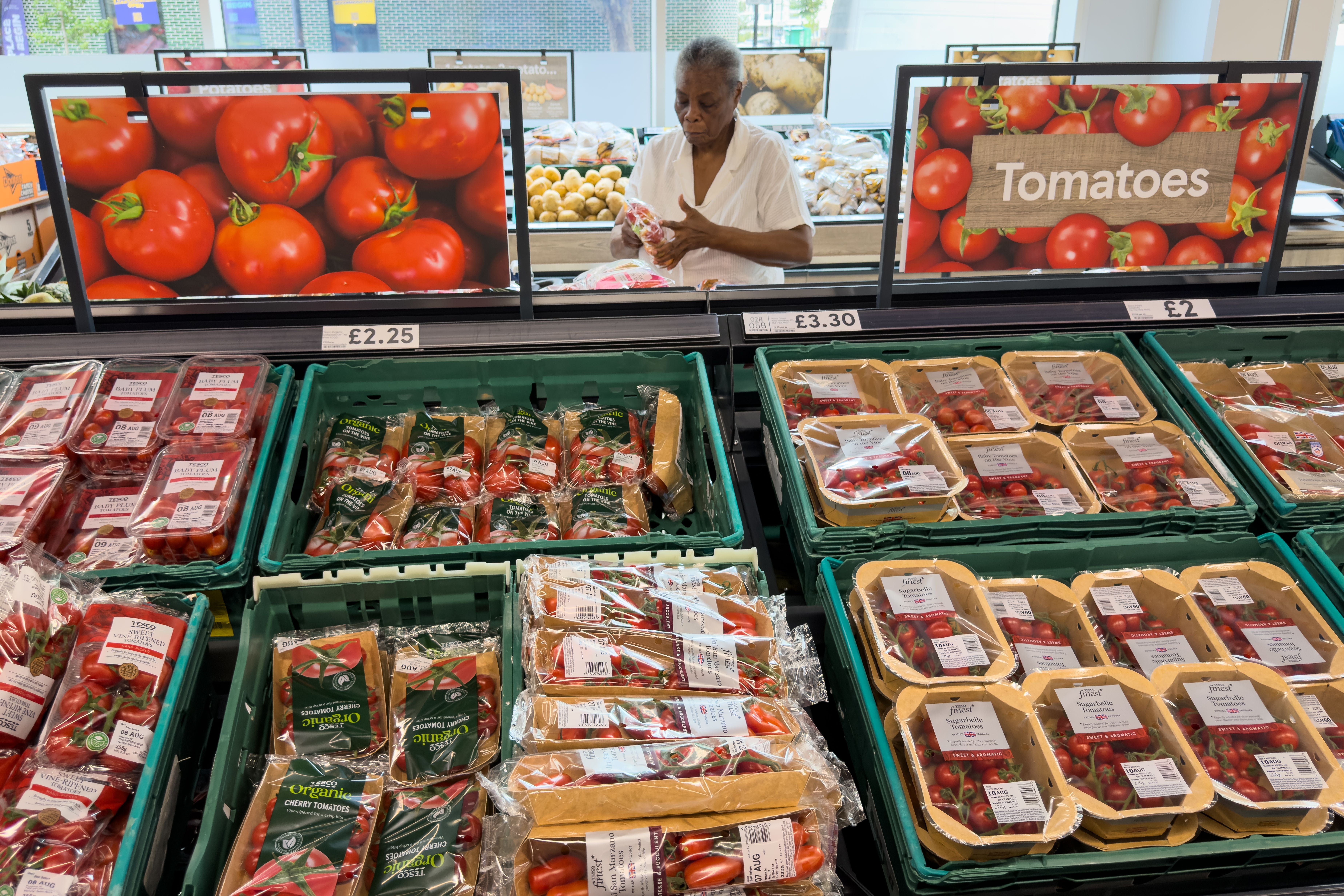 Tom Bradshaw called on the Treasury to reduce the tax burden on farmers and drive investment in farm infrastructure as a ‘long-term commitment to food production’ (Getty)
The UK could also become self-sufficient in poultry, dairy and beef if needed, he said.
He also called on the Treasury to reduce the tax burden on farmers and drive investment in farm infrastructure as a “long-term commitment to food production”.
Prices could rise in the short term as a result, he acknowledged.
He said: “I think we also have to decide: Are we willing to accept that there may be some short-term inflation, but that makes us more resilient to global shocks.
“Whereas we’re becoming more and more exposed to every global shock. They’re predicting food price inflation to be over 6% in the middle of next year, and that’s because of the global shocks that we’re already having.”
Mr Bradshaw’s message to the conference was that Britain’s declining production levels had left it vulnerable to global shocks, and that producing more food at home was the way to prepare for the impact of a future global conflict.