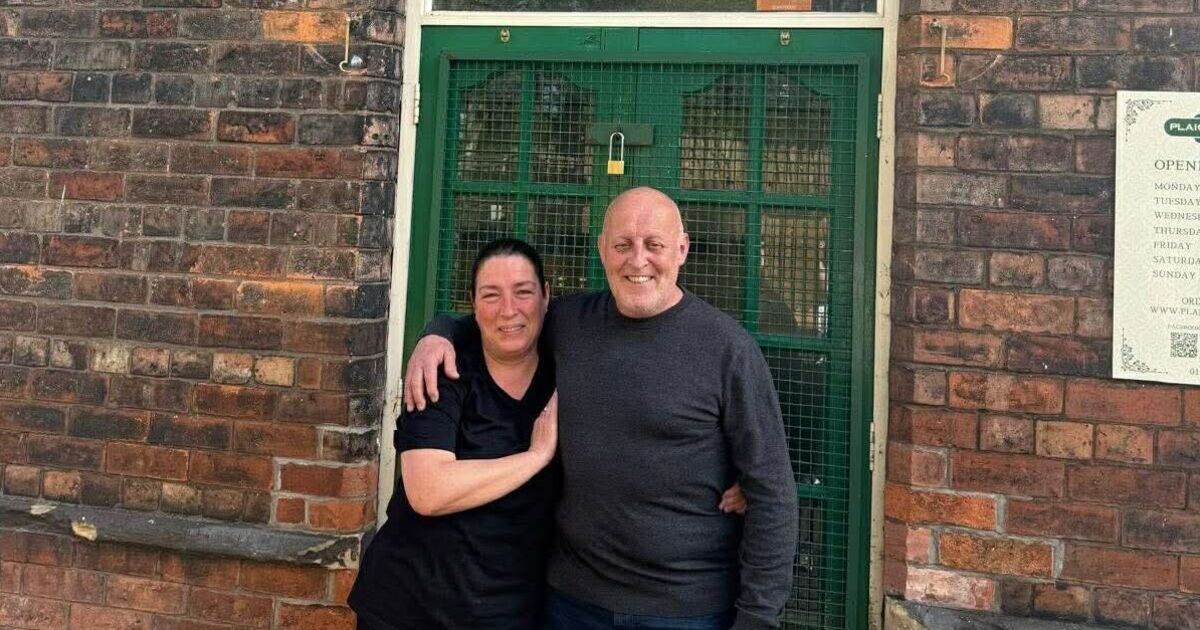

Darren closed his fish and chip shop after 19 years in business due to soaring costs (Image: Darren Sudlow)
Despite building an award-winning fish and chips in the heart of Warrington for 19 years, Darren Sudlow shut the doors on his family-run shop for the final time on April 17. He felt there was no choice but to step away. It wasn’t a lack of customers that sank Plaice Station, but rather the growing pressure of VAT, minimum wage and regulations that made it harder to survive.
“This conversation is raw. It’s upsetting. It’s infuriating as well,” he tells the Express.
“I knew my shop was going to have to shut last February, because there’s no point in running a business when I can’t drive the business forward. It’s just dormant, so I’m stuck at the threshold.”
The threshold he refers to is in the optional VAT Flat Rate Scheme, which requires smaller catering businesses with a yearly turnover of up to £150,000 to pay 12.5% of their VAT turnover to HMRC.
Read more: Rachel Reeves issued dire warning as 1,500 fish and chip shops close for good
Read more: Not Brighton or Blackpool — UK’s best pier is named

His fish and chip shop, Plaice Station, was open for 19 years (Image: Getty)
This rate is lower than the 20% they must charge customers for hot food because they cannot reclaim VAT on purchases under this scheme – which is standard practice for most businesses – so it aims to level costs out, without extra paperwork.
However, once turnover rises above £230,000, they must pay the standard 20%. Darren says that is a major problem for takeaways, because there is little VAT to reclaim on their costs, so expenses rise disproportionately sharply.
“Everything was fine, until the accountant called me last January and said, ‘you’re getting very close to this threshold, and if you go over, it’s going to be too much for you’.”
This meant he had to do the opposite of what you’re meant to in business: stem his own sales. Having been pulling in between £6,500 and £7,000 a week, he had to stop using delivery services to bring his turnover down to £4,000.
“So I had to take off Deliveroo, JustEat and Uber. It just becomes so frustrating and upsetting. It was then I knew I’d have to turn the lock on the door.”
While he had to stay stagnant, his costs were soaring with rising energy bills, food prices, minimum wage and National Insurance contributions. “So then your margin is that small, it’s not worth the mither.”
It has made Darren feel “angry and disappointed” with the Government. He called for different flat tax rate thresholds so small companies are incentivised to make more money, especially since independent shops help young people get into work.
“The small businesses are the backbone of the country. When the kids leave school, I guarantee that the majority of them have the first job inside a small family business. Then they step on.”
He was devastated to have to let his staff go, while unemployment sits at around 4.9%, according to the latest figures from December to February this year, up from 4.4% the year prior.
He worries that the increase in the minimum wage will only increase unemployment among young people. Rachel Reeves increased the hourly rate to £10.85 for 18- to 20-year-olds in April, up from £8.60 just two years earlier.
“They’re making the 18-year-olds, 19-year-olds, they’re making them unemployable,” he says. “I could employ a skilled pair of hands with life experience for about £1.80 an hour more.”

Labour increased the minimum wage this April (Image: Getty)
Wetherspoon previously said the whole concept of charging 20% VAT in hospitality was “perverse”, highlighting that supermarkets do not have to charge any VAT on cold food.
Darren says the fish and chip industry has also been “barking up the same tree” for nearly two decades about this. “If nobody’s going to listen after 20 years, when are they going to listen?”
Despite wanting to continue his fish and chip shop, which had a “great buzz”, Darren now plans to open a sandwich shop, where he will have lower overheads since he will need fewer staff, and he will avoid the 20% VAT since he will be selling cold food.
“That’s £800 a week that the Government’s lost in revenue just off me,” he says. “I just think things can be done differently.”
The Express has contacted the Department for Business and Trade for comment.