
Tate Britain has unveiled When Words Fall Silent, Cinema Speaks…, a major new commission by Zineb Sedira that transforms the museum’s Duveen Galleries into something far richer than a single installation. It feels closer to a fully realised exhibition, part archive, part film set, part historical reconstruction — a moment in time rebuilt inside the grand neo-classical space of Tate Britain.
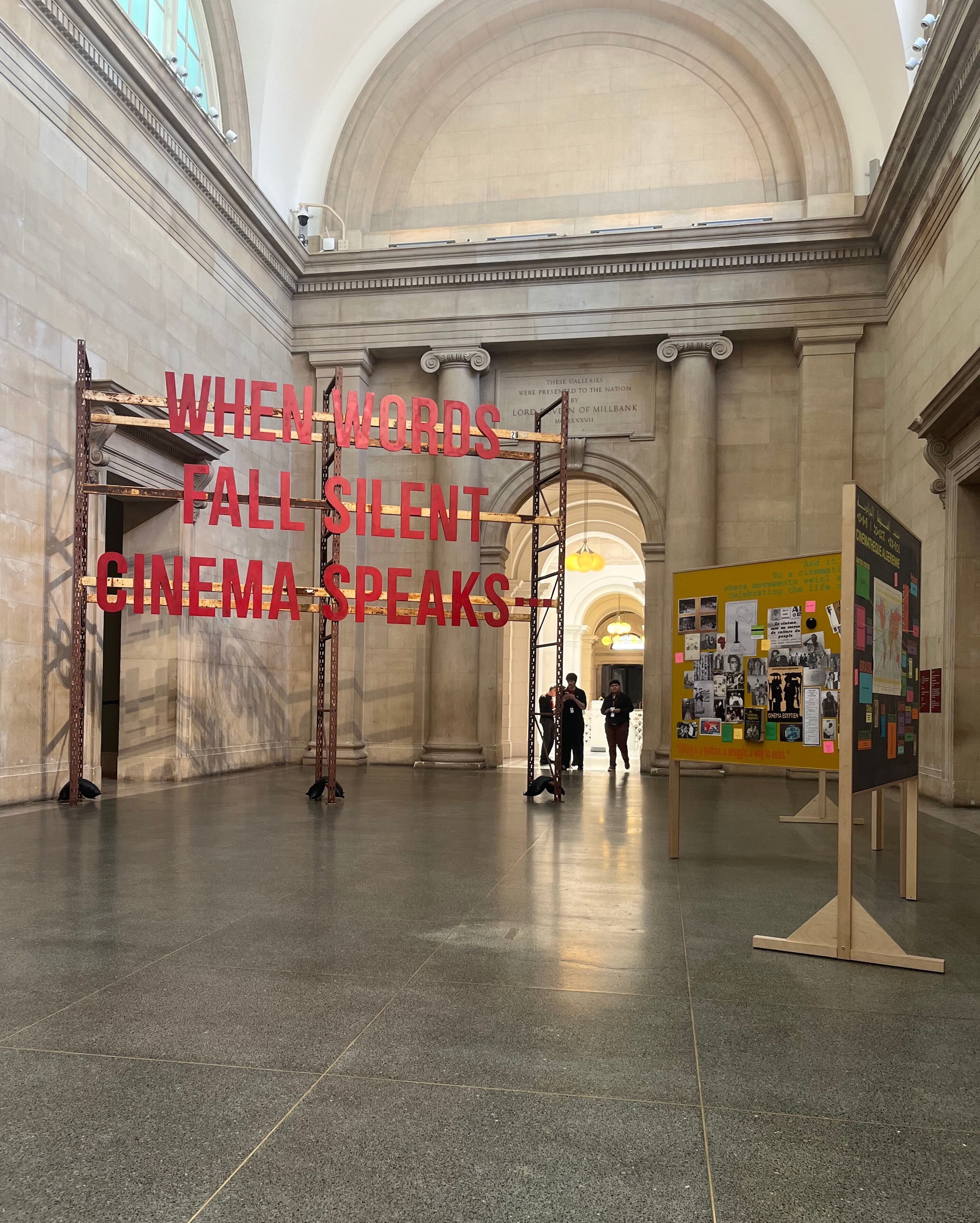
Sedira’s starting point is the radical world of African and anti-colonial cinema in the 1960s and 70s, particularly the period following Algeria’s independence in 1962, when the country became a hub for filmmakers, activists and intellectuals from across Africa, Asia and South America. The installation explores cinema not simply as entertainment, but as a political tool — a vehicle for solidarity, resistance and collective imagination.
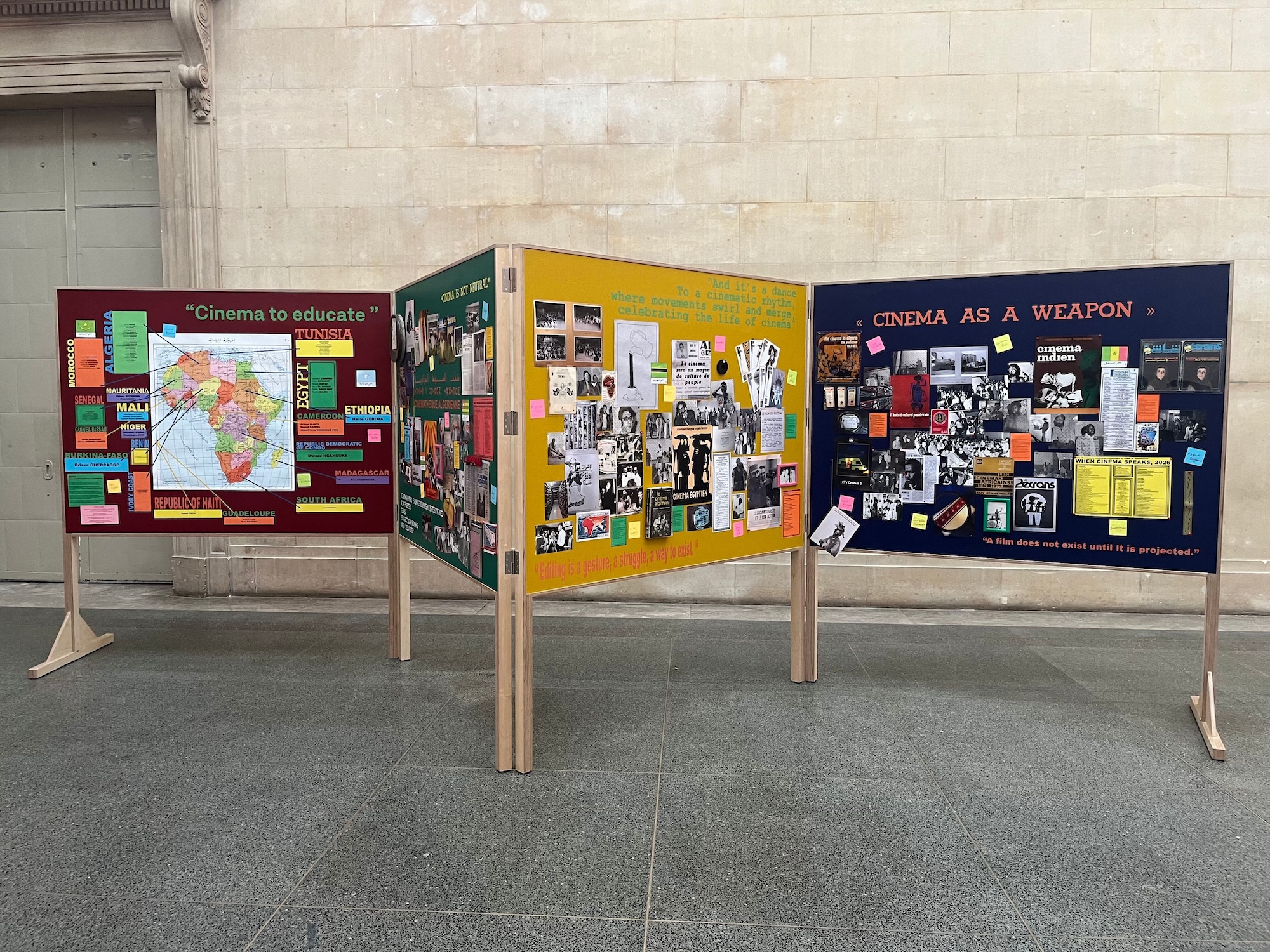
One of the strongest curatorial decisions comes right at the beginning. Before entering the main installation, visitors encounter a series of research boards documenting Sedira’s three-year development process. Filled with archival references, visual material, notes and cinematic connections, they provide a fascinating insight into how deeply researched the project is. Rather than functioning as supplementary material, these boards establish the intellectual and emotional framework for everything that follows, revealing how Sedira constructs history through fragments, references and visual dialogue. It’s rare to see an artist’s research process presented so openly, and it adds an important layer to understanding the ambition behind the commission.
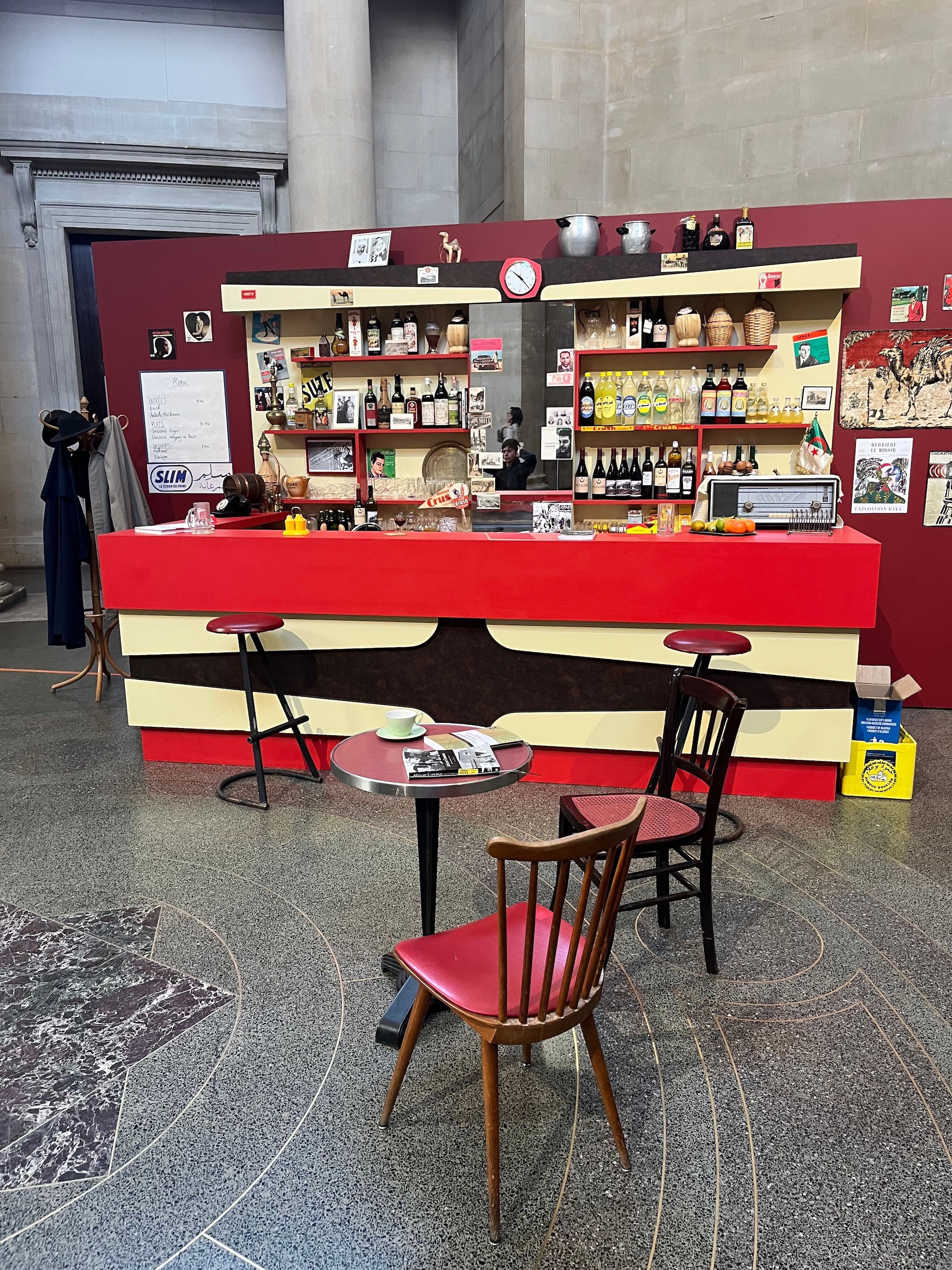
At the centre of the space is a recreated 1960s Parisian café, complete with tables, chairs, books and a functioning atmosphere of conversation and pause. It is one of the strongest elements of the installation because it operates simultaneously as sculpture, social space and historical reference. These cafés became gathering places for Algerians living in exile during the War of Independence, and Sedira captures that sense of political and intellectual exchange without turning the environment into a static reconstruction.
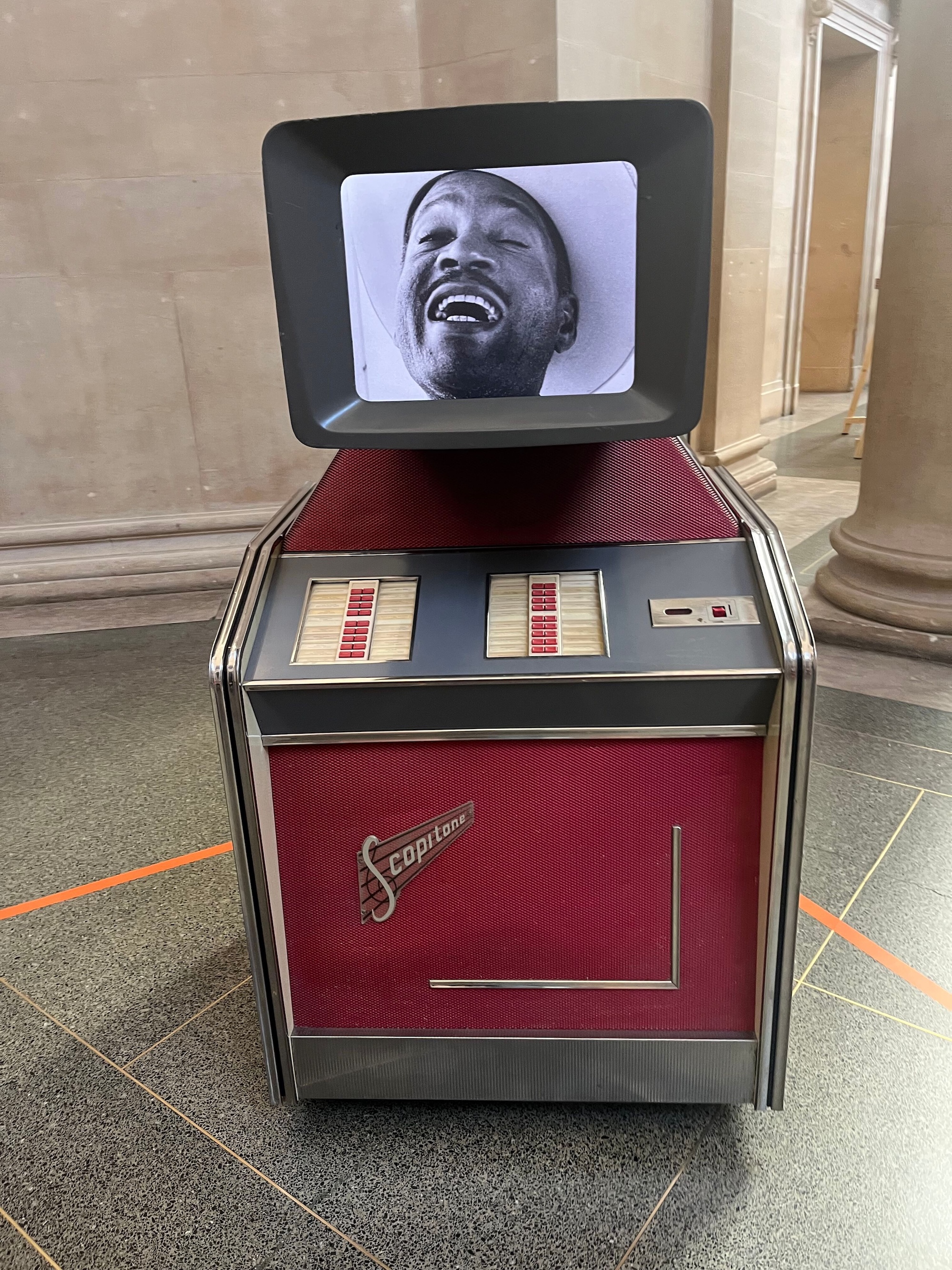
Nearby, a customised Scopitone — an early video jukebox associated with migrant communities — plays excerpts from Agnès Varda’s Salut les Cubains (1963), where dancing bodies and still images pulse with energy. The work becomes a reminder that joy, music and culture were also forms of resistance.
The newly commissioned film at the centre of the installation unfolds across four acts structured around filmmaking itself: writing, shooting, editing and screening. Sedira weaves together archival material, reconstructed scenes and the voice of Boudjema Kareche, former director of the Cinémathèque Algérienne, whose memories ground the installation in lived history. Rather than presenting a straightforward documentary, Sedira blurs fact, memory and performance, positioning herself both behind and in front of the camera.
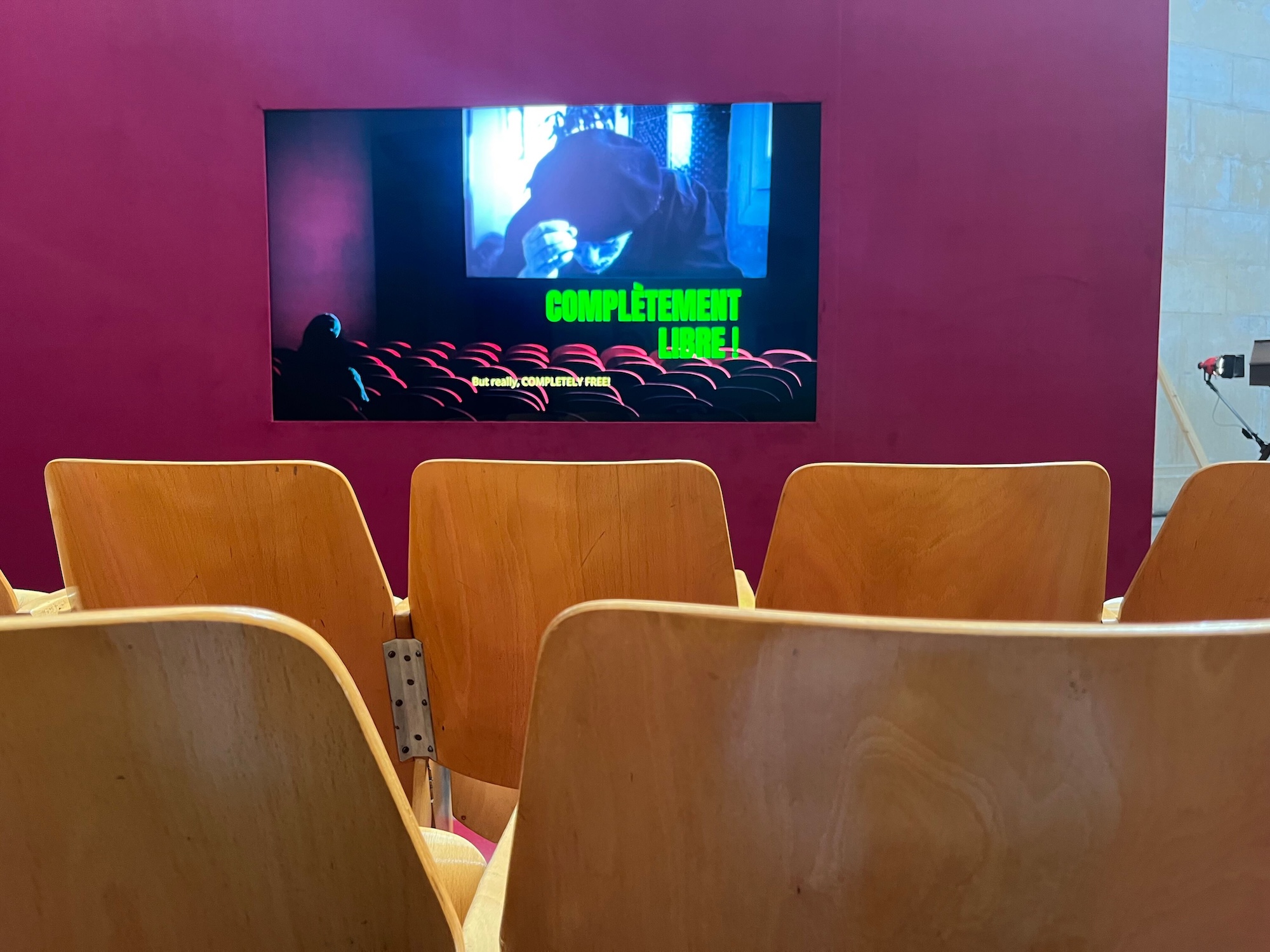
That layering is what makes the project feel so expansive. It is not simply about cinema history, but about how histories survive at all.
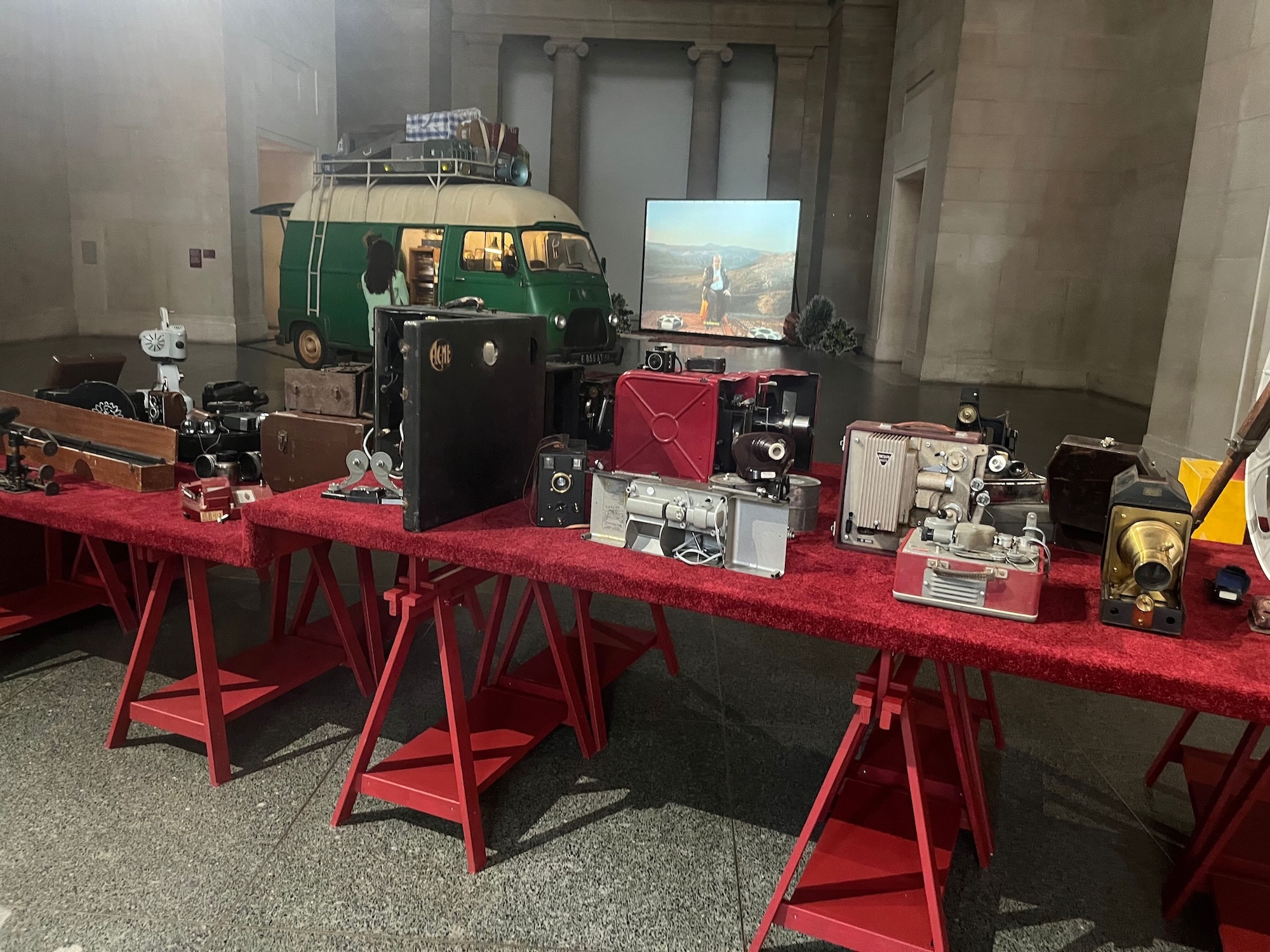
In the North Duveen, the atmosphere shifts again. Vintage cameras and analogue film equipment sit beneath Arabic cinema signage while an interview with film historian Ahmed Bedjaoui is projected from a repurposed 1960s van transformed into a mobile cinema unit. These “Ciné Pop” vans once carried propaganda films during French colonial rule before being reclaimed by Algeria to distribute revolutionary cinema to rural audiences. Sedira uses the vehicle as both object and symbol — a reminder that technology itself can be repurposed politically.
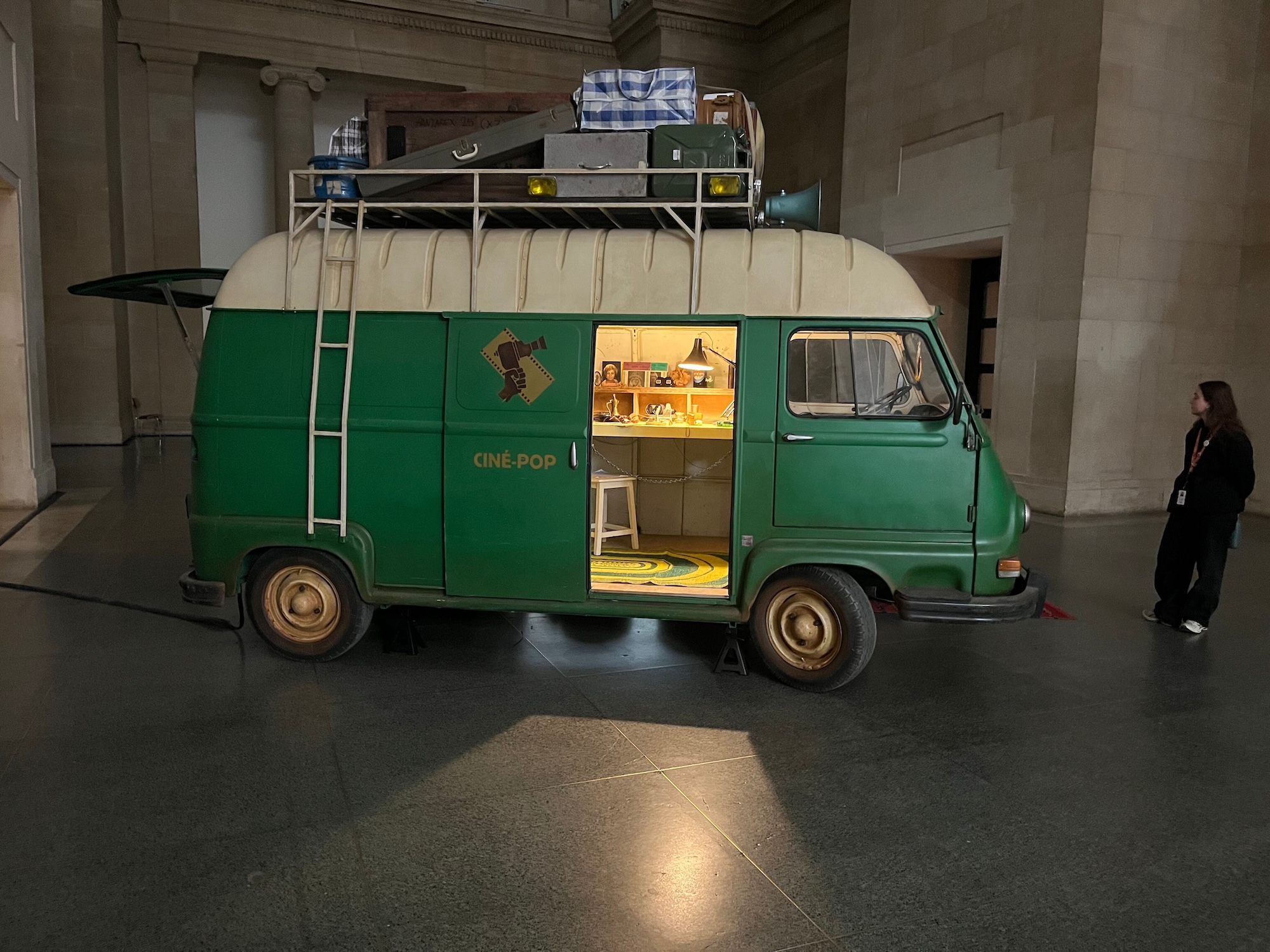


What is particularly effective about When Words Fall Silent, Cinema Speaks… is how naturally it occupies the Duveen Galleries. Large commissions in the space can often feel dwarfed by the scale or reduced to singular gestures. Sedira instead fills the galleries with multiple points of entry: film, architecture, sound, archival material, furniture, signage and conversation. The result is closer to wandering through an active cultural ecosystem than viewing a discrete artwork.

There is also something timely about Sedira’s focus on solidarity movements and alternative networks of communication. At a moment when global politics again feels fractured and ideologically polarised, the installation looks back to a period when cinema carried revolutionary potential across borders. Yet the work never feels overly didactic. Instead, it creates an emotional and atmospheric experience where history is encountered physically.
The commission succeeds because it balances intimacy with scale. You can sit quietly in the café, watch fragments of film, listen to voices recalling another political era, or simply absorb the texture of analogue cinema culture. Sedira understands that memory is often carried through spaces, objects and gestures as much as through official narratives.
More than an installation, When Words Fall Silent, Cinema Speaks… operates as an exhibition, an archive and a living act of remembrance. Sedira has created one of the most ambitious and thoughtful commissions recently shown in the Duveen Galleries — a work that asks not only how cinema shaped political imagination, but how art can continue to reactivate histories that risk fading from view.
Tate Britain Commission: Zineb Sedira, 13th May 2026 – 17th January 2027, Tate Britain
All installation photos © Mark Westall
CategoriesTags