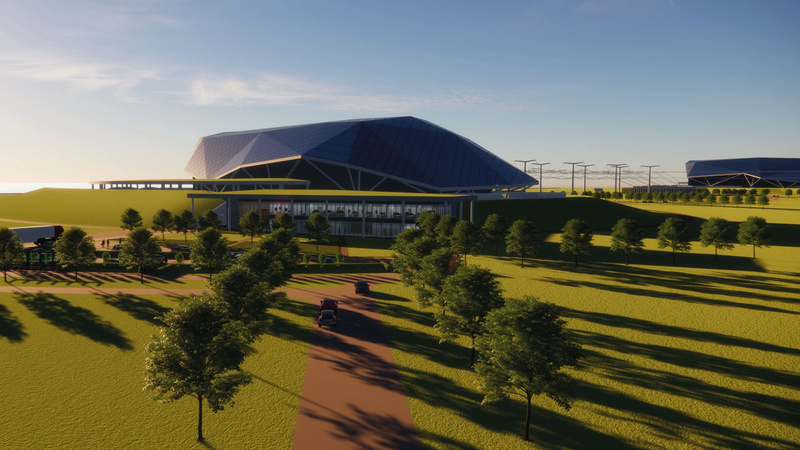
The Rolls-Royce SMR is based on a compact, three-loop pressurised water reactor designed to generate approximately 470MW of electrical power – enough to power one million average households, or a city the size of Sheffield, for at least 60 years.
Another advantage is that SMRs can be scaled up for larger demand. For instance, the site at Wylfa will initially host three SMR units, but GBE-N says it has the capacity to host up to eight.
Rolls-Royce SMR is in the final stages of the UK regulatory process. Once this process is successfully completed, the ambition is to start construction, with the aim of Wylfa’s three SMRs supplying power to the grid from the mid-2030s.
Similarly, the first unit in Sweden is expected to enter operation in the mid-2030s.
“This is another major endorsement of Rolls-Royce SMR’s technology and a significant boost for Britain’s nuclear export ambitions. Coming so soon after its selection by GBE-N, it underlines the growing international confidence in the technology and the strength of the British nuclear industry,” said Tom Greatrex, chief executive of the Nuclear Industry Association.
“New nuclear projects like this will provide clean, reliable power for decades while supporting high-skilled jobs, industrial growth and energy security. As we move forward with deployment at Wylfa, this agreement shows that British nuclear expertise is not just attracting investment at home, but winning opportunities overseas too,” added Greatrex.
In another boost for the UK nuclear sector, Rolls-Royce and Japan’s Atomic Energy Agency have signed a new agreement with the UK National Nuclear Laboratory to develop next-generation nuclear technologies and to deepen their collaboration on fusion energy.
The latest video in our E+T Expert Engineering series explores SMRs and why miniaturising nuclear technology may prove that smaller is indeed better. Watch it below: