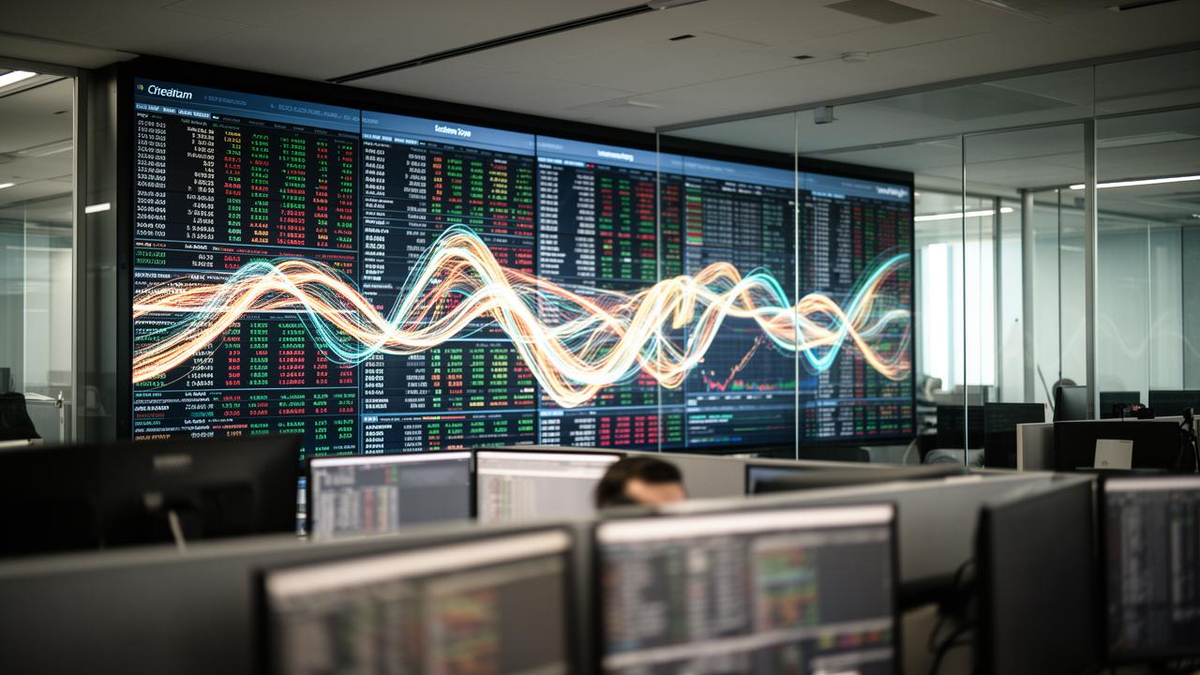
The world’s major stock exchanges have entered a competition for the final frontier: “time.” The London Stock Exchange Group (LSEG) officially announced on the 21st that it will launch an overnight trading market called “LSE24,” targeting the first half of 2027. With U.S. players steering toward 23-hour trading within the year, the United Kingdom is now joining this trend, plunging Western markets into a nearly 24-hour battle for capital. Completely left behind in this movement is the Tokyo Stock Exchange, which maintains only daytime trading.
According to LSEG’s announcement, the new “LSE24” market will operate completely separate from the existing main market. Trading hours will run from 5:00 p.m. to 7:50 a.m. London time, with a 30-minute pause for daily processing from 6:30 p.m. to 7:00 p.m. Combined with traditional trading hours (8:00 a.m. to 4:30 p.m.), this structure effectively enables near 24-hour trading.
Initially, the products handled will center on exchange-traded products (ETPs) linked to UK and U.S. equity markets. ETPs are a broad category including exchange-traded funds (ETFs) and exchange-traded notes (ETNs). Overnight trading will begin with these packaged products, with potential expansion to individual stocks in the future. LSEG plans to begin customer testing by the end of 2026, aiming for a full launch in the first half of 2027.
LSEG CEO Julia Hoggett explained the rationale behind the new market in an interview with the UK’s Financial Times, stating, “There is growing demand, particularly from retail investors globally, to leverage London’s specific time zone to gain exposure not just to UK assets but to global assets.”
This move is not LSEG’s alone. The rise of asset classes like crypto assets (virtual currencies), which can be traded 24 hours a day, 365 days a year without being bound by traditional trading hours, is forcing transformation upon traditional exchanges. Expectations among retail investors to “trade anytime” are rapidly escalating, shifting the axis of competition among exchanges from fees and liquidity to “time.”
The U.S. market is moving even faster. Nasdaq is advancing plans to extend weekday trading hours to 23 hours starting in December 2026. Cboe Global Markets also plans to begin 23-hour, five-day-a-week trading of U.S. stocks on its EDGX Equities exchange around the same December timeframe. Furthermore, the Chicago Mercantile Exchange (CME) already launched 24/7 trading for crypto futures and options in late May, as the entire industry rapidly moves toward a “market that never sleeps.”
In contrast, the current situation at the Tokyo Stock Exchange is remarkably quiet. Even after extending trading hours in November 2024, the TSE’s cash equity trading remains limited to 9:00 a.m. to 3:30 p.m., with a lunch break (11:30 a.m. to 12:30 p.m.). While institutional improvements such as the introduction of a closing auction and a review of tick sizes are progressing, no concrete discussions regarding 24-hour trading can be heard.
Concerns are simmering among market participants about the risk of the TSE being “left behind.” Among major Asian markets, the Singapore Exchange (SGX) and Hong Kong Exchanges and Clearing (HKEX) are also showing moves to expand overnight trading, with some pointing out that this could lead to a decline in the international presence of the Japanese market. That said, Japan faces a mountain of challenges, including securing overnight liquidity, system adaptation costs, and protecting disciplined investors, meaning a hasty shift to 24-hour trading carries its own risks.
Nevertheless, LSEG’s decision signals that the “international standard for trading hours” is undeniably changing. As CEO Hoggett noted, with London—capable of weaponizing its time zone—now making a move, the next focus will likely shift to how Asian exchanges respond to this trend. In particular, the choice made by the TSE, home to the world’s third-largest stock market, will serve as a litmus test for the future of Japan’s capital markets.