Britain is facing the most dangerous security environment in decades, the boss of the country’s biggest defence contractor has warned, as tensions with Iran escalate and concerns grow over whether the Armed Forces have the resources needed to respond to a rapidly changing world.
BAE Systems chief executive Charles Woodburn described the current climate as “the most threatening time I’ve seen”, warning that Britain’s defence investment still falls “well short” of what is required to protect the country.
His stark assessment came hours after Iran’s Islamic Revolutionary Guard Corps issued a direct warning naming RAF Fairford in Gloucestershire as a potential target, claiming any base used to launch attacks against Iranian territory would be considered a legitimate target.
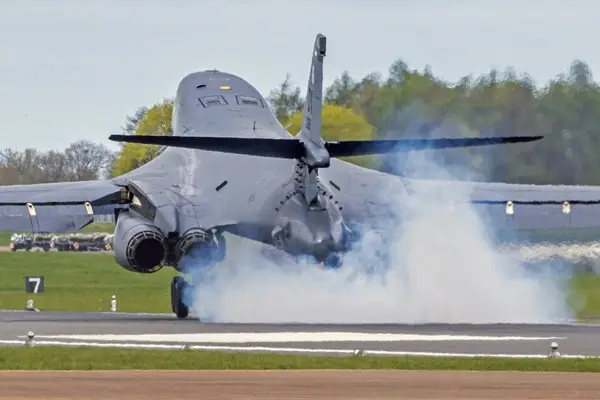
Tehran has alleged that US B-1 bombers involved in recent strikes against Iran operated from the British airbase — a claim rejected by the UK Government. RAF Fairford has hosted US Air Force operations since March after Britain authorised its use for what ministers described as defensive missions.
The latest threat has highlighted the growing risks facing Britain’s military infrastructure as the Middle East crisis spills into a wider confrontation.
The Government insisted the Armed Forces remain ready to respond, saying Britain maintains a “layered approach” to air and missile defence involving the Royal Navy, British Army, Royal Air Force and NATO allies.
“Our Armed Forces are ready to keep the United Kingdom safe from any kind of attacks, whether it’s on our soil or from abroad. The UK stands ready 24/7 to defend itself,” a Government spokesperson said.
“This includes through operating a layered approach to air and missile defence, provided by Royal Navy, British Army and Royal Air Force assets equipped with a range of advanced capabilities, working closely with our NATO allies,” they added.
But Mr Woodburn warned the nature of warfare had fundamentally changed, with conflicts in Ukraine and elsewhere demonstrating the growing importance of drones, cyber warfare and advanced missile systems.
Speaking to the BBC, Mr Woodburn said: “This is by far the most threatening time I’ve seen.
“Even when I joined the company in 2016 I was amazed at what we saw Russian submarines doing, the cyber attacks.
“I think that’s come a long way sadly as a result of the Ukraine conflict we’re much more aware of the proximity of a hot war in Europe.”
The Government has pledged an additional £15 billion for defence spending, but the announcement triggered political turmoil after former Defence Secretary John Healey resigned, arguing funding commitments were insufficient.
Mr Woodburn said the extra money represented progress but did not close the gap between Britain’s ambitions and its military capabilities.
The warning comes as investors bet that defence spending will rise further, with BAE Systems shares climbing after Mr Healey’s appointment as Chancellor.
The company also secured a £708 million Ministry of Defence contract extension to develop next-generation combat aircraft, underlining the growing pressure on Western governments to rebuild military capacity after years of cuts.
For Britain, the message from its largest defence supplier is stark: the era of assuming major conflict is distant may be over.