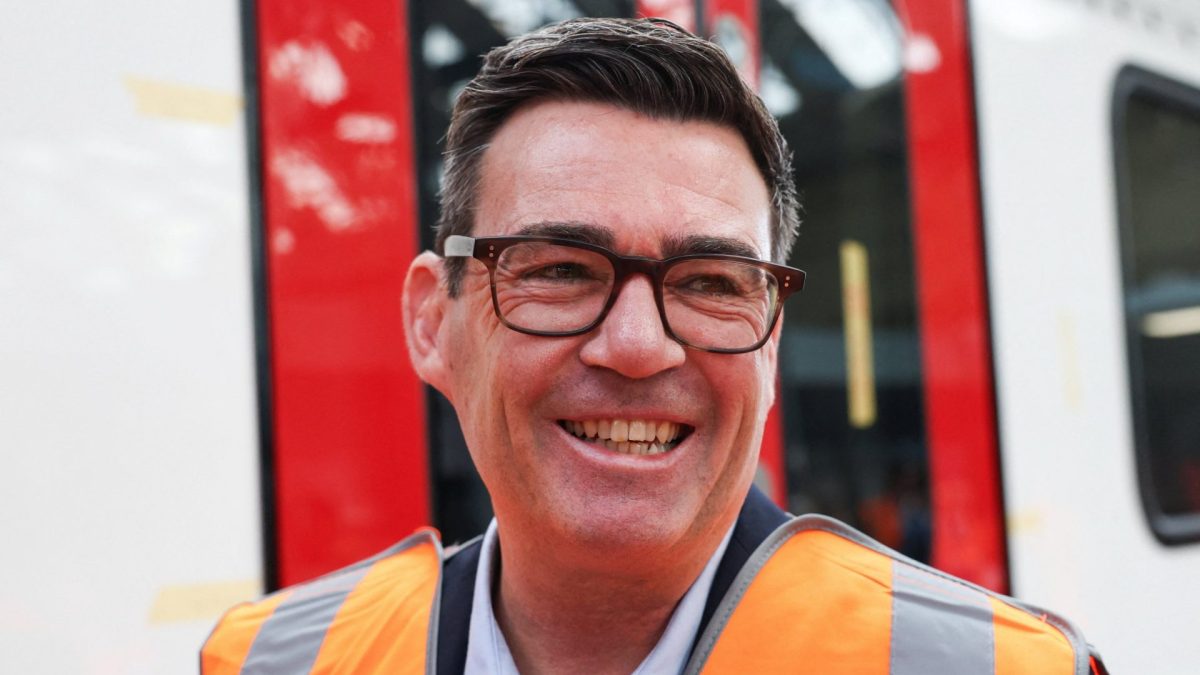
As Andy Burnham unveils his plans to tackle youth unemployment, the centrepiece will be a national version of an idea born during his years as a regional mayor: the Greater Manchester Baccalaureate (MBacc).
The announcement will set out his ambition to reshape the education system so that young people have a clearer route from school into skilled work, apprenticeships and technical and vocational careers, with employers playing a much bigger role in shaping what they learn.
But the MBacc is only one page of the Manchester playbook.
The city-region has also been the testing ground for a series of interventions aimed at helping young people find opportunity and helping those who fall out of education, or work, get back on track.
Shorts
Scroll to previous short
Scroll to next short

Health
Why more men are being enticed by weight-loss pills rather than jabs
 Caption: A syringe and capsules among the festive sequins.
Photographer: Mariyariya
Provider: Getty Images
Source: Moment RF
Copyright: borisova marevgenna
Pharmacies have said that the new Wegovy weight-loss pill is more popular with older men compared to the weekly injection because it is discreet and easier to take.
Everything we know
Manufactured by Novo Nordisk, the pill was approved by the Medicines and Healthcare products Regulatory Agency (MHRA) last month and hit the shelves of both private and high-street pharmacies three weeks ago.
It is taken daily and, according to online retailer CheqUp, two thirds of patients taking the new pill switched over from the injectable version.

Explained
4 min read

Big Read
3 min read
The expert view
It is still very early to draw firm conclusions. But the initial response has been exceptionally strong. We have seen demand for the pill grow by 350 per cent in the weeks since launch, and that interest has continued as more people become aware that an oral treatment may be a viable alternative to injectables.
Lisa Tookey, the chief executive of online pharmacy CheqUp told the times
 Caption: photo illustration Foundayo weight loss oral pill with Wegovy. Its a non-peptide oral GLP-1 receptor agonist from Eli Lilly. (Photo by: Michael Siluk/UCG/Universal Images Group via Getty Images)
Photographer: UCG
Provider: UCG/Universal Images Group via G
Limiting sugar before age of two ‘could lower dementia risk’
A study based on almost 65,000 people in the UK has found that limiting sugar before the age of two could lower the chance of dementia by up to a fifth.
 Photographer: Catherine Falls Commercial
Provider: Getty Images
Source: Moment RF
Sugar could affect how babies receive nutrients
Experts suggested that exposure to sugar in the womb and early life could affect metabolic processes as well as how the baby receives nutrients. The study used UK Biobank data, which includes people who experienced sugar rationing during the Second World War.

Analysis
2 min read

LIFESTYLE
4 min read
The wartime diet worked
 Caption: 21st June 1946: Hungry housewives bring their ration books to London’s Petticoat Lane Market during World War II on the first day of bread rationing. (Photo by Eric Harlow/Keystone/Getty Images)
Photographer: Eric Harlow
Provider: Getty Images
Source: Hulton Archive
The British government began rationing certain foods, including sugar, in 1940 which lasted until 1953.
Previous studies also found that people who had restricted sugar intake in the womb and early childhood were less likely to suffer conditions such as heart attack, heart failure and stroke.
A closer look at the figures
21%
Lower risk of dementia for those who experienced sugar rationing before birth and up to age one.
23%
Lower risk of dementia for those whose sugar intake was restricted up to the age of two.
Those people with lower sugar intake also developed dementia an average of 2.6 years later.
football
Leeds, Forest and Everton enter race for Chelsea’s £40m Liam Delap
 Caption: SYDNEY, AUSTRALIA – JULY 28: Liam Delap of Chelsea FC looks on during the Sydney Super Cup match between Western Sydney Wanderers and Chelsea FC at Accor Stadium on July 28, 2026 in Sydney, Australia. (Photo by Ayush Kumar/Eurasia Sport Images/Getty Images)
Photographer: Eurasia Sport Images
Provider: Getty Images
Source: Getty Images AsiaPac
Copyright: 2026 Eurasia Sport Images
Chelsea’s Liam Delap is seeing interest from three Premier League teams as Chelsea look to offload a number of unwanted stars.
Questions have been raised over their ability to keep splashing the cash in a world of tighter financial regulations.
However, the club continue to generate significant income through player sales, bringing in £300m through departures last season and £120m already this summer.
The clubs after Delap
 Caption: NOTTINGHAM, ENGLAND – JULY 18: Oliver Glasner, head coach of Nottingham Forest, looks on during the pre-season friendly match between Notts County and Nottingham Forest at Meadow Lane on July 18, 2026 in Nottingham, England. (Photo by James Gill – Danehouse/Getty Images)
Photographer: James Gill – Danehouse
Provider: Getty Images
Source: Getty Images Europe
Copyright: 2026 James Gill – Danehouse
Nottingham Forest
Manager Oliver Glasner is understood to be a big fan of the 23-year-old, who would provide support for Chris Wood.
Everton
The Toffees are in desperate need of firepower with sources saying Delap is an ideal focal point.
 Caption: BOLTON, ENGLAND – JULY 25: David Moyes, Manager of Everton looks on during the pre-season friendly match between Bolton Wanderers and Everton at Toughsheet Community Stadium on July 25, 2026 in Bolton, England. (Photo by Alex Livesey/Getty Images)
Photographer: Alex Livesey
Provider: Getty Images
Source: Getty Images Europe
Copyright: 2026 Getty Images
 Caption: Daniel Farke, manager of Leeds United, speaks to the press during the Premier League match between West Ham United and Leeds United at the London Stadium in Stratford, United Kingdom, on May 24, 2026. (Photo by MI News/NurPhoto via Getty Images)
Photographer: NurPhoto
Provider: NurPhoto via Getty Images
Source: NurPhoto
Copyright: MI News/NurPhoto
Leeds United
The club are seeking competition for Dominic Calvert-Lewin, however, funds are tight after signing James Trafford from Manchester City.
Limited opportunities for Delap at Chelsea
Delap only managed one goal in an injury-hit debut campaign for The Blues last season.
With Danny Welbeck and Emmanuel Emegha also set to be integrated into the squad, Delap is unlikely to get the chance to challenge Joao Pedro for the central striking role.
 Caption: Joao Pedro of Chelsea FC during the Premier League match between Sunderland and Chelsea at the Stadium Of Light in Sunderland, United Kingdom, on May 24, 2026. (Photo by Scott Llewellyn/MI News/NurPhoto via Getty Images)
Photographer: NurPhoto
Provider: NurPhoto via Getty Images
Source: NurPhoto
Copyright: MI News/NurPhoto

Explained
3 min read
The Beatles’ unheard recordings from Rubber Soul to be released
Previously unreleased session recordings and home demos will be included as part of a special edition of The Beatles’ album Rubber Soul.
 Caption: The Beatles posing together. From left to right: musicians George Harrison, John Lennon, Paul McCartney and Ringo Starr, circa 1965.
Photographer: Bettmann
Provider: Bettmann Archive
Source: Bettmann
When will it be released?
 Caption: The Beatles performing on stage, circa 1963. Left to right: Paul McCartney, Ringo Starr, George Harrison (1943 – 2001) and John Lennon (1940 – 1980). (Photo by King Collection/Avalon/Getty Images)
Photographer: Avalon
Provider: Getty Images
Source: Hulton Archive
The new edition, mixed by producer Giles Martin and engineer Sam Okell, will be released in October.
The band’s media agency said it “presents the album in stunning new stereo and Dolby Atmos mixes, alongside the original mono mix, the original Capitol US Album version, and expanded with previously unreleased session recordings and home demos”.
What can fans expect to get?
Included is the contemporary double A-side single, Day Tripper/We Can Work It Out.
The reissue brings together all 14 new stereo mixes, sourced directly from the original four-track master tapes.
Across the Super Deluxe collections, fans can hear 24 early session recordings, including 20 previously unreleased takes and three previously unreleased demos, including Little Girl, a John Lennon song that was never released.
The collections also feature the original mono album, the original Capitol US album version and the 1965 double A-side single.
A classic album
The original was released in December 1965 and features songs including Drive My Car, Norwegian Wood (This Bird Has Flown), Nowhere Man, Michelle, Girl and In My Life. It was recorded over four weeks following the band’s record-breaking concert to more than 55,000 fans at Shea Stadium in New York.
 Caption: CIRCA 1964: Rock and roll band “The Beatles” pose for a portrait wearing suits in circa 1964. (L-R) Ringo Starr, John Lennon, Paul McCartney, George Harrison. (Photo by Michael Ochs Archives/Getty Images)
Photographer: Michael Ochs Archives
Source: Michael Ochs Archives

Interview
5 min read
news
Britain’s ‘loneliest dog’ finds his forever home
 Caption: BRITAIN?S ?LONELIEST? DOG FINDS FOREVER HOME AFTER 550 DAYS AT RESCUE
5-year-old Greyhound, Danny, has finally found his forever home after spending over 550 days in Battersea?s care – making him one of the longest stays at the rescue.
Danny was at Battersea?s Old Windsor centre fifteen times longer than most dogs, with the average length of stay being 38 days. Danny celebrated multiple milestones at the rescue, with Battersea staff doing everything in their power to make him feel special – from throwing him birthday parties to even hosting a Valentine?s Day themed photoshoot with Danny – while he patiently waited for his perfect match. Sadly, misconceptions around Greyhounds? energy levels and exercise requirements often deter many owners from giving these gentle souls a chance.
As an ex-racing Greyhound, Danny found aspects of the outside world quite frightening at first. To help him get used to living in a home environment, he spent some time in a foster home, where he discovered a love of garden zoomies, quiet nature?reserve walks and even the occasional paddle in a stream. His confidence started growing and he slowly learned that the world wasn?t quite as scary as he once thought. After over 16 months in Battersea?s care, Danny finally found his forever home and now spends his time exploring his new garden, taking naps around the house and keeping a watchful eye over the comings and goings of his new family.
Copyright: Battersea Dogs and Cats Home
Danny the Greyhound was labelled “Britain’s loneliest” dog after he spent more than 550 days at a rescue centre – 15 times longer than most dogs at the Battersea Old Windsor centre in Berkshire.
He found aspects of the outside world frightening when he first arrived, so spent time in a foster home to become accustomed to everyday life.
A new owner
After 16 months, the ex-racing greyhound found a new home with Year 6 teacher Sandra.
She said: “It was heartbreaking, I could not stop thinking why this beautiful dog had not found a home. I felt an instant connection with him.”

Analysis
2 min read

Explained
3 min read
Capturing hearts
From the moment we met him, there was something incredibly special about him and we just knew that we would be his forever family… It felt really natural. My husband initially was very reluctant to have a dog but I knew once he saw him there would be no going back.
Sandra – danny’s owner
 Caption: BRITAIN?S ?LONELIEST? DOG FINDS FOREVER HOME AFTER 550 DAYS AT RESCUE
5-year-old Greyhound, Danny, has finally found his forever home after spending over 550 days in Battersea?s care – making him one of the longest stays at the rescue.
Danny was at Battersea?s Old Windsor centre fifteen times longer than most dogs, with the average length of stay being 38 days. Danny celebrated multiple milestones at the rescue, with Battersea staff doing everything in their power to make him feel special – from throwing him birthday parties to even hosting a Valentine?s Day themed photoshoot with Danny – while he patiently waited for his perfect match. Sadly, misconceptions around Greyhounds? energy levels and exercise requirements often deter many owners from giving these gentle souls a chance.
As an ex-racing Greyhound, Danny found aspects of the outside world quite frightening at first. To help him get used to living in a home environment, he spent some time in a foster home, where he discovered a love of garden zoomies, quiet nature?reserve walks and even the occasional paddle in a stream. His confidence started growing and he slowly learned that the world wasn?t quite as scary as he once thought. After over 16 months in Battersea?s care, Danny finally found his forever home and now spends his time exploring his new garden, taking naps around the house and keeping a watchful eye over the comings and goings of his new family.
Copyright: Battersea Dogs and Cats Home
How has he settled so far?

Danny has now been at his new home for two months and Sandra has said that he settled in far more quickly than expected.
He now spends his time exploring his new garden and taking naps around the house.

MONEY
3 min read
weather
More than half of England officially in drought, Environment Agency says
 Caption: WOLDINGHAM, UNTIED KINGDOM – JULY 25: Golfers on the green at Woldingham Golf Club on July 25, 2026 in Woldingham, United Kingdom. According to the the National Drought Group, eight areas across southern, central, and eastern England are verging on drought, following a period of “prolonged dry weather,” including three heatwaves to hit the region this season. Water companies report seeing a 30% increase in demand for water on the hottest days of the year so far, with more than 20 million households facing hosepipe bans in parts of England and Wales. (Photo by Dan Kitwood/Getty Images)
Photographer: Dan Kitwood
Provider: Getty Images
Source: Getty Images Europe
Copyright: 2026 Getty Images
Swathes of England are suffering from a “flash drought” as a result of very low rainfall and high temperatures, the Environment Agency has said.
The government agency said seven areas of central, eastern and southern England – around half of the country – have been declared as officially in drought.
The areas affected
The areas are East Anglia, Hertfordshire and the whole of London, Thames Valley, Hampshire and the Isle of Wight, Devon and Cornwall, the West Midlands, and Wessex – covering Dorset, Somerset, Wiltshire and Gloucestershire.
 Caption: LONDON, UNITED KINGDOM – JULY 23: A man practises his ball control on the drought-damaged grass of Hackney Marshes on July 23, 2026 in London, United Kingdom. According to the the National Drought Group, eight areas across southern, central, and eastern England are verging on drought, following a period of “prolonged dry weather,” including three heatwaves to hit the region this season. Water companies report seeing a 30% increase in demand for water on the hottest days of the year so far, with more than 20 million households facing hosepipe bans in parts of England and Wales. (Photo by Leon Neal/Getty Images)
Photographer: Leon Neal
Provider: Getty Images
Source: Getty Images Europe
Copyright: 2026 Getty Images

NEWS
4 min read
A closer look at the detail
July is set to be the driest month on record, with England having just 7 per cent of expected rainfall, and southern England seeing just 1 per cent.
 Caption: BRAY, UNTIED KINGDOM – JULY 25: In this aerial view the Maidenhead & Bray CC 1st XI take on the Boyne Hill CC 1st XI on a bone dry field at the Maidenhead & Bray County Cricket club on July 25, 2026 in Bray, United Kingdom. According to the the National Drought Group, eight areas across southern, central, and eastern England are verging on drought, following a period of “prolonged dry weather,” including three heatwaves to hit the region this season. Water companies report seeing a 30% increase in demand for water on the hottest days of the year so far, with more than 20 million households facing hosepipe bans in parts of England and Wales. (Photo by Dan Kitwood/Getty Images)
Photographer: Dan Kitwood
Provider: Getty Images
Source: Getty Images Europe
Copyright: 2026 Getty Images
 Caption: LONDON, UNITED KINGDOM – JULY 23: A man practises his ball control on the drought-damaged grass of Hackney Marshes on July 23, 2026 in London, United Kingdom. According to the the National Drought Group, eight areas across southern, central, and eastern England are verging on drought, following a period of “prolonged dry weather,” including three heatwaves to hit the region this season. Water companies report seeing a 30% increase in demand for water on the hottest days of the year so far, with more than 20 million households facing hosepipe bans in parts of England and Wales. (Photo by Leon Neal/Getty Images)
Photographer: Leon Neal
Provider: Getty Images
Source: Getty Images Europe
Copyright: 2026 Getty Images
As a result, much of the country is experiencing a flash drought – one which has come on quickly despite a very wet winter. The announcement was made as parts of the UK experience their fourth heatwave of the summer, with temperatures reaching into the 30s in some places.
The expert view
The hot and dry weather means we are currently using water faster than nature can replenish it. “A second consecutive summer drought is an exceptionally serious situation and one that will have long-lasting impacts on our environment, wildlife and the economy.
Helen Wakeham, director of water at the Environment Agency and chairwoman of the National Drought Group
 Caption: LONDON, UNITED KINGDOM – JULY 23: In this aerial view drought-damaged football pitches are seen on Hackney Marshes on July 23, 2026 in London, United Kingdom. According to the the National Drought Group, eight areas across southern, central, and eastern England are verging on drought, following a period of “prolonged dry weather,” including three heatwaves to hit the region this season. Water companies report seeing a 30% increase in demand for water on the hottest days of the year so far, with more than 20 million households facing hosepipe bans in parts of England and Wales. (Photo by Leon Neal/Getty Images)
Photographer: Leon Neal
Provider: Getty Images
Source: Getty Images Europe
Copyright: 2026 Getty Images
In an interview with The i Paper during the Makerfield by-election campaign last month, Burnham set out, in his own words, a broader blueprint for the changes he believes would transform young people’s lives and improve their chances of finding work. We are publishing the answers from that interview in full for the first time.
From changing procurement rules so public money delivers apprenticeships and work placements, to giving 16 to 18-year-olds free travel linked to work opportunities, to devolving employment support and using data to understand young people’s wellbeing better, Burnham has already outlined a wider set of policies that could now form the basis of a national offer.
The question after today’s announcement is what else he might draw from Greater Manchester.
1. Use government contracts to create apprenticeships
One of Burnham’s most striking proposals is to change the way public money is spent.
His argument is that government should not only ask whether a contract offers financial value, but whether it delivers wider benefits for communities – including creating opportunities for young people.
Burnham believes the state should use its enormous purchasing power to encourage companies winning contracts to invest in the next generation.
He said: “I’d like just to touch on, if I could, a big change to British procurement and public spending, using full social value weighting.… It means when you lay a contract or you commission a service, that you can then require work placements for 16 to 18 year-olds or apprenticeships. We’re not using the full might of the British state, in terms of procurement, to get the benefits for young people that will help them have a path towards work.”
The proposal links closely to Burnham’s wider belief that education and employment cannot be separated. If young people are to see a clear route into the world of work, he argues, employers must become part of that journey.
That is the thinking behind his support for longer, meaningful work placements – including the 45-day model associated with technical education – giving teenagers a chance to experience workplaces before they leave school.
2. Give 16 to 18-year-olds free travel – linked to job opportunities
Burnham has already introduced a policy in Greater Manchester that he believes could be replicated nationally: free bus travel for 16 to 18-year-olds.
He argues that transport can become an invisible barrier preventing young people from taking up work opportunities. A free pass removes one obstacle – but he believes it should be matched with a guaranteed route into experience, training or employment.
He said: “I’ve done something here as mayor of Greater Manchester, where we give our 16 to 18s a free bus pass. I know it’s common in London, but elsewhere in England it isn’t.
“I want to match that guarantee of free travel to a high-quality [work experience] opportunity. And I think if you did that everywhere, you would have a significant impact on youth employment. Because if you… fall out at 16 and you don’t have that clear path, then it’s very, very hard once people hit their 20s to be able to put them back on track.”
The idea reflects a central theme of Burnham’s approach: intervention before problems become entrenched.
He argues that the years immediately after compulsory education are critical. If young people lose connection with learning, work or opportunity at 16, rebuilding that connection later becomes much harder.
3. Devolve job support
Perhaps the clearest example of Burnham’s Manchester philosophy is Working Well – a programme designed around the idea that unemployment is often not simply linked to a lack of job applications.
Working Well was created as part of Greater Manchester’s devolution journey and takes a different approach from traditional employment support programmes. Instead of focusing only on whether someone is applying for jobs, it looks at the wider issues that may prevent someone moving into work – including health, housing, debt, skills and personal circumstances.
Participants are supported by dedicated workers who help them move towards employment.
Burnham believes this approach has shown that local areas can deliver better results when they have the freedom to design support around their own communities.
He said: “I think when it comes to the whole question of spending on benefits, it’s about supporting people upfront and having a more preventative approach. We’ve pioneered that in Greater Manchester.
“So, we took a different way of supporting people, not the tick box top-down approach, sometimes used by the DWP [Department of Work and Pensions], which just doesn’t get to the heart of why somebody isn’t in work but comes at it the other way round, and starts with the whole person, the housing situation, whether people have got debt worries.
“There are a whole host of wider reasons why people may not be able to move towards work. And what I would say when it comes to welfare reform, this is an area where I would strongly advocate that the country goes down the greater devolution route.
“If you support people starting in communities, working through community and voluntary organisations, I think you can actually get to the heart of the thing that is holding them back. And we’ve got experience in Greater Manchester of operating in that way and evidence that you get twice the rate of people back to work when you take that whole person approach, then you’re doing through the ‘computer says no’ approach.
“The simple thing is this… if people fear having interaction with the DWP, how on earth is that going to move them forward? But that is how people do feel when they go into Job Centre Plus; they feel they’re about to be tripped up, or something taken off them. Whereas I would argue for a much more devolved, much more empowering and supporting approach that we’ve got evidence actually achieves bigger and better results.”
The Working Well philosophy could be one of the biggest parts of Burnham’s Manchester inheritance if he seeks to reshape employment support nationally: a shift from managing unemployment to preventing it. According to a well-placed government source, Pat McFadden, the Work and Pensions Secretary, is already exploring proposals that will see mayors in other areas being given similar powers.
4. Listen to young people before they disengage
The fourth idea comes from another Greater Manchester innovation: #BeeWell.
The survey, introduced across secondary schools in the city-region, asks young people directly about their wellbeing, hopes, experiences and expectations for the future.
The purpose is simple but ambitious: understand what young people are experiencing before problems become crises.
The survey has given policymakers and schools a detailed picture of teenage life – including confidence, belonging, mental wellbeing and whether young people feel they have opportunities ahead of them.
For Burnham, this is essential because education cannot be reformed successfully without understanding how young people experience it.
He said: “Honestly, I feel that the education system needs a massive change. It’s built for some young people, rather than all young people, and that’s the truth of it. Schools have been judged on their performance on the English baccalaureate and they are the GCSEs most favoured by university.
“So the whole system is weighted in that way. We do a survey of teenagers in Greater Manchester… and you see some of them start to report a loss of engagement with the school by year 10. It’s high when they come in year seven, but it drops right down by year 10.
“The most troubling thing is we ask the question: do you have hope for the future? And in parts of this city region, and indeed parts of this borough, you know, that number is way too, way too low. They just cannot see what the opportunity is beyond school.”
Whether it is procurement, transport, employment support or education reform, Burnham’s Manchester model is built around one central argument: young people need to see a visible path from school into a future. The question now is how much of that approach he chooses to take to the national stage.