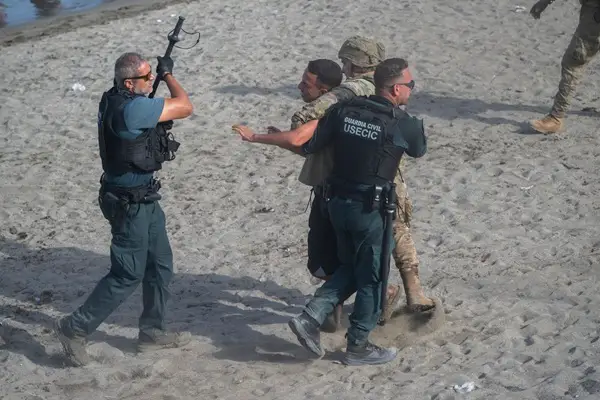
The surge of migrants into Spain’s North African enclave of Ceuta has reignited concerns that Europe’s migration pressures could once again spill into the UK, after one young migrant said his ultimate ambition was to reach England.
The comments come as Britain’s political debate over border security intensifies following the arrival of around 60,000 migrants in Ceuta over the past 24 hours, one of the largest mass movements into the territory in recent years.
While Spanish authorities say most have since returned to Morocco, the episode has exposed the continuing fragility of the European Union’s external borders.
Reform UK and the Conservatives have urged the government to strengthen Britain’s own border controls, warning that migrants who reach mainland Spain could eventually make their way to northern France before attempting to cross the English Channel.
Prime Minister Andy Burnham said he had spoken with his Spanish counterpart, Pedro Sánchez, and offered “what help we can” as Madrid sought to regain control of the situation. Spain has since announced plans to install an additional offshore barrier extending from Ceuta’s breakwater in an effort to deter further sea crossings.
The political pressure has been heightened by comments from Zia Yusuf, Reform UK’s home affairs spokesman, who visited Ceuta and said several migrants told him they hoped ultimately to reach Britain.
One of them, a 15-year-old Moroccan named Omar, told The Telegraph that although he hoped first to study in Spain, he eventually wanted to move to England.
“I really like England,” he said, while insisting he also loved Morocco. He described leaving home because “everything is expensive and life is difficult”, adding that his divorced mother was raising four children alone. I want to study, work and build a future for myself and for my family,” he said.
The humanitarian cost has also mounted. At least 67 migrants have died during the crossings, with fatalities caused by drowning and crushes at the breakwater barrier.
Mr Sánchez has rejected criticism from several European leaders, dismissing calls for Spain to face sanctions within the Schengen area as being driven by “prejudice, fake news, ignorance, or political interest. Interior Minister Fernando Grande-Marlaska insisted Spain would remain “relentless against those who break the law”, even as the crisis continues to reverberate across European capitals.