
UPDATE — July 2, 10 a.m.: Follow live updates on this announcement here:
Prime Minister Mark Carney says his government will uphold a tanker ban off B.C.’s North Coast, taking the wind out of the sails of any potential oil pipeline route to the region.
Alberta Premier Danielle Smith has been among those who have favoured exporting heavy crude to B.C.’s North Coast due to the region’s proximity to Asia and the existence of deep water ports.
However, opponents to such projects have held that the risks of a spill are too great to the marine environment which holds important ecological, environmental and economic values to people in the region.
Carney’s reaffirmation of the ban came as part of a new multibillion-dollar Canada-British Columbia Cooperative Prosperity Agreement he announced alongside Premier David Eby in Vancouver Thursday.
The agreement includes money for mining, forestry and upgrading the Massey Tunnel and Port of Vancouver in B.C.’s Lower Mainland.
“British Columbia is the lynchpin — the gateway to a more prosperous, sustainable and inclusive Canada,” Carney said. “This agreement is comprehensive. It is ambitious. And it will help transform the entire Canadian economy.”
Eby called the agreement a “landmark, generational” deal that is about “building the kind of province we want … for generations to come.”
The premier was back in B.C. fresh off his first trade mission to China, where he was promoting the province’s energy, agriculture and tourism industry.
Impact on pipeline proposal unclear
Carney is set to travel to Calgary later Thursday to deliver remarks alongside Smith focused on “proposed new energy infrastructure to diversify Canadian exports.”
Smith had been scheduled to provide an update on Alberta’s proposed “million-barrel-per-day” oil pipeline route through B.C., following the July 1 deadline for her government to submit the proposal to the Major Projects Office.
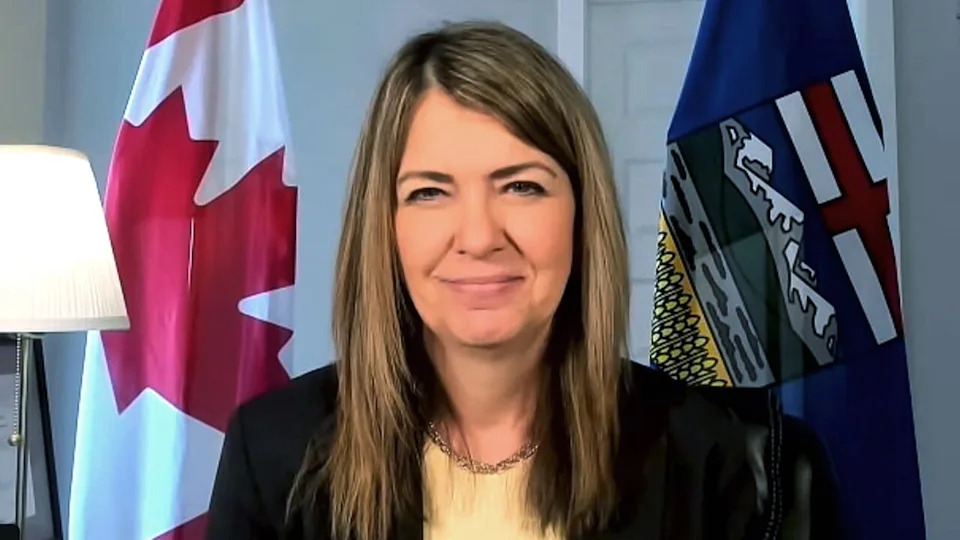
Alberta Premier Danielle Smith, (CBC News)
It is unclear how Thursday morning’s announcement will impact that proposal, but Eby said he recognizes B.C.’s “constitutional role” and that it does not have the authority to stop a pipeline.
Instead, he said, the agreement announced Thursday keeps the North Coast safe from oil tankers, while ensuring that B.C. will be fairly compensated should a pipeline through the province be approved.
Money for Port of Vancouver, Massey Tunnel
Part of the agreement includes $10 billion from Ottawa to upgrade the Roberts Bank Terminal in the Port of Vancouver, which Carney said will help increase exports from Canada.
The expansion, he said, will reduce the amount of time cargo spends waiting to be shipped overseas.
He also committed $3 billion for the George Massey Tunnel replacement, upgrading the four-lane route along Highway 99 to eight lanes, a move he said will enable more exports to travel through the Lower Mainland by road.
Money is also being committed to the Port of Prince Rupert and Port of Stewart, in northern B.C., to provide “vital trade corridors for Canadian critical minerals and other resources,” alongside $500 million in investment to expand the Red Chris copper mine in the province’s far northwest, and money for the North Coast Transmission Line being built to send more electricity to the northwest.
Other aspects of the agreement include reaffirming the desire to develop B.C.’s liquefied natural gas industry for export overseas, the development of wind turbine manufacturing in B.C., and strengthening protection for orca populations along the B.C. coast.