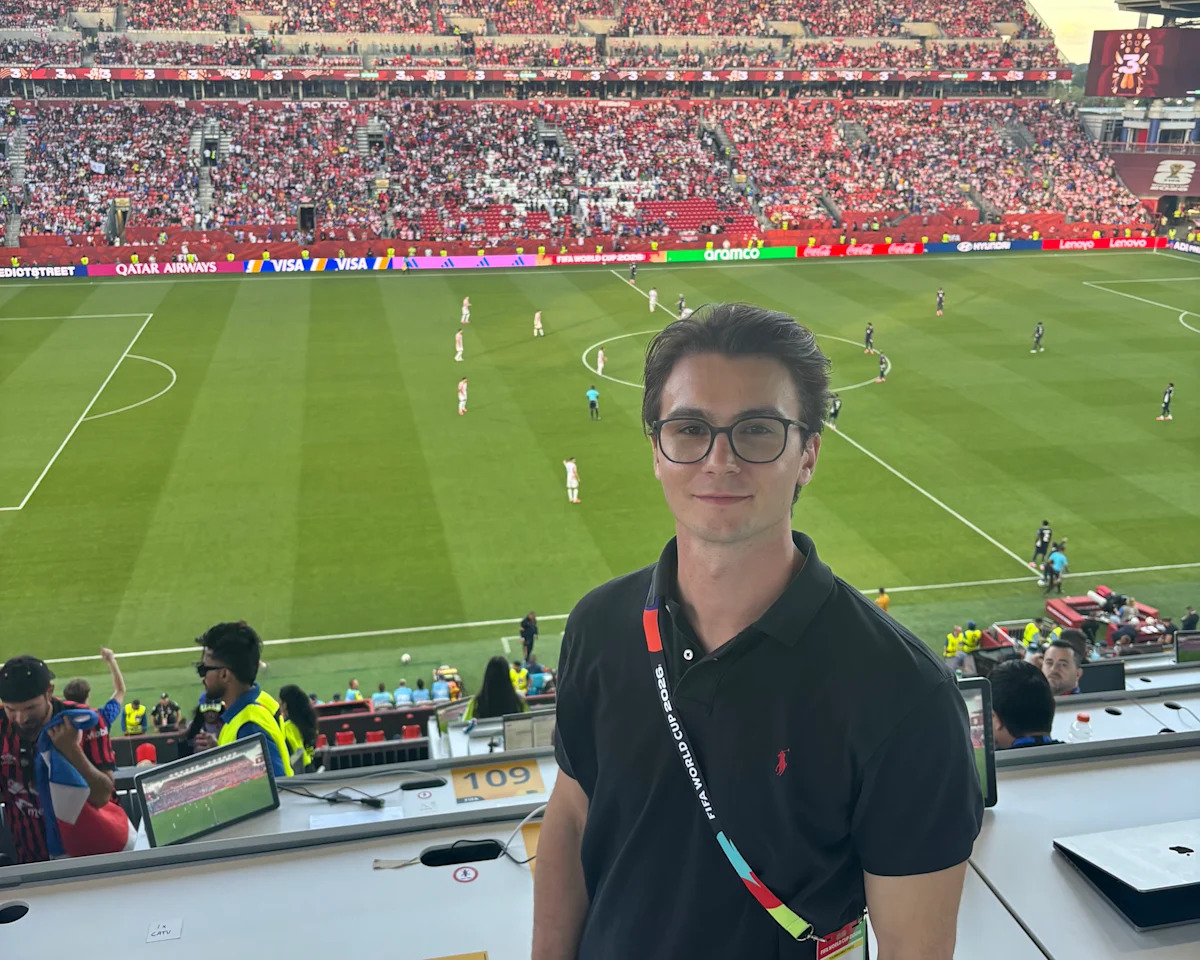
Ahead of the tournament, the fact that Toronto would be hosting a World Cup didn’t seem fathomable. As a kid who grew up in the city, I thought the biggest storyline that would come from the event would be the traffic issues.
After six matches across three weeks, I can’t begin to describe how happy I am that I was proven so wrong, as I saw my city reach its peak form. Not only did we have all-time great players like Luka Modrić and Cristiano Ronaldo descend on Toronto, but we gave fans from all around the world the space to support their national teams in grandiose ways. That also includes the diverse diasporas that call Canada and notably the Greater Toronto Area home, as our city’s melting pot-identity reached a new meaning.
Fan marches became spectacles, thanks to our waterfront downtown location. It allowed thousands of fans — a literal sea of people — to make prideful journeys to Toronto Stadium, with their flags waving freely and national chants ringing through the air. It felt like the city embraced a different identity with each match. One day, it felt as though you were walking the streets of Munich, the next, Panama City. It’s where I saw the joy that the World Cup brings, while consuming what’s likely a dangerous amount of second-hand smoke from canisters, whether it was green from the Iraqis or red from the Croats.
Heading into the tournament, there were also concerns that Toronto Stadium wasn’t adequate. With additional stands installed, it reached a capacity of 43,036 — which is still the fewest of all the host cities. But in retrospect, it provided an intimate environment, mixed with a unique view of Lake Ontario and Toronto’s skyline in the distance.
Inside, the stadium’s layout featured distinct, vibrant sections carved out for opposing supporters. Architecturally, coaches compared it to an old-school English ground, defined by a tight rectangular shape where the stands towered directly over the touchline. As a reporter who would sometimes have his head in his copy, it was a blessing to know that the crowd’s collective gasps could instantly alert me if something required my attention.
The six World Cup matches in Toronto will forever be a career highlight, and it’s funny thinking back to how different life felt three weeks ago. It started hitting me that the World Cup was in fact real in Toronto, as I sat on the media bus that took me to the stadium for the first match, with Canada taking on Bosnia and Herzegovina. I was among dozens of reporters, hearing the excitement of this new chapter through a handful of different dialects. To help ground me, I decided to load up the soundtrack from my favourite video game as a kid — EA Sports’ FIFA ’06 — to teleport me to a time where soccer meant everything to me.
The Canada match felt like a new era, charged with the excitement of knowing it’ll influence an even better one to come. Canada’s home soil debut was the perfect moment to inspire the next generation, knowing our journey into soccer relevancy was just truly beginning. The weight of that moment was met with a stunning finish, as Cyle Larin’s late equalizer gave Canada its first-ever World Cup point. The atmosphere leading up to it was remarkable, with tension vibrating through the stadium before finally erupting in that historic moment.
The next match was Panama versus Ghana, with the evening fixture taking place in the rain and 17°C weather — marking the only time that the playing conditions weren’t ideal in Toronto. With the referees on alert for lightning, the match took on a moody atmosphere that set up an epic clash, as a reported 25,000 Panamanians descended on Canada for the World Cup.
In true Toronto fashion, it came down to the wire and produced my favourite goal of the tournament. With Caleb Yirenki making his way down the wing in the 94th minute, Panama’s José Córdoba tried going for the heroic sliding tackle. As he missed, the rain rose around Cordoba in a way that felt straight out of an anime, leaving Yirenki with a clear path to goal.
I spent part of that match doing a follow-up interview with a Panamanian family in the stands, all while being engulfed by the “Olé, olé, olé, olé, Panama, Panama” chants. After Ghana’s late victory, it was the Ghanaian supporters who stole the spotlight, transforming downtown Toronto into a celebration I could only wish I had time to join. That wasn’t possible considering I had deadlines to meet at Toronto Stadium. But I knew I needed to step further into the fan action. Germany’s fan march ahead of their game versus Côte d’Ivoire provided just that; and looking back, it’s still my favourite one to take over Toronto’s streets.
Beers were flowing and the march featured the most prominent and united chants I can remember, as “Super Deutschland Olé, Super Deutschland Olé, Super Deutschland Olé,” eventually found a permanent spot in my brain.
In speaking with German fans, they noted that many were skipping matches in the U.S. for political reasons. Now in Toronto, they were amazed by how intimate the city’s World Cup setup really was, especially in comparison to U.S. host cities. Instead of having to take Ubers down to arenas that were kilometres outside of the downtown core — which is the case in places like New Jersey and Houston — Toronto allowed fans to simply walk down to their waterfront stadium.
To make matters even more fitting, I fell in love with how Princes’ Gate was the most popular entry point to Exhibition Place, which is the home of Toronto Stadium. The triumphal arch with a French design perfectly fits the grand atmosphere that the World Cup deserves, as fans walked under it to embark on a roughly half a kilometre stretch to where they’d witness greatness.
With a bit of a routine under my belt, the next two matches allowed me to truly feel the unifying power of sport in combination with one’s own identity. As a Canadian of Croatian descent, I got to live out the family-held dream: watching Hrvatska play in the World Cup. This time, it became hard to settle into the objective perspective required of journalists, because I could still hear my dad yelling at the TV in my childhood home.
I wrote about that experience as both a reporter and a fan, watching the Croatian in me come alive during a gritty 1-0 win. Following the match, Zlatko Dalić credited the crowd, which had become somewhat of a tradition among head coaches in Toronto.
Following the Croatia match, that sense of national pride and unity was taken to another level when it was Iraq’s turn to play. Its dispersed diaspora came together in Toronto, one that was far more diverse than what Iraq has currently become after decades of conflict.
The 2026 tournament had marked 40 years since the nation had been in the World Cup, and the Iraqis showed up in what I felt was the largest and loudest march to take over Toronto, as the iconic zaghrouta — the high-pitched, wavering Arabic ululation — rang out with all the joy and celebration it’s supposed to exemplify.
The five group-stage matches had already exceeded anything I could have imagined. Then came the news that Toronto would host a Round of 32 showdown between Croatia and Portugal. The Portuguese showed up in droves, but this march also featured countless Ronaldo supporters, as one of the world’s most recognizable faces descended on the Canadian city. A frenzy ensued, with large crowds forming outside of his downtown hotel, as he’d eventually come out on the balcony to hype up his unwavering fan base.
It came after a tough and controversial win in Toronto. The match was a classic, but video assistance replay made its mark. It looked like Croatia was on its way to tie up the score, but their goal in the 103rd minute was overturned. Microchip technology in the ball alerted the referees to an offside, after a supposed touch of the head (or even a stand of hair) by Igor Matanović. It’s an outcome that will be debated in barbershops for generations to come.
It was ultimately a gut punch to the Croatia fans and players, especially as it likely marks the end of Modrić’s World Cup career. Following the match, Ronaldo spoke about how he didn’t want that to end.
For the Torontonian in me, the sentiments were similar but at a grander scale; there was no way I wanted this experience to come to a close. Funny enough, I had grown accustomed to watching FIFA organized soccer, to seeing the best talent take the pitch right in front of me.
But I also didn’t want this chapter to end, one where we got to see that Toronto is, in fact, world class. That we’re capable of showing the world that it belongs in Toronto — that there’s a place here to feel the beauty of the game and watch it grow to new heights.