See more Toronto Sun on Google — save as a Preferred Source
Given that polls show most Canadians now favour new pipelines, they deserve to know what it will cost them.
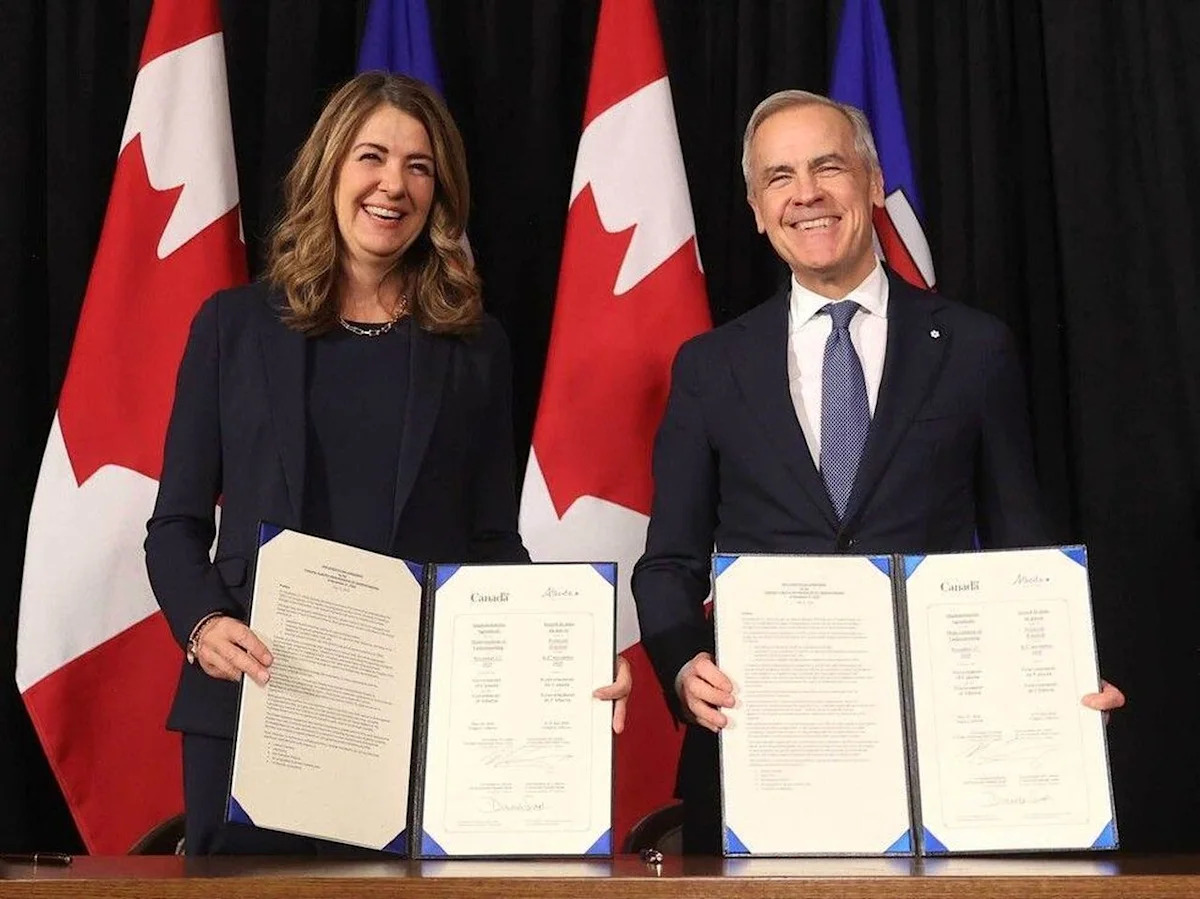
In November, Prime Minister Mark Carney and Alberta Premier Danielle Smith reached a memorandum of understanding for:
“Construction of one or more private sector constructed and financed pipelines, with Indigenous Peoples co-ownership … with at least one million barrels a day of low-emission Alberta bitumen, with a route that increases export access to Asian markets as a priority.”
For now, that’s one pipeline from the oilsands to the southern B.C. coast costing between $35.2 billion and $43.7 billion, 90% funded by federal and Alberta taxpayers, with 10% to 20% coming, if its conditions are met, from the Pembina Pipeline Corporation.
That’s a far cry, at this point, from a “private sector constructed and financed pipeline.”
Another condition in the MOU is “construction and financing of the world’s largest carbon capture, utilization, and storage (CCUS) project … making Alberta oil among the lowest carbon intensity produced barrels … in the world.”
The cost of the so-called Pathways project has been estimated at $20 billion to $30 billion, 75% financed by federal and Alberta taxpayers, the rest coming from the Oil Sands Alliance consisting of five oil companies — Canadian Natural, Cenovus Energy, Conoco Phillips Canada, Imperial Oil and Suncor Energy.
The federal and Alberta governments and the Oil Sands Alliance announced a non-binding agreement to build this project this week, expected to reduce oilsands emissions by 16 million tonnes annually by 2045. The oilsands currently produce 90 million tonnes annually.
Martha Hall Findlay, director of the University of Calgary’s School of Public Policy and a leading proponent of carbon capture when she was chief sustainability and climate officer at Suncor Energy, now says it’s a bad, expensive idea with a less than 0.02% reduction in global emissions.
A report by Kenneth Greene of the Fraser Institute last week concluded carbon capture is inefficient, doesn’t hit promised reduction targets, is subject to cost overruns and requires massive new infrastructure, including hundreds of kilometres of new pipelines that will face regulatory and legal challenges.
If public subsidy is now the only way to build a new pipeline in Canada (see TMX) then taxpayers have a right to know the bill.