Critics say the Manitoba government isn’t adequately addressing the growing needs of young people as drug-related paramedic responses for youth have nearly doubled in Winnipeg in a decade.
It comes as the province began accepting patients at its 72-hour detox centre in December and looks to open Manitoba’s first supervised consumption site on Aug. 11.
Both those sites are for people 18 and older. Housing, Addictions and Homelessness Minister Bernadette Smith said in March that anyone using the consumption site must be 16 and older but clarified to CBC News last week that guests must be adults.
Calls involving substances and people aged 12 to 17 went from about 24 patients a month to more than 45 between 2016 and 2025, data from the Winnipeg Fire Paramedic Service obtained through freedom of information laws shows.
Calls reporting alcohol use — which made up most cases — nearly doubled during that period, increasing from 219 incidents in 2016 to 404 in 2025. Patients reporting opioid use saw the biggest per cent increase.
Paramedics responded to an opioid-related call involving a youth five times in 2016. They responded to 53 in 2025, an average of about one a week.
The data captures the main complaint during a response, which is often based on the patient’s description, meaning the number of calls involving substances is likely higher, a fire paramedic service spokesperson said.
Alexa Légère is a support worker with CommUnity204, an outreach organization. Lately, Légère or a co-worker have been administering naloxone to someone under 18 on Main Street in downtown Winnipeg at least once a day, she says.
“Two weeks ago, we had three girls under the age of 18 experience a drug poisoning. That’s something I haven’t seen in the past,” said Légère, who works out of the Access Centre on Main.
She said it feels as though teens are turning to drugs more and more, younger and younger, “and substances that could kill you with one use.”
Légère, who herself endured youth addictions and homelessness, had just helped reverse an opioid overdose when she met with CBC News last week.
“We’re failing the youth, but like … how do we fix that? The damage has already been done.”
Manitoba’s advocate for children and youth says she isn’t shocked by the numbers.
Between a lack of mental health services and long-term substance use support, Sherry Gott says existing addictions services for youth and prevention work are falling short.
“It’s really concerning,” she said last week.
“We’re failing our youth in Manitoba because of the lack of response by government.”
Her office’s last annual report in October found more than half of the serious injuries in children and youth reported to them in 2024-25 involved alcohol and drugs.

Sherry Gott, Manitoba’s advocate for children and youth, is calling on the province to develop a mental health and substance use strategy for youth. (CBC)
Between 2016 and 2025, 17 out of Manitoba’s 22 suspected drug-related deaths among 12 to 17-year-olds happened in the last four years, the chief medical examiner’s office said.
While adult and youth addictions services have to be managed differently, Gott — pointing to the 72-hour detox centre and supervised consumption site — once again called on the province to develop a mental health and substance use strategy for youth to address prevention and treatment.
“We need something” tied to funding, she said.
“However that looks, either … land-based or institutional, I think we need to respond to youth today.”
Awareness, prevention
Joseph Fourre feels the Manitoba government could have helped prevent more addictions and fatal drug poisonings in youth if it had focused on awareness and prevention work surrounding drug use instead of a supervised consumption site.
He launched his “No thanks, I’m good” campaign and the Singing Red Bear Foundation after his 31-year-old son Harlan died of fentanyl poisoning in 2023.
Since then, he has presented Harlan’s story to about 6,000 school students to educate them on navigating peer pressure and warn them about recreational substance use they believe might be safe, Fourre said.
“One bad choice could take your life,” he said. “We need to be telling them today that drugs kill.”
“Everything can’t fall on harm reduction, and we can’t wait for these kids to get addicted before they start getting services in the addictions field, which is really not there for them because there is no beds. There’s no spaces.”
Fourre says children and youth need more recreational opportunities and resources to help them work through the challenges leading them to substance use “because a lot of them…they have nothing else.”

Joseph Fourre, whose son Harlan died of fentanyl poisoning, says the province has not focused enough on substance use awareness and prevention. (Travis Golby/CBC)
Addictions Minister Smith defended the NDP government’s approach, calling it “balanced,” saying the goal of the supervised consumption site is to move Manitobans into recovery.
She did not say whether the province was developing a mental health and substance use strategy for youth.
Smith said the province continues to listen and implement changes based on feedback, pointing to the recent opening of Manitoba’s seventh Huddle location in Portage la Prairie. The locations are mental health and wellness hubs where families and youth can get help accessing primary health care, along with other supports.
An eighth location will open soon in northern Manitoba, she said.

Housing, Addictions and Homelessness Minister Bernadette Smith did not say whether Manitoba is developing a mental health and substance use strategy for youth. (Tyson Koschik/CBC)
Nearly 10,500 youth accessed Huddle locations in 2024-25, including more than 4,000 who attended for addictions and mental health, Smith’s office said.
Huddle staff, in addition to 13 addictions counsellors across Manitoba schools, are doing awareness and prevention work, the minister said.
Smith says the province also supports other youth-serving organizations, including Compass, a bed-based addictions treatment facility through Shared Health, along with Resource Assistance for Youth and Marymound‘s youth addiction stabilization unit in Winnipeg.
‘It’s like a family for some kids’
CommUnity204 offers kitchen and recreational space to more than 300 underserved youth on Smith Street in downtown Winnipeg.
Founder Daniel Hidalgo says over the last decade, its mentorship program has helped guide at-risk children and youth, making them more resilient to negative influences and unhealthy coping methods, including substance use.
Hidalgo, a former child in care himself, said he believes the increase in paramedic responses could be connected to a lack of consistent and ongoing resources for youth, who are struggling with mental health and poverty, and are vulnerable to bad actors.
Légère says her daughter fell into a dangerous marijuana addiction by hanging out with older people in the William Whyte neighbourhood.

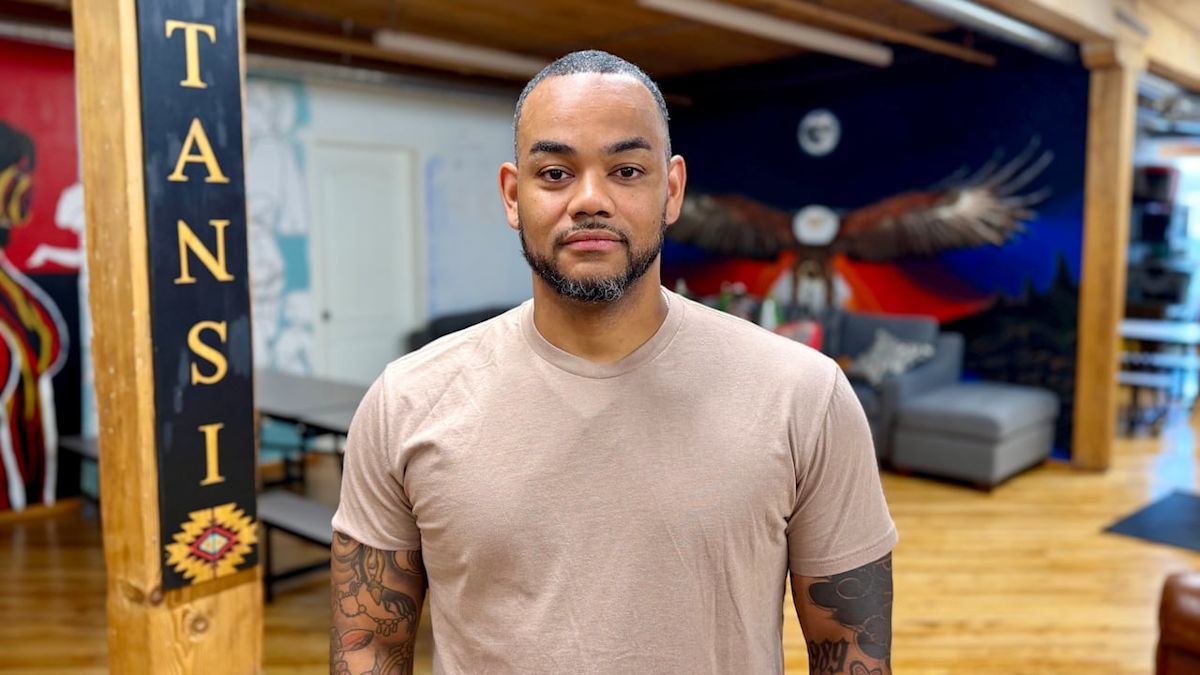
Daniel Hidalgo, the founder of CommUnity 204, says the organization’s mentorship program helps keep at-risk kids engaged and out of trouble. (Travis Golby/CBC)
Légère moved her family away after one of her daughter’s friends fatally overdosed, she said.
The change helped offer stability, but Légère said she has struggled to get her daughter treatment because it’s voluntary.
CommUnity204’s mentors have helped some of Légère’s other children excel in life and school, she said.
“It’s like a family for some kids.”