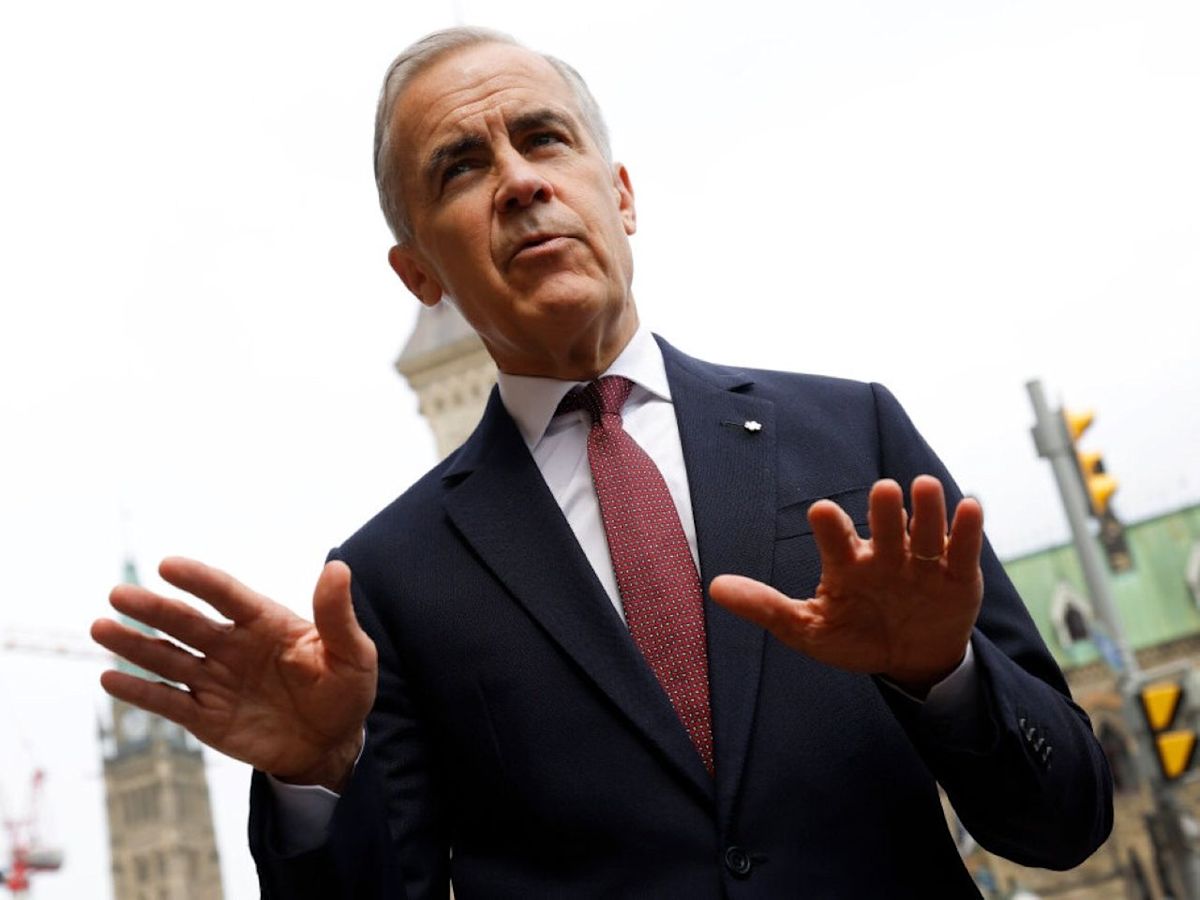
When the Carney Liberals lecture Canadians on history it is with a smugness and self-righteousness that is as loathsome as it is tiresome.
Saturday’s Emancipation Day — created by the Liberals in 2021 — proved such an occasion for pontificating and sermonizing by our prime minister and senior ministers.
In a statement over the weekend, Prime Minister Mark Carney was at pains to point out that “slavery existed here” and that while the 1834 Slavery Abolition Act marked a turning point, “freedom was not granted in a single day.”
He went on: “Today, we honour those whose courage helped make our country freer, fairer, and stronger.”
But the vital component missing from the prime minister’s statement was context.
The 1834 act that abolished slavery across the British Empire wasn’t the first turning point in Canada aimed at giving Black people their freedom.
More than 40 years earlier, John Graves Simcoe, the lieutenant-governor of Upper Canada, passed the 1793 Act to Prevent the further Introduction of Slaves and to limit the Term of Contracts for Servitude, the first anti-slavery legislation in the British Empire. While the law did not ban slavery, it prohibited the importation of enslaved people into Upper Canada.
It added that no person is “to be subjected to the condition of a Slave, or to a bounden involuntary service for life, into any part of the Province.”
The act also paved the way for the “Underground Railroad.” A University of Toronto article on the subject estimates that 30,000 to 40,000 African Americans fled to Canada and freedom between 1793 and 1865.
This is in contrast to the estimated 4,000 to 8,000 African and Indigenous people who were enslaved during 200 years of Canadian history.
So if the prime minister wants to honour those who made this country freer, fairer and stronger, he should start by celebrating Simcoe’s abolitionist legacy.
Meanwhile, in a Saturday tweet, Foreign Minister Anita Anand said that on Emancipation Day, “I join Canadians in reflecting on the dark legacy of slavery.”
That same day, Identity and Culture and Minister Marc Miller said in a statement, “On this Emancipation Day, I invite Canadians to deepen their understanding of the history of slavery in Canada and the long-term effects of anti-Black racism.”
How sweet and humble of Anand and Miller to invite us to deepen our understanding and to pause in reflection. The implication here, of course, is that these two Liberal ministers have already done that emotional legwork and it’s only the proletariat who need educating.
Unfortunately, Carney and his ministers are merely reflections of these times when our penance must be on full display, our sackcloth and ashes be in full view and, like good Pharisees, we must stand proudly on street corners in order to show our sincerity.
There’s nothing wrong with condemning slavery; that it is evil goes without saying. But there is everything wrong in insinuating that the “peculiar institution” so prevalent in America — it is estimated that there were more than 10 million slaves in more than 200 years of American history — was in any way comparable to Canada.
But that is the effect of the Liberal announcements when they leave out that slavery was not widespread in Canada, that we led the way in abolishing the practice and that we were a refuge for tens of thousands of slaves.
If we are to “reflect on the dark legacy of slavery,” then we should also consider the fierce abolitionists who fought to end it.
In his Emancipation Day statement, Opposition Leader Pierre Poilievre was happy to denounce slavery — “that immoral practice across Britain’s vast and mighty empire.”
But he added, “We as Canadians have a special place in this story because it was 40 years prior, in the young colony of Upper Canada, that a reformist lieutenant-governor by the name of John Graves Simcoe passed the first law limiting slavery in any of Britain’s territories.
“In Simcoe’s time, British North America was already home to communities of Black Loyalists, many of whom were once enslaved. In the coming decades, these colonies would play an important role as the end point of the Underground Railroad: providing freedom and refuge for tens of thousands who were unjustly held in bondage.”
More than 200 years after Simcoe led the way in ending slavery, the Liberals are intent on using selective history to take Canadians on a guilt trip.
However, it wasn’t guilt but gratitude that was expressed by those slaves who made their way to freedom in Upper Canada.
“I left Mississippi about 14 years ago,” said Mrs. Christopher Hamilton, a freed slave living in what is now London, Ont., in an interview that was published in 1856. “I was raised a house servant, and was well used, but I saw and heard a great deal of the cruelty of slavery. I saw more than I wanted to — I never want to see so much again…. I had rather live in Canada, one potato a day, than to live in the South with all the wealth they have got.”
On Emancipation Day, Canadians can rightly reflect on the fact that this country laid the groundwork for abolishing the evils of the slave trade.
National Post