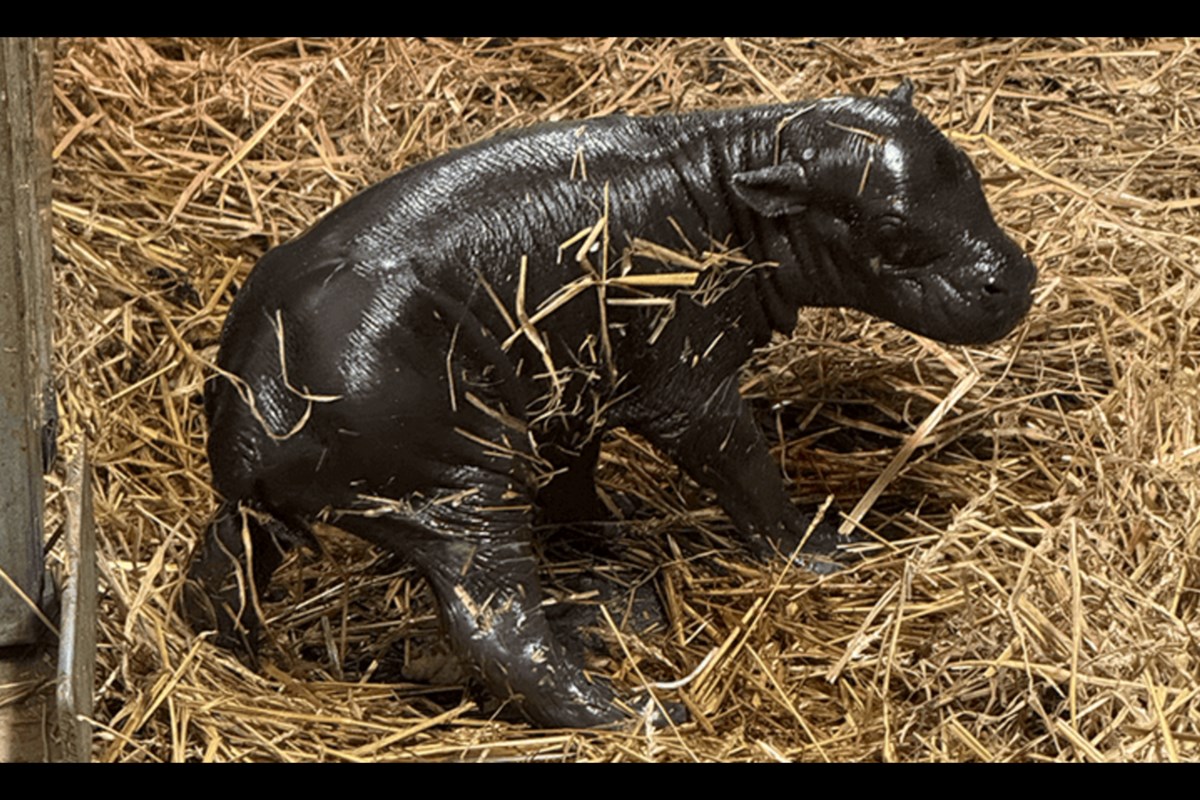
The female calf born was born on Sunday to her mother, a 13-year-old pygmy hippo named Kindia
The Toronto Zoo is celebrating the birth of a female endangered pygmy hippopotamus calf, marking another milestone for the zoo’s conservation breeding program.
The calf was born on Sunday afternoon to 13-year-old Kindia after about an hour of active labour, the zoo said in a press release on Wednesday.
Zoo staff said the newborn began attempting to stand within 15 minutes after her birth and was nursing in about four hours.
Both Kindia and her calf are reportedly doing well and are bonding behind the scenes in the zoo’s “Little Hippo Hollow” shelter, which is not currently visible to visitors.

Kindia and her newborn calf at the Toronto Zoo. Supplied: Toronto Zoo
The calf is Kindia’s third offspring. Zoo officials said she successfully birthed a female calf, named Penelope, in 2018, though staff cautioned that survival can be challenging for endangered species like the pygmy hippo.
Staff will continue monitoring the mother and baby around the clock during the calf’s first days.
Kindia was introduced to 31-year-old male Harvey for eight days in January, resulting in the pregnancy.
“Welcoming a pygmy hippo calf is far more than a celebration of new life,” Toronto Zoo CEO Dolf DeJong said. “This birth represents the critical role modern accredited zoos play in conservation, scientific collaboration, and maintaining healthy populations that contribute to the long-term survival of the species.”

Toronto Zoo staff with the pygmy hippo calf. Supplied: Toronto Zoo
Pygmy hippopotamuses are listed as endangered by the International Union for Conservation of Nature, with an estimated 2,000 to 3,000 of the animals remaining in the wild. Native to the forests and swamps of West Africa, the species faces threats from habitat loss, hunting and human development.
The Toronto Zoo actively participates in the Association of Zoos and Aquariums’ Pygmy Hippo Species Survival Plan, which coordinates breeding among accredited zoos to help maintain a genetically healthy population.
The zoo said the calf will remain off exhibit while she bonds with her mother and continues to be monitored by staff. Updates on when visitors may be able to see the calf will be shared through the zoo’s social media channels.