
 Cape Smokey, Ingonish, Nova Scotia | Image: Facebook
On August 6, Cape Smokey’s CEO, Martin Kejval, posted a reel to social media confirming that a major expansion is officially underway at the resort. The 4.5-year development plan kicks off in the 2026–27 season with new uphill routes for split boarding and ski touring. It is a sharp, modern shift for an old soul mountain.
Few ski resorts offer a panoramic view of the North Atlantic quite like Cape Smokey. At this Atlantic Canadian resort, skiers and riders descend 1,000 vertical feet (305 meters) directly toward the sea. The climate and landscape here is so wild that several international investor groups looked at it and walked away. But Kejval, a former competitive ski racer from Czechia, saw something entirely unique.
Cape Smokey is on the Indy Pass and offers incredible black and double-black diamond terrain. The resort is positioning itself to offer an aggressive, big-mountain experience unlike anything east of the Quebec/New Brunswick border.
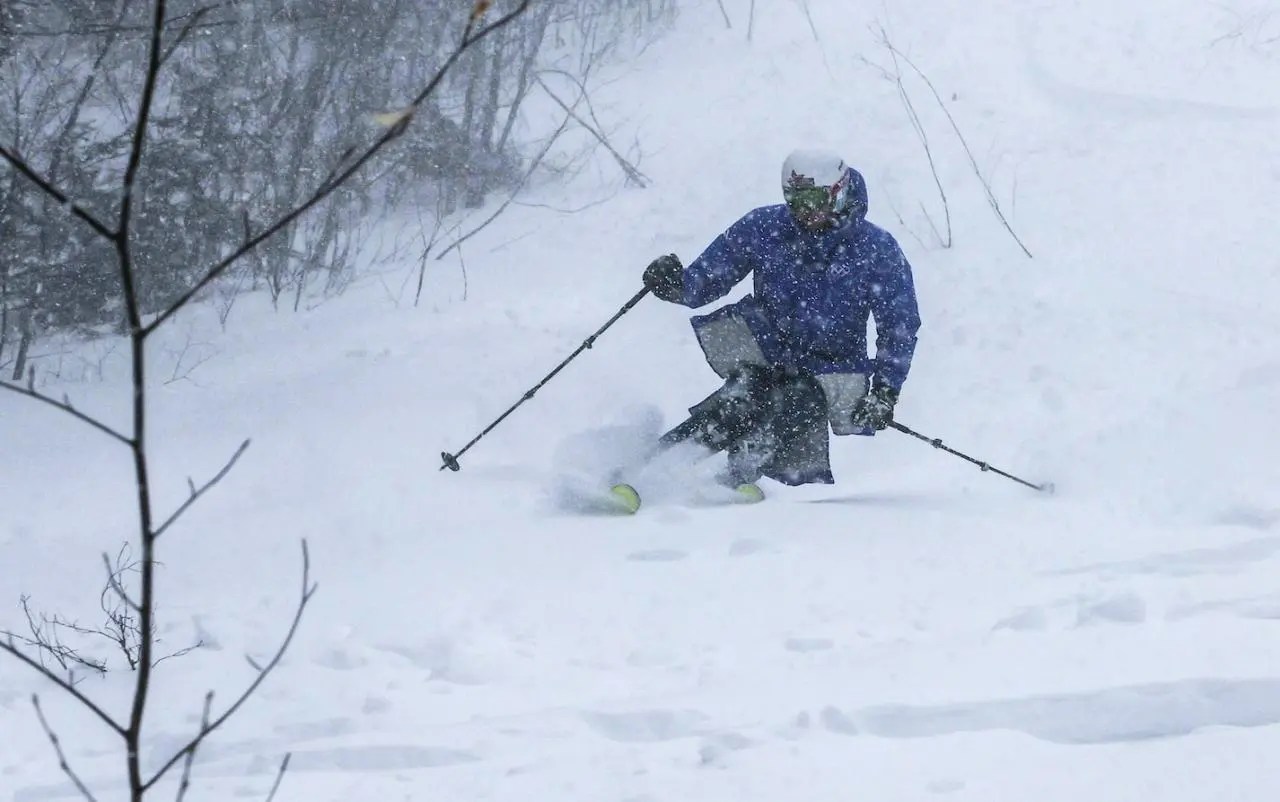 Skiing the storm at Cape Smokey. | Image: Indy Pass
As Kejval described it to the Canadian Ski Hall of Fame, “standing on the top of Smokey is like being in an Indiana Jones movie hunting for some sort of treasure.” It is an independent playground that gives the same cliff-edge ocean views you usually have to fly to British Columbia, Alaska, or Norway to find. The project will scale the resort from its current 150-acre footprint to a total of 642 skiable acres, eventually introducing three new lifts and opening a full 1,312 feet (400 meters) of vertical drop.
The ocean air here delivers a bone-chilling freeze. It doesn’t stop Nova Scotia surfers from braving the icy waters at Lawrencetown in February, and it didn’t stop the province’s own snowboarding legend Trevor “Gucci Ghost” Andrew from making his mark on the world stage. If you can hold an edge here while the Atlantic wind is howling, you can ride anywhere on earth.
The Cape Breton Community and Year-Round Funding
Cape Smokey is named after the fine, smoke-like early morning mists that rise off the Atlantic. Located in Ingonish, along the northern loop of the legendary Cabot Trail, the area is known for dramatic vistas and a tight-knit community that kept the mountain alive through years of precarity before Cape Smokey Holding Ltd. stepped in.
 Summer at Cape Smokey, Cape Breton, Nova Scotia | Image: Facebook
Installing Atlantic Canada’s first high-speed gondola captured vital summer tourism. That engine now directly funds the winter expansion. This model allows the resort to scale up its terrain while building out the self-sustaining village and oceanfront accommodations.
The Backcountry and Après Scene
Beyond the downhill runs, winter in Ingonish means snowshoeing the boreal forests or hitting the highlands’ snowmobile trail networks. The après scene centers around The Cape Restaurant, where the emphasis is on local eats: bowls of seafood chowder, slow-cooked brisket, and blueberry crumble.
This is Cape Breton, where traditional music is the heartbeat of the community and a nightly fixture of local life. The lodge hosts the Smokey Sessions. Local fiddle players and maritime acoustic acts turn the room into a loud cèilidh, a traditional kitchen party atmosphere just a short walk from the new luxury villas at Cormorant Rock.
“Standing on the top of Smokey is like being in an Indiana Jones movie hunting for some sort of treasure.”
— Martin Kejval, Cape Smokey CEO
Maritime Travel Planning
The closest regional airport is Sydney, which features direct connecting flights from Montreal, Toronto, and Calgary. For American travelers and those looking for more flight options, nonstop flights from Boston (BOS) land in Halifax in just under 2 hours, while a direct flight from Montreal (YUL) to Halifax takes 1.5 hours.
From Halifax, the drive up to the Cape Breton highlands spans roughly 5.5 hours over 236 miles (380 kilometers) of winding, snow-packed maritime highways. The route demands proper winter tires and a patient eye on the forecast. But navigating the roads also reveals a mutual trust among drivers in tough winter conditions. Welcome to Nova Scotia.
A visit to Cape Smokey is a rugged journey into a classic maritime winter. It is a rare opportunity to experience unfiltered Canadian skiing and riding at its limits. The excitement over what is happening here is palpable. I cannot wait to book my flight.