The director of a pet rescue shelter says it has taken in nearly 200 animals this year because owners are struggling to afford costs such as veterinarian bills and dog or cat food.
“There is more this year than any other year. Last year was a lot. This year is more than a lot, you know, and it’s just so unfortunate,” said Carla Martinelli-Irvine, founder and executive director of the Winnipeg Pet Rescue Shelter.
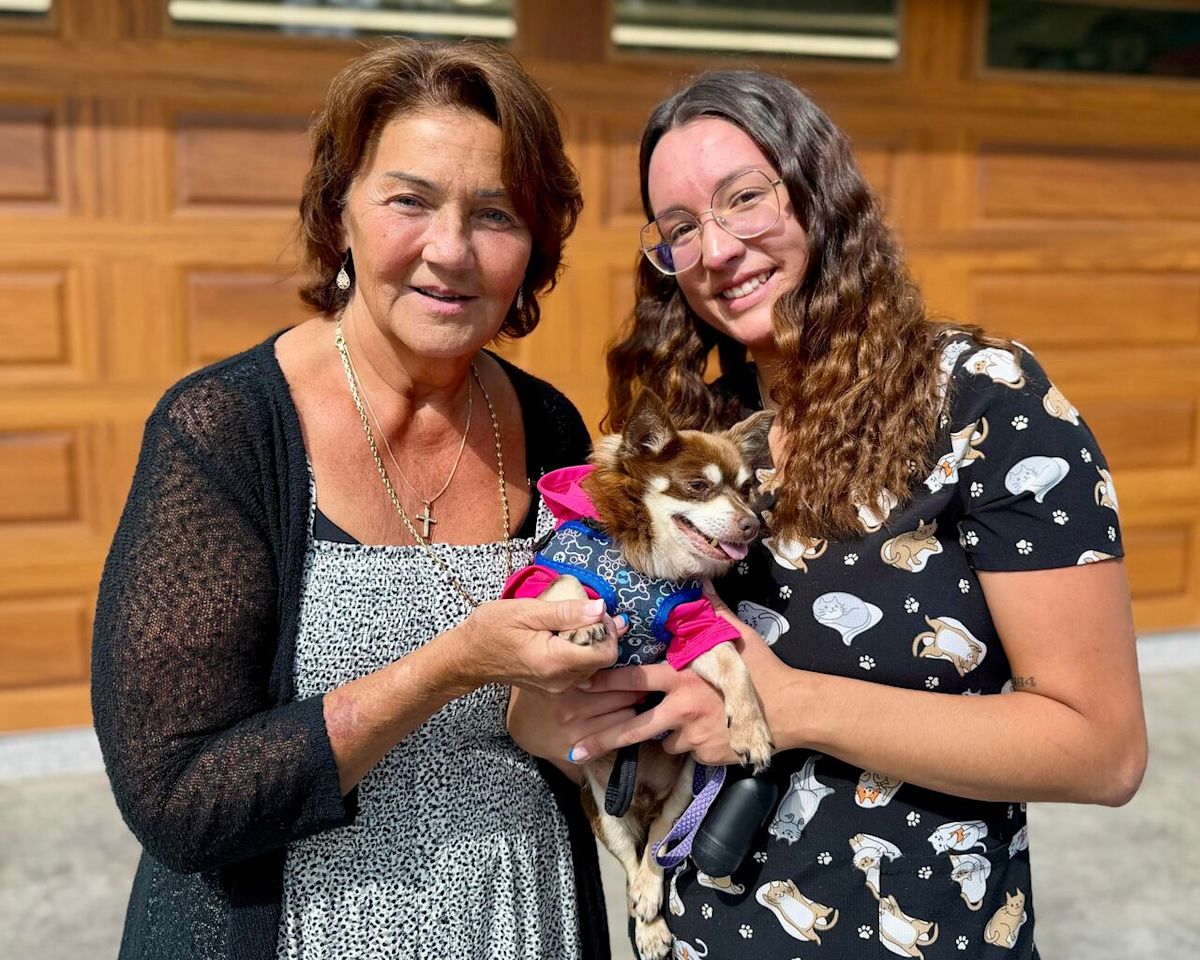
She says they took in a six-year-old dog, a Chihuahua cross named Hero, about a week ago after it was attacked by a larger dog.
By the time Hero was brought in, he had developed an infection, and the owner wasn’t able to pay the cost to care for the wound, which Martinelli-Irvine says was upwards of $7,000.
“I feel really blessed that the shelter was able to get him and help him because that’s what we’re here for. We’re here to help these animals, and we are here to help the people that can’t afford their pets anymore,” she said.
“Hero’s got such a wonderful disposition. There’s people lined up to adopt him already.”
Martinelli-Irvine says she’s worked in animal welfare for 39 years.
She says the usual reasons for owners surrendering their pets to shelters have changed.
“It used to be a matter of unwanted pets. ‘I had an accidental litter. It’s killing me to take care of nine dogs’ — it’s not like that anymore,” Martinelli-Irvine said.
“There is definitely, definitely an increase over the years, with this year being the worst for relinquishments due to cost.”
She’s not the only one noticing more pets being surrendered due to financial reasons. The Winnipeg Humane Society said it had 500 pets come into its care in July.

Carly Peters says of the 150 pets surrendered to the Winnipeg Humane Society in July, the vast majority were handed over because their owners were unable to afford the costs of veterinary care. (Travis Golby/CBC)
While most are strays, about 150 of the pets were surrendered by owners. The vast majority of those animals were given up because the owner could not afford veterinary care, said Carly Peters, the humane society’s director of communications.
“Pets are part of our family, and having to make that choice, you know, to surrender them into care because you can’t afford the vet care is heartbreaking,” she said.
“If you were looking to surrender your pet right now, it’s very hard, especially if there isn’t a medical issue — there is not a lot of space.”
Both Martinelli-Irvine and Peters say the general rise in cost of living is a contributing factor in more pets being surrendered to shelters, as people are having to make difficult financial decisions.
CBC News reached out to animal welfare organizations across the country last year. More than half of them reported either seeing pet surrenders go up or hearing more people cite the cost of living as the reason for giving up their pet.
Jonas Watson is a companion animal veterinarian and owner of Grant Park Animal Hospital. He says veterinary costs are not uniquely high.
“It’s like a reflection of the high cost of everything in our society right now, whether it’s grapes or new cars or your dog’s ear medicine,” he said.
Watson estimates his practice gives hundreds of thousands of dollars in subsidized care each year and that veterinary expenses are constantly rising at the same time many veterinary professionals are on the brink of burnout.
“Certainly, this is a burden that is a social burden that doesn’t just fall on the veterinary profession, and really it’s something that politicians maybe need to step up and do a little bit more about,” he said.
“This is not an easy job to do, and in order to retain good people, you have to pay them well.”
Martinelli-Irvine says preventative health measures such as vaccinations and checkups could help reduce the number of pets surrendered to shelters, and the likelihood of unanticipated medical pet expenses for owners.
She acknowledged that for some, even yearly checkups might not be as affordable as they were years ago.
“A lot of good people, due to cost, are having to relinquish their pets,” Martinelli-Irvine said.
“I think it’s just incredibly sad, there’s no other word for it. It’s so sad for the animals, and it’s so sad for the people.”