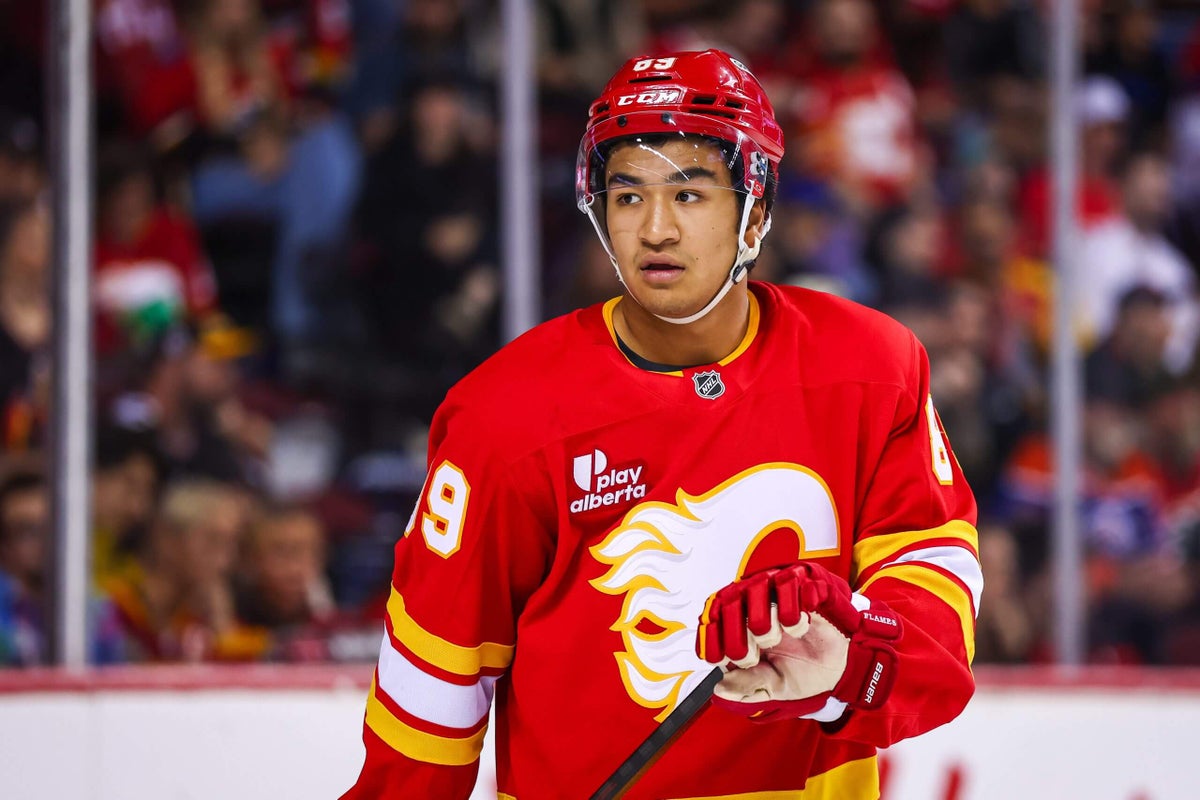
Calgary has one of the best collections of young defensemen in the NHL in Carson Carels, Zayne Parekh and Šimon Nemec. The Flames’ young forward group is strong and has future middle-six players, although not quite at the same elite level.
2025 ranking: 17
2026 NHL Draft grade: A-
Player Ranking1. Carson Carels, D
June 23, 2008 | 6-foot-2 | 198 pounds | Shoots left
Drafted: No. 6 in 2026
Tier: Bubble top and middle of the lineup player
Skating: NHL average
Puck skills: NHL average
Hockey sense: NHL average
Compete: High-end
Shot: Above NHL average
Analysis: Carels is a strong two-way defenseman. He’s a powerful, fluid skater who can get up the ice easily. He closes on checks well, using his feet and body to break up a lot of plays. He has an edge in his game and plays with a lot of physicality. Carels has good hands and vision and can activate into plays. He doesn’t project as a PP1 type, but he should generate offense. He could be a great top-four defenseman who will play significant minutes.
2. Šimon Nemec, D
Feb. 15, 2004 | 6-foot-1 | 190 pounds | Shoots right
Drafted: No. 2 in 2022
Tier: Middle of the lineup player
Skating: NHL average
Puck skills: NHL average
Hockey sense: Above NHL average
Compete: Above NHL average
Shot: Above NHL average
Analysis: Nemec is an intelligent puck mover with poise and vision with the puck. He can run a power play and makes a great outlet pass. His pure athleticism and skill don’t stand out, though. He can make stops because of how smart he is and his solid compete level while being a decent enough skater. The toolkit, though, leaves something to be desired, and without off-the-charts offense, which he’s yet to show as a pro, he projects as more of a second-pair defenseman.
3. Zayne Parekh, D
Feb. 15, 2006 | 6-foot-0 | 179 pounds | Shoots right
Drafted: No. 9 in 2024
Tier: Middle of the lineup player
Skating: NHL average
Puck skills: NHL average
Hockey sense: High-end
Compete: Below NHL average
Shot: High-end
Analysis: Parekh is an extremely talented offensive defenseman who can be a frustrating player away from the puck. He has a ton of skill and hockey sense. When the puck is on his stick, he beats opponents one-on-one often. His brain operates differently from other players on the ice in how he sees the ice and can take an extra second with the puck to create a scoring chance. He skates well and can attack with his speed and skill. He has strong edge work and top speed and is very elusive off the blue line. He also has an excellent point shot and is a constant goal-scoring threat. He stands out with the puck; his NHL projection will depend a lot on his play without the puck. He’s not overly physical and can be bullied by larger players. He also tends to cheat for offense, which doesn’t help. His scoring is going to need to be elite to make up for his flaws, which it could be, but it’s not a guarantee.
4. Cole Reschny, C
April 6, 2007 | 5-foot-11 | 180 pounds | Shoots left
Drafted: No. 18 in 2025
Tier: Middle of the lineup player
Skating: NHL average
Puck skills: NHL average
Hockey sense: Above NHL average
Compete: Above NHL average
Analysis: Reschny was a top freshman in the NCHC and quite good at the World Juniors for Canada. He’s a highly skilled and intelligent player who can run a power play like a pro and makes a ton of creative stick handles and passes. He’s a quick skater with good edges who plays with pace and makes high-end plays on the move. He’s not the most dynamic skater for a guy his size, but he will be able to move at the NHL level. He’s on the smaller side, but Reschny can create at the net and kill penalties. He’s not a dynamo, but he is a very smart, all-around smaller forward who projects as a third-line center.
5. Jack Hextall, C
March 23, 2008 | 6-foot-1 | 188 pounds | Shoots right
Drafted: No. 30 in 2026
Tier: Middle of the lineup player
Skating: NHL average
Puck skills: NHL average
Hockey sense: NHL average
Compete: Above NHL average
Analysis: Hextall is a skilled center with excellent offensive sense. He’s a slick playmaker who executes difficult passes with consistency, can play both ways and doesn’t shy away from going into traffic. His skating is solid, albeit not a standout trait. He hasn’t been a prolific junior scorer, but he’s well-rounded enough that I can see him playing a lot of important minutes as he advances levels.
6. Theo Stockselius, C
July 24, 2007 | 6-foot-3 | 196 pounds | Shoots left
Drafted: No. 54 in 2025
Tier: Middle of the lineup player
Skating: NHL average
Puck skills: NHL average
Hockey sense: NHL average
Compete: NHL average
Analysis: Stockselius is a highly skilled big man who excels at creating offense around the net and in small areas. He has shown the talent to score and generate chances at the junior level. Last season, he started to play with more pace and was more direct than he was in his draft season. Stockselius’ pure effort level won’t win over coaches, but he works hard enough to go with a legit set of tools for the higher levels. He projects as a top-nine forward.
7. Chase Harrington, LW
Oct. 30, 2007 | 6-foot-1 | 194 pounds | Shoots left
Drafted: No. 36 in 2026
Tier: Middle of the lineup player
Skating: NHL average
Puck skills: NHL average
Hockey sense: NHL average
Compete: Above NHL average
Shot: Above NHL average
Analysis: Harrington is a talented winger with NHL-caliber feet and hands. He shows flashes of high-end skill, but it’s not consistent in his game. As a draft-minus-one, he looked more like a pure skill type, but this season Harrington embraced a physical and agitating part of his game that, when combined with decent playmaking skills, could make him a useful middle-six winger.
8. Samuel Honzek, LW
Nov. 12, 2004 | 6-foot-4 | 186 pounds | Shoots left
Drafted: No. 16 in 2023
Tier: Middle of the lineup player
Skating: NHL average
Puck skills: NHL average
Hockey sense: Below NHL average
Compete: Above NHL average
Analysis: Honzek started off the season all right in the NHL before a shoulder injury knocked him out. He’s big, skates quite well for his size and has some skill in his game. He’s certainly not overly creative or instinctive with the puck, and he creates offense in a basic, direct way. Honzek does work hard, uses his size and can play on both special teams. He projects as a middle-six winger.
9. Tobias Trejbal, G
Nov. 9, 2007 | 6-foot-4 | 190 pounds | Catches right
Drafted: No. 42 in 2026
Tier: Middle of the lineup player
Skating: NHL average
Hockey sense: NHL average
Analysis: Trejbal checks a lot of the boxes you want in an NHL goalie. He has size, quickness, technical skill and strong hockey sense. He’s efficient moving in the net and makes a lot of good reads, showing a smooth poise to his game. He can make difficult lateral saves, although that isn’t the strength of his game. He projects as a tandem goalie.
10. Matvei Gridin, RW
March 1, 2006 | 6-foot-1 | 182 pounds | Shoots left
Drafted: No. 28 in 2024
Tier: Middle of the lineup player
Skating: NHL average
Puck skills: Above NHL average
Hockey sense: NHL average
Compete: NHL average
Shot: Above NHL average
Analysis: Gridin was outstanding last season as a teenager between the AHL/NHL, becoming a regular for the Flames toward the end of the season. He’s a strong skater with excellent offensive skills. He routinely beats defenders with his one-on-one play and can improvise well with the puck. He’s a strong playmaker and finisher who can generate a lot of offense. Gridin has a great shot and is often a threat to score from range. Like a lot of shooters, he can tend to play too much on the perimeter, though. His effort level is decent enough, and he comes back on defense but he’s not overly physical. He projects as a middle-six winger.
11. Hunter Brzustewicz, D
Nov. 29, 2004 | 6-foot-0 | 190 pounds | Shoots right
Drafted: No. 75 in 2023
Tier: NHL prospect
Skating: NHL average
Puck skills: NHL average
Hockey sense: Above NHL average
Compete: NHL average
Analysis: Brzustewicz played a chunk of games with the Flames last season. He has great offensive sense and patience with the puck, and makes a lot of difficult plays through seams. He’s a strong enough skater who can transport pucks up ice, and with his offensive touch, he can walk the line well to create chances. Defensively, Brzustewicz is average. He’s smart and mobile enough to be competent defensively, but he’s not that big or physical, and he’s struggled defending at times. He projects as a third-pair D/PP specialist type.
12. Kirill Zarubin, G
Sept. 20, 2005 | 6-foot-3 | 178 pounds | Catches left
Drafted: No. 84 in 2024
Tier: NHL prospect
Skating: NHL average
Hockey sense: NHL average
Analysis: Zarubin has been great at the junior level in Russia. He’s 6-3 and looks a little bigger, arguably. He has clear NHL lateral quickness in net and explodes across the crease when he needs to make a difficult save. He’s fast, but controlled in his movements, not oversliding pucks that much. He’s a smart goalie who anticipates the play well. He has the talent to potentially be a tandem goalie.
13. Jonathan Castagna, C
April 20, 2005 | 6-foot-2 | 195 pounds | Shoots left
Drafted: No. 70 in 2023
Tier: NHL prospect
Skating: NHL average
Puck skills: NHL average
Hockey sense: NHL average
Compete: NHL average
Analysis: Castagna was an important player for Cornell, playing big minutes on both special teams, and was named a first-team All-Star in the ECAC. He’s a skilled center who can create offense with his hands and feet like a pro. He has solid instincts with the puck and makes plays with pace. Castagna plays reasonably hard and has two-way value, although I wish he got to the net more. He has a path to becoming a bottom-six center.
14. Max Curran, C
Aug. 27, 2006 | 6-foot-3 | 185 pounds | Shoots left
Drafted: No. 161 in 2024
Tier: NHL prospect
Skating: NHL average
Puck skills: NHL average
Hockey sense: Below NHL average
Compete: NHL average
Analysis: Curran was a top player for Czechia at the World Juniors and has an intriguing athletic toolkit. I don’t think he’s a blazing-fast skater, but he moves well enough, especially for his size. He has power in his stride and can get by opposing players. He has strong hands and can make plays with the puck on the move. Curran has some offense, but I don’t view him as a true scorer or someone who is going to be a primary chance creator at higher levels. He has a good chance to become a bottom-six forward.
15. Henry Mews, D
March 9, 2006 | 6-foot-1 | 189 pounds | Shoots right
Drafted: No. 74 in 2024
Tier: NHL prospect
Skating: NHL average
Puck skills: NHL average
Hockey sense: Above NHL average
Compete: Below NHL average
Analysis: Mews was looking quite good in the Big Ten prior to a knee injury ending his season in the fall. He’s very intelligent with the puck and shows poise and creativity in making plays, on top of a strong point shot. He skates well and can both skate and pass pucks out of trouble. Mews has the offensive touch to be an NHL player and run a power play, but it’s his play without the puck that creates questions. I’ve seen worse defense, and he isn’t that small, either, but Mews isn’t overly physical and can play too much like a forward at times.
16. Eric Jamieson, D
July 15, 2005 | 6-foot-3 | 199 pounds | Shoots left
Drafted: No. 177 in 2024
Tier: NHL prospect
Skating: NHL average
Puck skills: Below NHL average
Hockey sense: Below NHL average
Compete: Above NHL average
Analysis: Jamieson is quite a mobile skater for a 6-3 defenseman. He can easily jump into attacks and be a threat in transition. He closes well on checks and breaks up a lot of plays due to his feet, but he’s also hard to play against, wins a lot of battles and is quite physical. Jamieson’s puck play and decision-making are just OK, but are good enough combined with his defense to have a chance to play NHL games.
17. Ethan Wyttenbach, LW
Feb. 10, 2007 | 5-foot-10 | 180 pounds | Shoots right
Drafted: No. 144 in 2025
Tier: NHL prospect
Skating: Above NHL average
Puck skills: Above NHL average
Hockey sense: NHL average
Compete: NHL average
Analysis: Wyttenbach had a great season as one of the very best forwards in the ECAC as a freshman. He’s always been a very skilled and creative offensive player, but the major improvement in his game came down to his pace. Wyttenbach played way faster than his junior days. The issue in his game is he’s undersized and not overly physical, so the offense needs to be special to make it, and I’m on the fence whether it is.
18. Alan Shaikhlislamov, RW
Sept. 4, 2008 | 6-foot-0 | 190 pounds | Shoots left
Drafted: No. 55 in 2026
Tier: NHL prospect
Skating: NHL average
Puck skills: NHL average
Hockey sense: NHL average
Compete: NHL average
Analysis: Shaikhlislamov is a fast winger whose game is full of tempo. He’s able to create offense in a direct style in how he takes pucks wide past defenders with speed. He’s also a creative playmaker with the instincts to generate off the perimeter. He struggles at times to win battles and get to the net, but he is one of the youngest players in the 2026 draft class, and with more physical development, he could become that type of player.
Player eligibility: All skaters who are 22 years old or younger as of Sept. 15, 2026, regardless of how many NHL games they’ve played, are eligible. Player heights and weights are taken from the NHL.
Tool grades: Tool grades are based on a scale with six separate levels, with an eye toward how this attribute would grade in the NHL (poor, below-average, average, above-average, high-end and elite). “Average” on this scale means the tool projects as NHL average, which is meant as a positive, not a criticism. Skating, puck skills, hockey sense and compete for every projected NHL player are graded. Shot grades are only included if a shot is notably good or poor.
Tier definitions: Tiers are meant to show roughly where in an average NHL lineup a player projects to slot in.