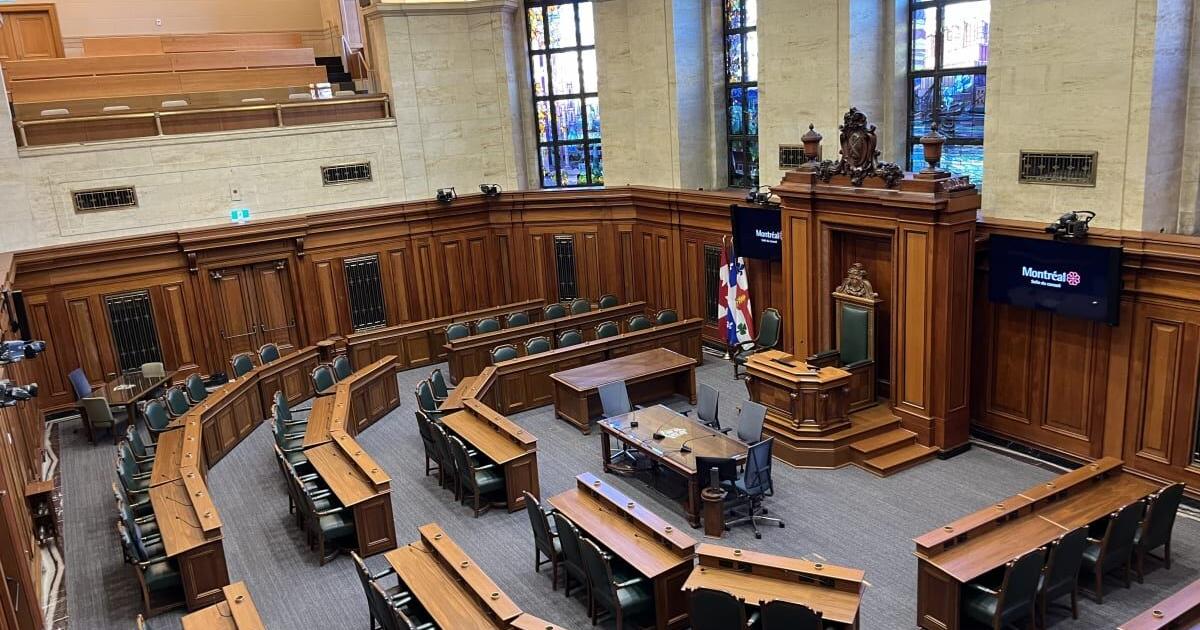
On August 24, Projet Montréal will ask City Council to turn the conflict in the Middle East into municipal policy. Its motion goes far beyond expressing solidarity with Palestinian civilians. It asks Montréal to recognize and denounce an “apartheid regime” and declare that a “genocide” is being perpetrated, before imposing a concrete consequence: suspending ties with the Israeli government, “its institutions” and “its municipalities.”
From a Boycott Campaign to an “Institutional Rupture”
This debate did not begin with this motion. During the last municipal election campaign, a collective asked candidates to commit to severing ties with Israel, including through municipal contracts, investments, and collaborations involving Israeli artists, researchers, and athletes. Several Projet Montréal candidates supported that initiative.
The language being used today is more careful. The motion no longer expressly calls for boycotting suppliers, universities, or artists. Instead, it calls for the suspension of “institutional ties.”
But what does that mean when implemented by a city?
A municipality does not act in the abstract. It acts through contracts, procurement, grants, partnerships, cultural and scientific collaborations, and relationships with other public institutions. When Council is asked to sever ties with Israeli “institutions” without defining that term, it is entirely legitimate to ask how far that policy may ultimately extend.
Municipal Powers are Delegated Powers
Municipal law begins with a basic principle: a city exercises the powers granted to it by the legislature. Quebec’s Municipal Powers Act confers broad powers on municipalities in matters of municipal competence. Those powers are not unlimited: they are granted to enable municipalities to respond to municipal needs in the interests of their populations.
The question, then, is not simply whether Council considers this motion desirable, but whether the action it proposes falls within the powers conferred on the City. Montréal can and should address the local consequences of a foreign conflict within the scope of its municipal powers: threats to public safety and social cohesion, and pressures on municipal services. This motion, however, does something different. It proposes to use the City’s institutional relationships to pressure Israel to change its policies.
The selectivity of that sanction is difficult to ignore. The motion refers to several foreign states and conflicts, yet Israel alone is subjected to this particular institutional rupture.
And if the “whereas” clauses in this motion are later invoked to exclude a supplier, university, artist, or institutional partner because of its connection to Israel, this may amount to discrimination, including, under Quebec’s Charter of Human Rights and Freedoms and its protections concerning religion, political convictions and ethnic or national origin.
City Council does not decide international law.
There is something deeply troubling about a municipal council speaking with greater certainty than the international courts themselves.
Genocide is a specific legal determination. It is not simply a stronger word for a deadly war, civilian suffering, or even serious violations of international law. It requires, among other things, proof of a specific intent to destroy, in whole or in part, a protected group as such.
To date, the International Court of Justice has made no determination on the merits that Israel committed genocide in Gaza. The proceedings remain far from a final determination on that question. The same problem arises with “apartheid.” In its 2024 advisory opinion, the ICJ found that certain policies of separation violated Article 3 of the Convention on the Elimination of All Forms of Racial Discrimination, but did not itself characterize that separation as apartheid.
Yet Projet Montréal asks Council to recognize and denounce an “apartheid regime” and declare that a “genocide” is being perpetrated.
For what purpose? A municipal resolution cannot make either legal characterization true. And if the ICJ ultimately concludes that the legal threshold for genocide has not been met, what will Montréal do with the official conclusion it chose to adopt?
Meanwhile, Montréal is fracturing.
While City Hall ventures into foreign policy, the consequences of this conflict are already being felt here. In 2025, Jewish people were the targets of approximately 71 per cent of all police-reported hate crimes motivated by religion in Canada. Jewish schools in Montréal have been shot at, Jewish people have been assaulted, synagogues have been attacked, and antisemitism has entered academic and professional spaces through intimidation, threats, and exclusion.
This is where the issue becomes personal. I am a lawyer, a Montrealer, and a Jew. For nearly three years, I have watched a distant conflict become embedded in my city’s civic life. I do not want political division or collective exclusion endorsed by City Hall.
Montréal can recognize the suffering of Palestinian civilians and Israelis and call for respect for international law. It can also acknowledge Hamas’s responsibility and the realities Israel has faced since October 7. It does not need to enshrine legally contested allegations by resolution or lay the groundwork for an institutional, economic, or cultural boycott that exceeds municipal authority and threatens rights protected by our Charter.
There are real consequences of this conflict for Montréal that fall squarely within the City’s responsibility. Using municipal powers to conduct foreign policy does not. On August 24, City Council should refuse to exceed the limits of its authority.
[Signatories]
Me Sarah Ettedgui, Barreau 2019
Frank Schlesinger, Barreau 1970
Theodore Goloff, Barreau 1973
Dida Berku, Barreau 1977
Nancy Cleman, Barreau 1983
Sharon G. Druker, Barreau 1986
Sandra Azancot, Barreau 1987
Peter Villani, Barreau 1987
Gary Rosen, Barreau 1988
Gabrielle Azran, Barreau 1992
Johanna Elhadad, Barreau 1993
Seth Dalfen, Barreau 1993
Gregory Azancot, Barreau 1995
Joel Banon, Barreau 1996
Judith Cohen, Barreau 1998
Vanessa Fhima, Barreau 1999
Jason Caron, Barreau 2000
Eric De Louya, Barreau 2000
David Assor, Barreau 2001
Alyssa Yufe, Barreau 2003
Simone Dighenakis, Barreau 2004
Jennifer Sabbah, Barreau 2004
Dorith Toledano, Barreau 2006
Steven Kravitz, Barreau 2007
Leon Benmergui, Barreau 2007
Jason Hadid, Barreau 2007
Saguy Barchichat, Barreau 2007
Jennifer Ana Chriqui, Barreau 2008
Dan Derhy, Notaire 2008
Andrew Kliger, Barreau 2009
Robert Steinman, Barreau 2009
Virginie Illouz, Barreau 2009
Raphael Amram, Barreau 2010
Yaniv Saragosti, Barreau 2010
Eva Derhy, Barreau 2010
David Ettedgui, Barreau 2010
Barry Olivenstein, Barreau 2013
Michael Elfassy, Barreau 2014
Ingrid Ouaknin, Barreau 2014
Nir-Nissim Elkouby, Barreau 2015
Laurent Gryner, Barreau 2017
Matthew Meland, Barreau 2019
Julia Nakache, Barreau 2019
Dov Charness, Barreau 2019
Magalie Dadou, Barreau 2021
Stephanie Kugler, Barreau 2023
Joseph-Gabriel Cohen, Barreau 2023
Nathan Cohen, Barreau 2025
Note: The views expressed in this text are solely those of the undersigned and do not necessarily reflect the positions of the organizations, firms, or institutions with which they are affiliated.
Sarah Ettedgui