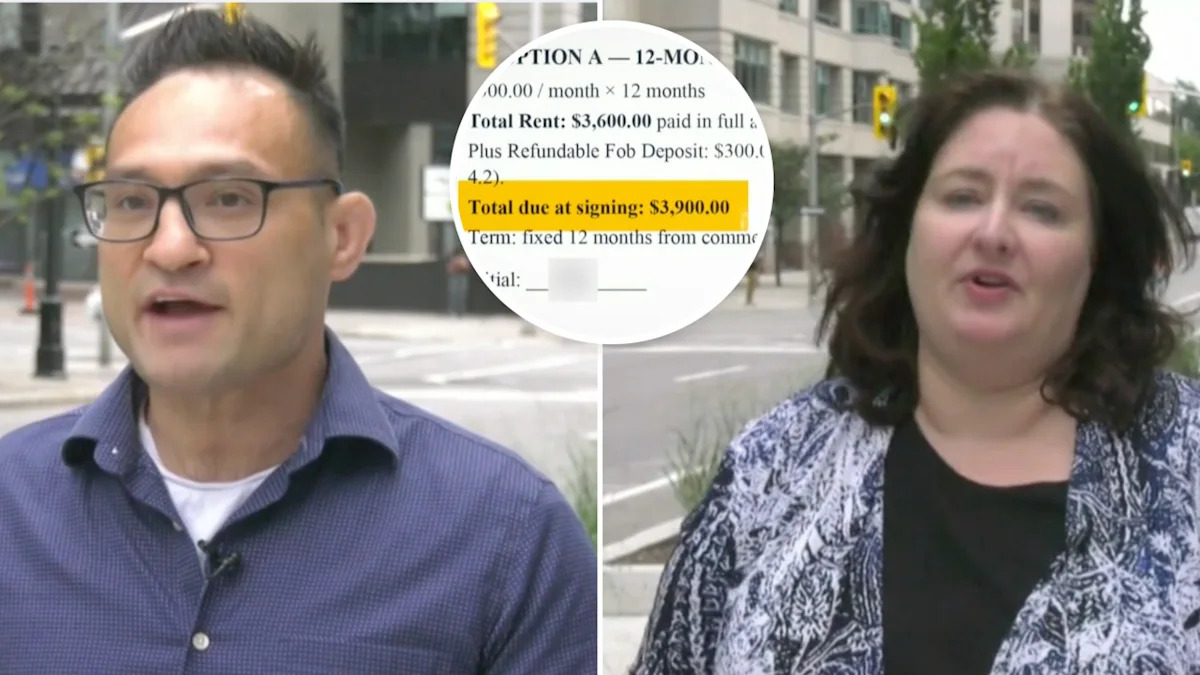
 Man and woman being interviewed.
An Ottawa man says he handed over $3,900 in cash for a downtown parking spot on Albert Street — then found out the person who took his money had no right to rent it out at all.
He’s not the only one. A second driver says she paid the same man for a spot she only got to use for a month before being notified she no longer had possession of the spot. Now Ottawa police say they’re investigating more than 20 reports connected to the same individual.
For any Canadian renting something informally — a parking spot, a storage locker, a driveway, a spare room — this case is a reminder that a signed agreement and a cash payment aren’t proof a rental is real. Here’s what to check before you pay, and what to do if you already have.
Don’t Miss A signed contract isn’t proof of a legitimate rental
In at least one case, the man showed the spot in person and had the renter sign paperwork before accepting payment. But the property management company that actually controls the building says he had no authority to rent or sublet any of its spaces.
This is the assumption that trips up most victims of informal rental fraud: if someone can show you the property, hand over a key or fob, or produce a signed agreement, the deal must be real. None of that proves the person collecting your money actually controls the space.
Why parking and storage rentals are easy targets
Apartment rentals are governed by provincial landlord-tenant law, and tenants can appeal to a tribunal if something goes wrong. Informal rentals — parking spots, storage lockers, driveways — usually have no such oversight. There’s often no lease registered anywhere, and no board to complain to if the deal turns out to be fake.
That gap is exactly what fraudsters rely on. Canadians reported more than $704 million in fraud losses in 2025, per findings from the Canadian Anti-Fraud Centre (CAFC). Rental-type scams typically cost victims the equivalent of one to two months’ payment upfront, sometimes reaching several thousand dollars per person, according to National Bank.
Read more: 3 essential money moves to make once you’ve saved $50,000
What to check before you pay for an informal rental
Ask for the building or property manager’s name and contact them directly to confirm the seller has authority to rent the space
Search the property address along with the word ‘management’ to find the real contact information, rather than relying on a number the seller gives you
Pay by e-transfer or credit card instead of cash so there’s a record, and in some cases, a chance to dispute the charge
Get the manager’s confirmation in writing before handing over any money
Be wary if the price is below market rate or if the seller pressures you to pay quickly
What to do if you’ve already paid a scammer
Contact your bank or credit card provider right away to ask about reversing the payment or flagging the transaction. Report the incident to your local police, and file a report with the Canadian Anti-Fraud Centre, even if you don’t expect to recover the money. Reports help investigators connect cases like the one that occurred in Ottawa, where a pattern across more than 20 complaints led police to link them to a single suspect.
A parking spot on a busy downtown street can feel like a low-stakes rental compared to signing a lease. That’s exactly why it’s an easy way to lose thousands of dollars. Before paying for any space you don’t own, treat it the way you would treat a full rental: confirm who actually controls the property, keep a paper trail and pay in a way that you can trace and potentially reverse.
What To Read Next
The most expensive financial mistakes are often the ones you don’t see coming. Join 19,000+ Canadians who get the money moves, risks and opportunities shaping their finances — delivered free each week. Subscribe now.
This article originally appeared on Money.ca under the title: An Ottawa driver paid $3,900 cash for a parking spot that was never his — how to spot a fake rental before paying
This article provides information only and should not be construed as advice. It is provided without warranty of any kind.