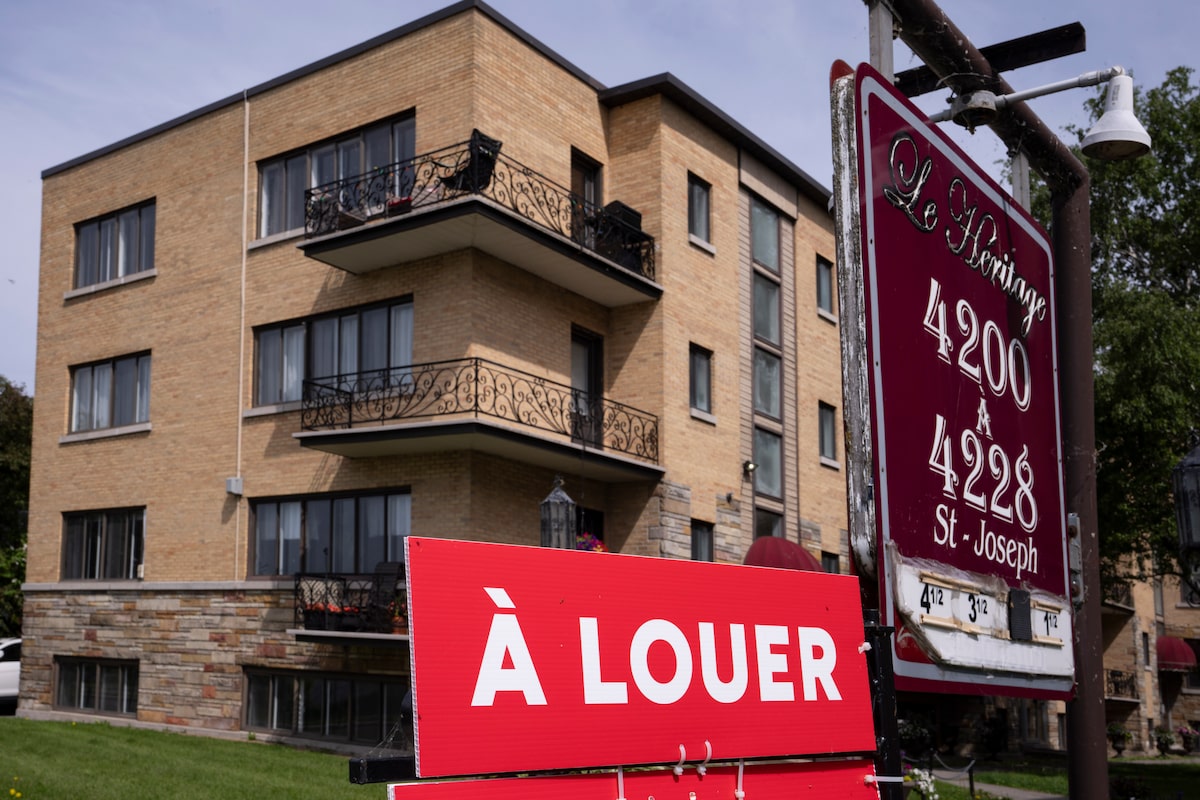
For more than a year, rental markets have been sluggish across most of the country. But in Quebec, rent affordability continues to be a concern for households, as prices have generally bucked the national trend.
Renters in Quebec’s major cities can expect little relief from rent hikes, as the cities’ existing cheaper units see intense demand and new supply comes online at significantly higher prices.
For example, rent rates rose by 10.5 per cent in Montreal and 9.7 per cent in Quebec City throughout 2025, according to data from the Canada Mortgage and Housing Corporation. In comparison, Toronto and Vancouver only saw 3.5 and 2.1 per cent increases, respectively. (CMHC uses statistics around the actual rent that tenants paid, rather than asking rates. That’s why average rents increased in 2025, even as average listing rates decreased.)
CMHC rental data aren’t available for 2026, but data on asking rents from Rentals.ca show that rents are barely slowing in Montreal, where the average listing price for a two-bedroom apartment in August was down just 0.5 per cent from a year earlier to $2,255.
For decades, Montreal and Quebec City have been among the most affordable major cities for renters. The low rental rates are possible because of an enormous supply of older duplex and triplex units, many of which were built more than 100 years ago.
Canada’s 100 best cities for renters in 2026
Meanwhile, newer rental supply has demanded higher prices because of the high cost of construction, analysts and realtors say. In Montreal and Quebec City in particular, nearly all of the rental developments have been priced for the high-end segment. Newer two-bedroom apartments tend to be priced in the $2,500 to $3,000 range, said Aline Zafirian, a broker and property manager with Royal LePage in Montreal.
That means demand for cheaper units has been intensifying, and prices have climbed, even during periods when other major cities saw hefty cuts to average rent prices.
Maëlle Boulais-Préseault, senior economist at Desjardins, said that rent has started to decrease this year in Montreal, but at a much slower pace than in Toronto and Vancouver, which have seen multiple years of decreasing rates.
“We don’t expect rents to fall much lower, especially because the demand for affordable units is still really high,” said Ms. Boulais-Préseault, adding that her outlook for the coming months is that rent rates will remain steady.
Another factor driving up demand is that Quebec has a uniquely high proportion of rental households with people living on their own, said Ms. Zafirian.
That rate in Toronto is 37.4 per cent and in Vancouver 39.7 per cent, compared with Montreal’s 48.8 per cent and Quebec City’s 57.1 per cent, according to data from 2021 referenced in a recent Desjardins report.
“That population [of single renters] is requiring nothing but the smallest units and the most affordable,” said Ms. Zafirian.
However, Montreal and Quebec City are still ahead of other major Canadian cities when it comes to the proportion of income that is spent on rent. Even after increases in rental rates, the average renter in the two cities spent 26 per cent of their income on rent, while Torontonians and Vancouverites who rent spent 32 per cent, on average.
Steve Baird, a community organizer with the Coalition of Housing Committees and Tenants Associations of Quebec, said that despite the province’s reputation for strong renter rights, protections are slowly being eroded.
Recently, the government made it easier for landlords to refuse to allow a tenant to assign their lease to another renter, making it easier for landlords to increase rent by finding a new tenant themselves.
Quebec is one of the few jurisdictions that prohibit major rent increases between tenants, but those rules are rarely enforced outside of a lease assignment, as the onus is on the new renter to figure out what the previous tenant paid.
For existing tenants, the province has also been allowing landlords to increase rates quicker than other jurisdictions in recent years. Landlords were allowed to increase rents by 5.9 per cent in 2025, even if they hadn’t done any work to an apartment. In comparison, Ontario’s maximum allowable increase was 2.1 per cent.
“For years, the amount that landlords were officially allowed to increase rents was under 1 per cent,” said Mr. Baird.
“There’s now very little margin for people to refuse a large increase.”