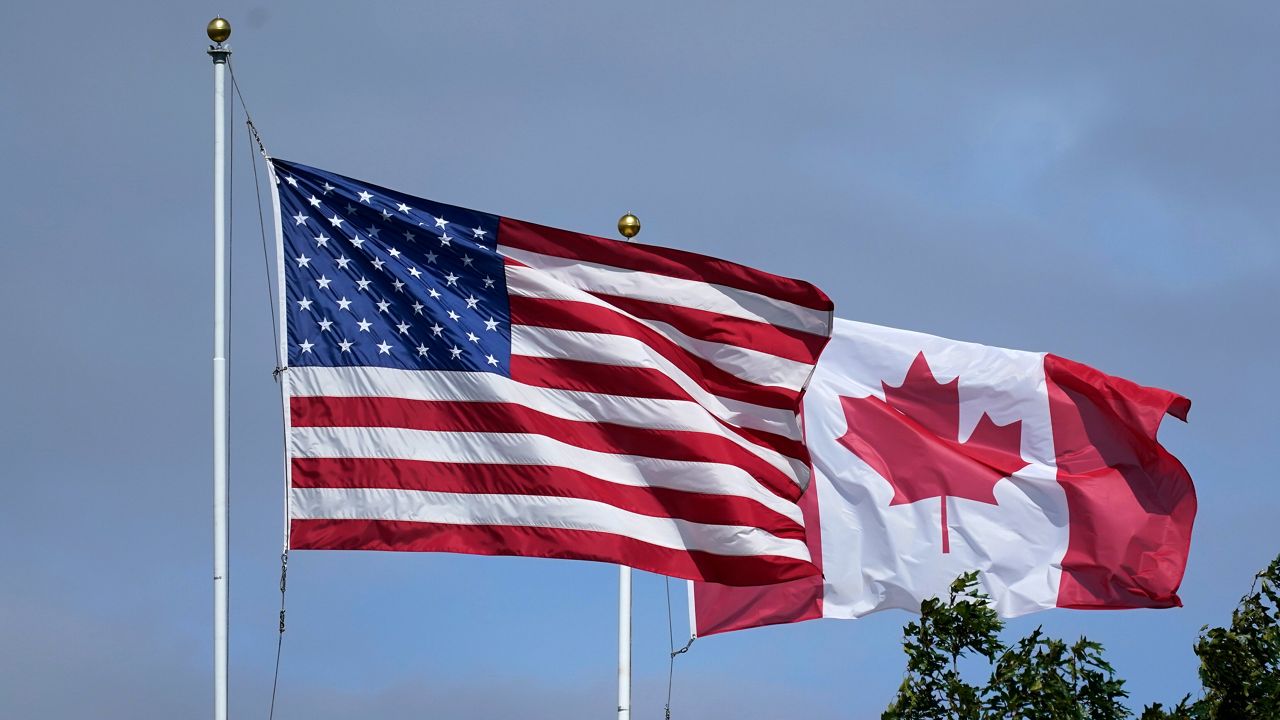
President Donald Trump said Monday he will impose a 50% tariff on Canadian automobiles, car parts and steel starting next year as the trade rift with Ottawa continued to deepen. Meanwhile, Ontario Premier Doug Ford threatened to cut off electricity and critical minerals to the United States if the trade fight worsens.
Trump’s announcement comes after trade talks between the otherwise allies and reliable trading partners collapsed last week. U.S. tariffs of 50% on $20 billion of Canadian goods went into effect after the talks broke off. Canada has said it will match those tariffs dollar for dollar on U.S. imports.
“Canada has been ripping off the United States of America for years,” Trump wrote on social media Monday morning. Criticizing Canada’s “ridiculously high tariffs” on American farmers, Trump wrote: “Not sustainable, and NOT ANYMORE!”
Ford said Monday in an interview with The Associated Press that former U.S. President Ronald Reagan would be “disgusted” with Trump’s trade policies and threatened to cut off electricity and critical minerals to its southern neighbor.
Reagan would “be throwing up on him (Trump) from the picture if he knew what was going on,” Ford said, noting that Trump keeps a portrait of Reagan near his desk.
Ford said “everything is on the table” after Canadian Prime Minister Mark Carney walked away from trade talks late Friday.
“I’ll cut them off,” Ford said of critical minerals. “You won’t get a grain of sand out of Ontario.”
Carney said Canada cannot agree to a deal that does not benefit both sides and argued the country can withstand the economic pain of the new tariffs by imposing its own set of duties, set to take effect Sept. 8.
“We’re stronger now than when the United States started this trade war,” Carney said in a speech Saturday. “More unified, more determined, more ambitious. With the strongest fiscal position in the G7 and a resilient economy, Canada has all the resources we need to pivot and to prosper.”
U.S. Trade Representative Jamieson Greer said Monday that Canada ultimately wanted more than Washington was willing to offer. In an interview with CNBC, he said Canada had maintained restrictions on U.S. wine, spirits, dairy and autos, prompting the United States to impose targeted tariffs covering about 5% of Canadian imports.
Greer said the two sides had made significant progress in negotiations, with the United States offering to halve steel and aluminum tariffs and substantially reduce auto tariffs. He also dismissed concerns about a broader trade war.
The Trump administration’s position has drawn backlash from members of both parties, including Trump’s former vice president, Mike Pence.
“I think the last thing we need right now, as our economy is getting back on its feet, is a trade war with Canada,” Pence said Sunday on CNN’s “State of the Union.”
Sen. Susan Collins, R-Maine, also criticized the uncertainty surrounding the talks, writing on X that the on-again, off-again trade negotiations between the United States and Canada lead to higher costs, risk and uncertainty for Maine businesses.
Michigan Gov. Gretchen Whitmer, a Democrat, wrote that the tariffs “act as a tax hike on Michigan families and businesses by raising prices at the grocery store and the gas pump.”
After the Supreme Court ruled that many of Trump’s previous tariffs were illegal, the president is now using a different authority to impose the new import duties. Some experts believe the latest tariffs will also be challenged in court, potentially sending the issue back to the Supreme Court.