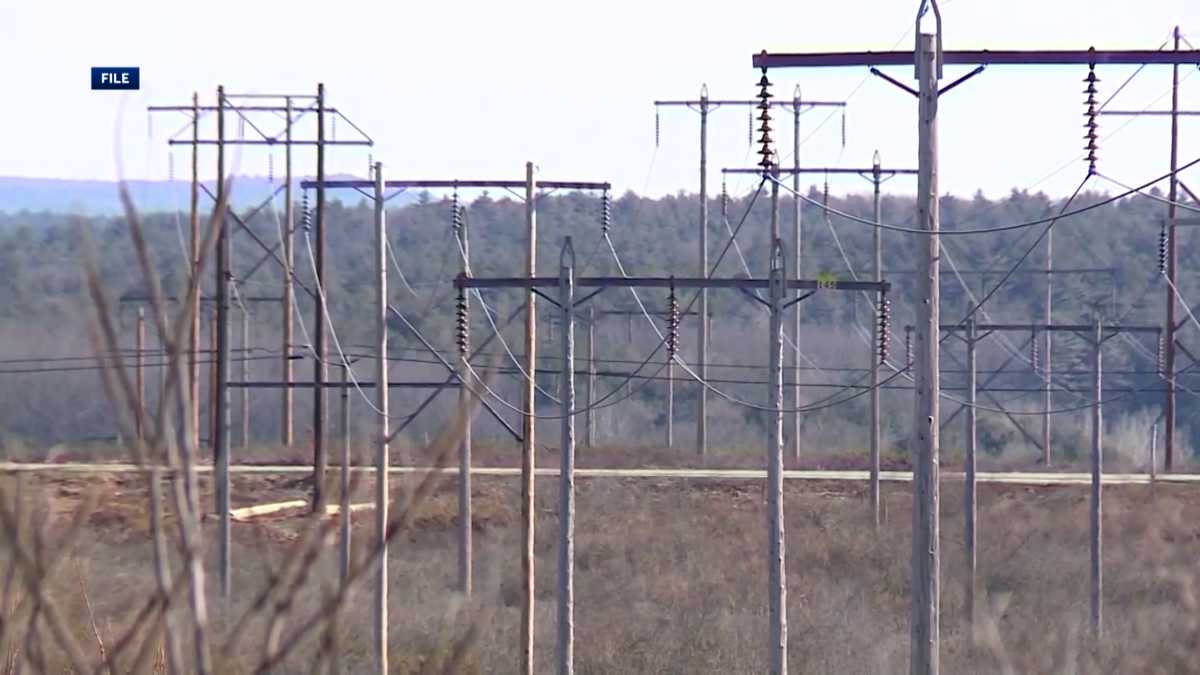
Canada electricity threat raises questions about New England power prices
ISO New England stressed that any potential price increase remains speculative. No such change has occurred as a result of the trade war with Canada.
 PORTLAND, Maine —
A possible impact of the trade war between the United States and Canada could be higher electric bills.
In an interview with The Associated Press, Ontario Premier Doug Ford said his province could raise the price of electricity exported to the United States, or stop sending the power altogether, if the trade dispute worsens.
Ford said “everything’s on the table” as Canada considers ways to respond to new U.S. tariffs. Ontario’s electricity exports to the United States primarily go to New York and Michigan, with smaller exports to Minnesota, according to Ontario’s Independent Electricity System Operator.
The power at issue in Ford’s comments is separate from the hydropower from Quebec that enters New England through Maine.
ISO New England, which operates the region’s power grid and wholesale electricity markets, said a broader reduction in Canadian power exports to New England could have a financial impact.
The agency said it does not expect reliability problems under typical weather conditions. But if Canadian provinces reduce or stop sending electricity to the region, New England could have less power available.
That could force the grid to rely more heavily on other generators and push wholesale electricity prices higher, according to ISO New England.
Higher wholesale prices could eventually affect the supply portion of customers’ electric bills. The timing and size of any increase would depend on how much power is affected and how long the reduction lasts.
ISO New England stressed that any potential price increase remains speculative. No such change has occurred as a result of Ford’s comments.
The agency also said power flows in both directions between New England and Canada. Although New England is generally a net importer, it can export electricity to Canada at certain times.
ISO New England also said reduced Canadian imports could increase regional emissions if the grid relies more heavily on fossil-fuel generators.