City council is looking at potentially expediting its 20-year overhaul of Edmonton’s water infrastructure in the wake of one of the wettest summers on record while Epcor is seeking to balance rates after finding residential users paid more into the system than they used.
Several water-related issues were brought before the utility committee on Monday. The committee unanimously passed a motion by Ward Ipiihkoohkanipiaohtsi Coun. Jon Morgan to direct Epcor to provide a memo about how the utility could provide drainage data on the city’s open data portal and follow up on research done by the University of Alberta on how to prioritize maintenance and development, as well as provide a report to committee outlining funding and logistical considerations to accelerate the timeline of the 20-year $1.6-billion stormwater integrated resource plan in conjunction with the city’s One Water Strategy. The information is due back in the first quarter of next year.
“We’re now in year seven — the question we all asked was ‘Can this move faster given what’s been happening?'” said Ward Karhiio Coun. and committee chairwoman Keren Tang. “Building capital out for record storms is incredibly expensive, but is there anything we can do in the meantime?
“I don’t think we’re going to have all those answers when Epcor returns, but they’ll be able to tell us what’s feasible.”
As part of its performance based regulation application, Epcor completed a study of its rates and found residential customers paid more into the system than they used, whereas commercial ratepayers paid less for water than they actually used. A phased-in approach is being looked at to rectify the difference without shocking either customers on their bills. A final decision will be made in November.
Both Tang and Mayor Andrew Knack said the city identified communication as an area for improvement over the storm season.
“Early on there wasn’t a dedicated web page where people could go to learn more about what’s happening,” said Knack. “It’s better to overcommunicate in unprecedented weather than to under-communicate.
“Beyond that, a lot of our infrastructure held up the way we had envisioned it to. Obviously there’s still more work to do, but overall city-wide we saw a lot of resiliency in our system.”
Officials told committee the final-cost of the once-every-two-centuries rainfall is still being assessed and could take two months to complete. The extent of Edmonton’s record summer rainfall is well measured, however. At least 265 mm of rain landed on the city over the month. So far this summer there have been 34 days of thunderstorms, with events in June lasting up to 56 hours and shorter but more intense storms in July.
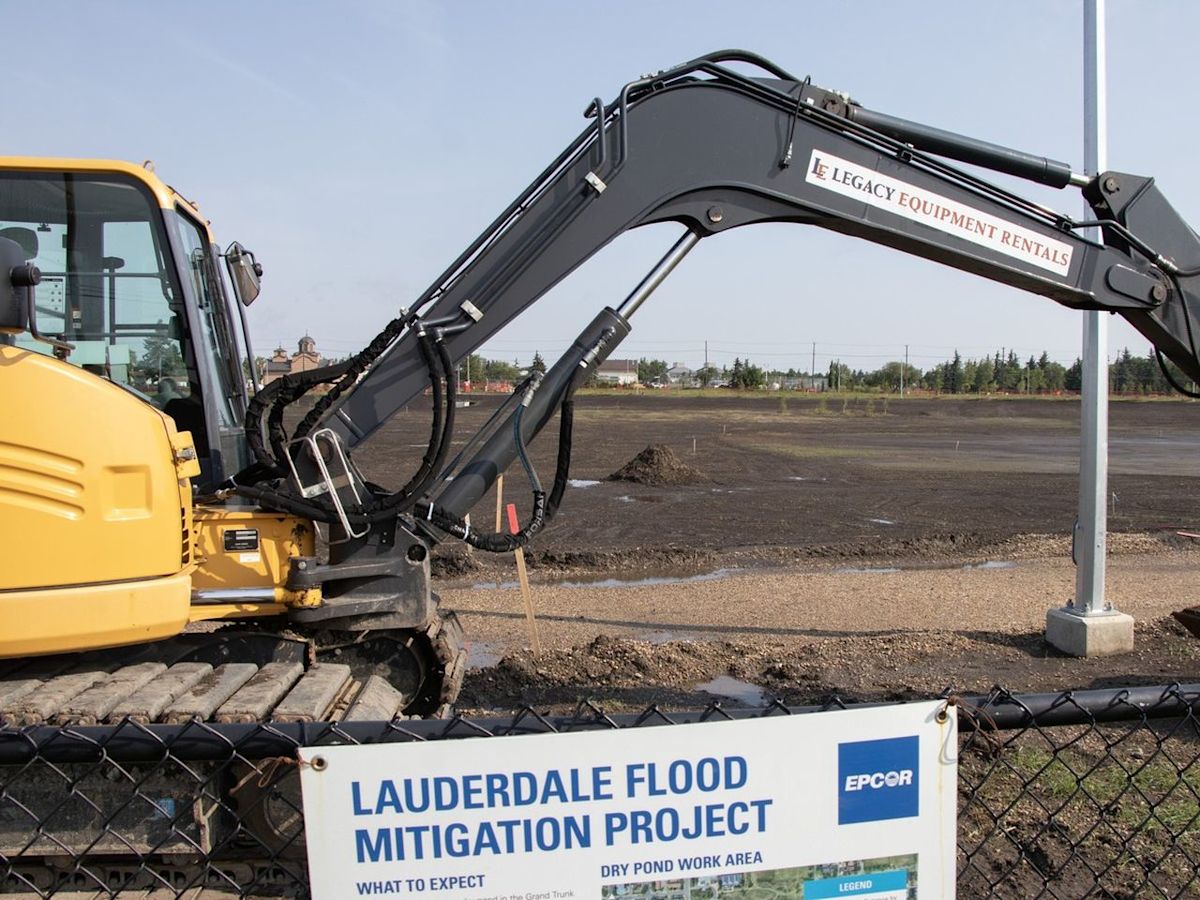
Edmonton is almost half-way into implementing its stormwater integrated resource plan with $350 million invested since 2019. Among the work still to be completed is more stormwater ponds, which helped keep the majority of the water off the streets and out of basements. The city currently has roughly 90 dry ponds.
Administration told committee Epcor could potentially re-prioritize infrastructure development based on the data collected during the storms.
Related
Bookmark our website and support our journalism: Don’t miss the news you need to know — add EdmontonJournal.com and EdmontonSun.com to your bookmarks and sign up for our newsletters here.
You can also support our journalism by becoming a digital subscriber. Subscribers gain unlimited access to The Edmonton Journal, Edmonton Sun, National Post and 13 other Canadian news sites. Support us by subscribing today: The Edmonton Journal | The Edmonton Sun.