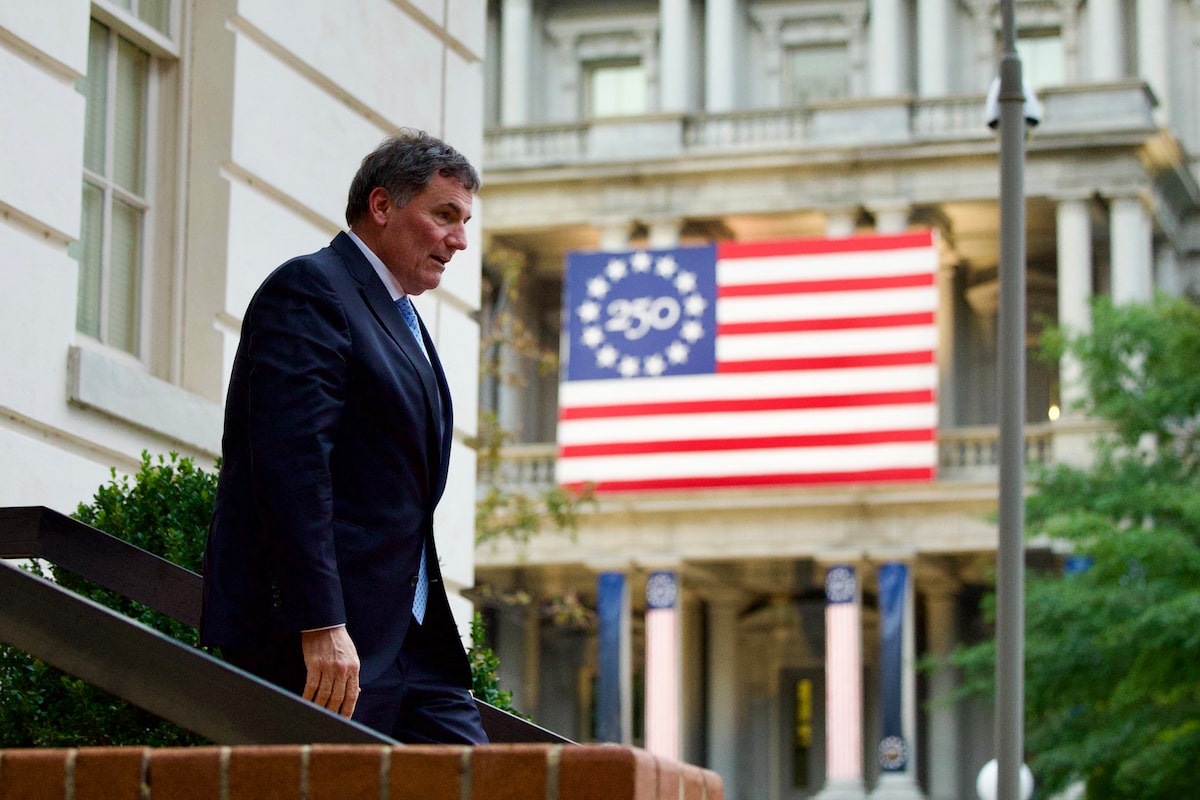
Dominic LeBlanc, the federal minister responsible for Canada-U.S. trade, leaves the U.S. Trade Representative’s office in Washington this past week.AMID FARAHI/AFP/Getty Images
Lawrence Herman is counsel at Herman & Associates, a member of the Expert Group on Canada-U.S. Relations and a senior fellow at the C.D. Howe Institute in Toronto.
The collapse of trade negotiations in Washington last week should come as no surprise. Given unacceptable U.S. demands, some that surfaced at the eleventh hour, Prime Minister Mark Carney was correct in ending the talks, recalling the team and confirming that Canada will be retaliating, dollar for dollar, against the latest U.S. tariffs, a show of combative resolve that reflects the country’s mood.
Even so, and notwithstanding the Prime Minister’s strategic acumen and the tough, competent Canadian negotiating team, there are lessons to be learned from some unfortunate blunders in dealing with U.S. President Donald Trump over the past 18 months. We can’t afford to repeat these mistakes as we gird ourselves for the battles ahead.
The most serious strategic error – now that we see the results – was entering these negotiations in the first place. Once Mr. Trump threatened these latest 50-per-cent tariffs, resurrecting the discredited 1930 Smoot-Hawley Tariff Act, Canada should have refused further trade talks. Coming to the negotiating table with an unconscionable threat like this looming over the process was unwise.
Campbell Clark: Mark Carney is digging in for the trade war
Andrew Coyne: The U.S. isn’t negotiating trade with Canada. This is a shakedown
To the contrary, Ottawa should have immediately said it would take countermeasures of its own if these tariffs came into effect, tabling a list of a range of U.S. sectors that it would target. Of course, we’ve now done just that, but announcing them last month would have been more effective. It might have torpedoed negotiations. But that’s where we are now anyway.
As to the negotiations themselves, we don’t have full details, but it’s becoming clear that the Trump team was putting things forward that Canada could never have accepted short of total capitulation. Even before the eleventh hour on Friday, many of these demands were known. It’s not clear why Canada remained at the table for so long instead of walking away.
Opinion: The U.S.’s deal was no deal at all
Some earlier mistakes also weakened Canada’s negotiating position. The first was the decision to cancel the digital services tax, a measure that many European countries and others have in place. There was no strategic advantage in cancelling it. Instead, Ottawa should have temporarily postponed the tax, saying that any final decision would depend on how both the trade talks and the review of the United States-Mexico-Canada Agreement played out. That would have provided them some leverage. As it stands, Canada gained nothing from this gesture.
In the same vein are the government’s June policy directions to the Canadian Radio-television and Telecommunications Commission to review requirements for streaming platforms to contribute more of their revenue toward funding Canadian content. U.S. tech giants had lobbied against this, even though the increased rate was similar to the kind of payments required in many European countries. Ottawa should have held firm on this.
Other mistakes could have easily been avoided. For example, knowing the belittling insults Mr. Trump directed at Canada, nothing substantive was gained by the Prime Minister visiting the Oval Office a second time in October, 2025. Given the kind of reality-show atmosphere Mr. Trump enjoys, once was enough. Mr. Trump cancelled trade talks with Canada later that month anyway. It’s interesting that Mexican President Claudia Sheinbaum has never made this kind of pilgrimage.
Similarly, it was inappropriate for Mr. Carney to have said in his address to a New York business audience that Canada could help make America great again. It was a small thing, maybe, but an unfortunate and unnecessary endorsement of the MAGA refrain.
The Editorial Board: Canada’s sovereignty is not negotiable
It is now clear that the Trump White House is not interested in any kind of mutually beneficial trade deal with Canada, let alone a balanced revision of North American free-trade arrangements under the USMCA. That’s not in the MAGA ethos. Nothing exemplifies the Trump attitude toward Canada better than his cancelling the opening of the Gordie Howe International Bridge, an appalling shakedown that followed lobbying by the Moroun family, who own the competing Ambassador Bridge.
All this is admittedly with the benefit of hindsight. At the end of the day, it may be that none of these errors mattered and we’d be where we are with the Americans anyway. But there are lessons to be learned – mainly, that the Trump White House has little regard for Canada, and a mutually balanced trade deal is not in the cards as long as the MAGA team is in office.