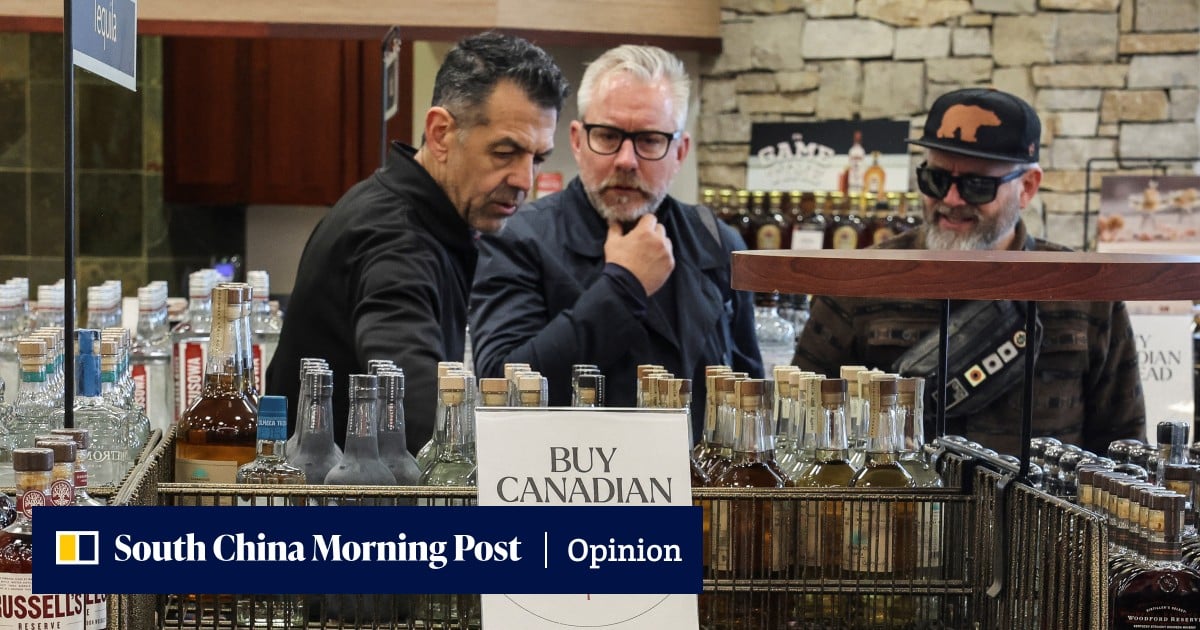
Macroeconomics is hardly my forte, but it is fascinating how a major international trade war between Canada and the US – two friends turned rivals – seems to hinge on one minor sector: booze.
The dispute between the two countries has escalated into all-out rancour after a breakdown in trade negotiations this week, resulting in US President Donald Trump imposing a broad 50 per cent tariff on a wide range of goods entering the US from Canada.
A major reason for the failure in talks is one party’s decision not to sell alcohol made by the other country. Canada, for the most part, has been refusing to stock American booze in its stores since early 2025.
In one of his first acts as the 47th US president, Trump decided it was priority number one to pick on his friendly neighbour, with whom he was in a free-trade pact. He unilaterally jacked up tariffs because… actually, I don’t know why. Your guess is as good as mine.
In response to the provocation from the self-proclaimed “stable genius” – who also slung personal insults, like calling the Canadian prime minister a governor and suggesting Canada should become the 51st US state – most provinces were highly offended and sought revenge strategically.
Besides Alberta and Saskatchewan, the other territories and provinces all decided to ban alcohol imports from south of the border. So, no Jack Daniels, no Jim Beam, no Maker’s Mark, and no California wines from Robert Mondavi, Opus One and others.