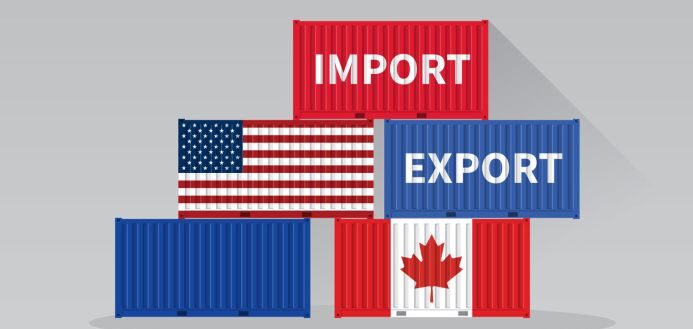
POUGHKEEPSIE – The immediate impact on the average American household is likely to be limited despite Canada’s decision to impose retaliatory tariffs on U.S. goods, according to an economics professor at Marist University.
Canada announced Tuesday that it would impose tariffs of up to 50 percent on about $20 billion worth of U.S. goods, matching the new U.S. duties imposed by President Donald Trump after trade talks between the two countries broke down. The Canadian tariffs are scheduled to take effect Sept. 8.
 Dr. Jin Lau
“This latest package affects roughly five percent of Canada’s exports to the U.S.,” said Dr. Jin Lau, an Assistant Professor at Marist. “It also excludes major exports such as oil, natural gas, and potash.”
However, Lau noted that lower-income households could be affected more because “they spend a larger share of their income on necessities and have less room in their budgets to absorb higher prices.”
“Families buying affected food, clothing, furniture, and household products may feel the greatest pressure,” Lau added.
Canada’s new tariffs cover more than 700 U.S. goods and are worth about $20 billion, matching the size of President Donald Trump’s latest import taxes on Canadian products, including wine, cement and hockey sticks.
Several analysts believe that Canada and the U.S. will reach a deal before the Sept. 8 deadline.
“Canada also has a strong reason to keep an escape route open because its economy depends much more heavily on the U.S. market than the U.S. economy depends on Canada,” Lau said. “Canada’s goal appears to be to show that it is prepared to respond while still leaving room for a negotiated settlement.”