After talks between the U.S. and Canada blew up last week, exporters and importers across the state are taking cover in an increasingly hostile trade war that could hit consumers in the pocketbook.
Canada is Colorado’s largest trading partner, selling $5.3 billion in imports to the state and buying $1.6 billion in exports in 2025.
That combined $6.9 billion in trade last year with Canada dwarfed the $2.7 billion in combined trade from the state’s next largest trading partner — Mexico, according to trade statistics provided by the World Trade Center Denver from the WISERTrade database.
“Canada, Mexico and the U.S. have so integrated their economies that this really disrupts that,” Sandi Moilanen, vice president of operations with the WTC Denver, said regarding the trade conflict.
After trade discussions, which appeared close to wrapping up, broke down late Friday, the U.S. placed new and higher tariffs on more than 550 Canadian product categories representing $20 billion in imported goods.
The administration turned to section 338 of the Tariff Act of 1930, which allows a U.S. president to impose tariffs of up to 50% on imports from any foreign country deemed to be “discriminating” against U.S. commerce or products.
Those rarely used duties supersede exemptions given under the United States-Mexico-Canada Agreement (USMCA), which was implemented in 2020 during the first Trump administration.
That treaty required a mandatory review in July 2026, and the U.S. declined to renew the agreement in its current form, which set off the current round of negotiations.
Citing long-standing trade imbalances, the U.S. wants Canada to dismantle its supply management system for dairy and provincial alcohol distribution barriers and to streamline regulations.
Canada wanted tariff relief for medium- and heavy-duty pickup trucks, which it argued had become too costly with added tariffs. But the U.S. rejected any adjustments beyond light-duty passenger vehicles.
U.S. officials also expressed frustration that Canada has strengthened trade ties with Europe and China. Canadian Prime Minister Mark Carney defended Ottawa’s foreign policy, stating Canada was an independent nation entitled to strike international trade deals as it saw fit.
When Canada walked out of talks late Friday, claiming the U.S. was asking too much and giving too little in return, it was hit with 50% tariffs effective midnight Saturday.
On Tuesday, Canada countered with a list of tariffs on more than 700 U.S. product categories effective Sept. 8.
They include 50% tariffs on U.S. steel, aluminum, clothing, apparel and furniture, as well as 25% tariffs on U.S. appliances, dairy products, seafood and steel and aluminum derivative products. Other categories face a 15% tariff.
Lacking a port, Colorado’s trade strategy emphasizes serving as a key U.S. link on a trade corridor stretching from Canada to Mexico, and it has built close ties in both countries.
Moilanen said the WTC Denver, which supports global trade, is urging Colorado companies doing business in Canada to keep their partnerships alive.
“We have had business relationships with Canada for years and years. Don’t ignore those because of changing U.S. policies. You don’t know what will happen in the future,” she said.
Gov. Jared Polis also made a statement of support for maintaining close trade ties with Canada on X on Wednesday.
“Canada is an important trading partner for Colorado businesses, and we will do all we can to grow a strong, predictable trade relationship with our neighbors to the north. A strong partnership benefits both Colorado and Canada,” Polis said.
His post was met with a barrage of negative comments from supporters of taking a tough stance against Canada.
About $230 million of Canadian imports to Colorado, or roughly 4.3% of the total, face added tariffs of up to 50% in the latest round, according to an analysis by the WTC Denver.
Canadian trade is a tiny sliver of Colorado GDP, around 1.2%, and the share of total exports facing tariffs is small. But many of the targeted products are ones that U.S. consumers rely on, and higher tariffs could compound local inflation, which was running at 3.9% in Denver in July.
Canada is the largest foreign supplier of toilet paper to the U.S., and it also supplies much of the softwood pulp that domestic makers like Procter & Gamble use.
Although analysts don’t envision a pandemic-like supply chain collapse, consumers could strain the existing inventory if they stock up in an attempt to lock in lower prices.
That includes other paper products like facial tissue and paper towels. One place to watch if that is happening would be the shelves of bulk retailers like Costco and Sam’s Club.
Maple syrup in the morning will cost more, and so will a shot of Canadian whiskey in the evening. Expect new home construction and existing home renovation costs to rise as lumber and building supplies become more expensive.
Prices for winter apparel and hockey gear are already going up, impacting youth sports leagues. And gardeners could face higher seed and bulb prices come spring.
Starting next year, tariffs on new autos assembled in Canada and sold in the U.S. could shoot up to 50% from current levels of 25%. One failed goal of the talks was to get the rate down to 15%.
Between 6% and 9% of vehicles sold in the U.S. are made in Canada.
Among the models most at risk of a price spike next year are the Toyota RAV4, the Honda CR-V, the Honda Civic, the Dodge Charger Daytona, the Chrysler Pacifica and Voyager, the Chevrolet Silverado and the GMC Sierra.
Colorado residents, however, have dodged what would have likely proven the greatest pain point — petroleum products, which are excluded from the current round of trade talks.
Petroleum products account for about 63% of the dollar value of imports from Canada to Colorado, and much of that represents bitumen extracted from oil sands in Alberta, which is used as feedstock at the Suncor refinery in Commerce City.
Colorado consumers are already coping with gasoline prices above the national average, $4.32 per gallon vs. $4.10 per gallon nationally, according to the AAA.
A 50% tariff on Canadian oil would have likely widened that gap even more.
On the flip side, Colorado exporters of industrial machinery, chemicals, transportation equipment and auto parts are vulnerable to higher Canadian tariffs.
Some bigger names in those areas include the Gates Corp., Woodward Inc., Hexcel Corp., Boulder Scientific, Ball Aerospace and Sierra Nevada.
A few companies find themselves caught squarely in the middle of the trade fight with nowhere to hide, chief among them the Molson Coors Beverage Co.
The company, based in both Montreal and Chicago, widely distributes its Canadian brands, like Molson, in the U.S. and does the same in Canada for its American brands, like Coors.
If a 50% tariff on both sides of the border wasn’t bad enough, heavier tariffs on raw aluminum from Canada will drive up the cost of cans, further eroding already-shrinking profit margins.
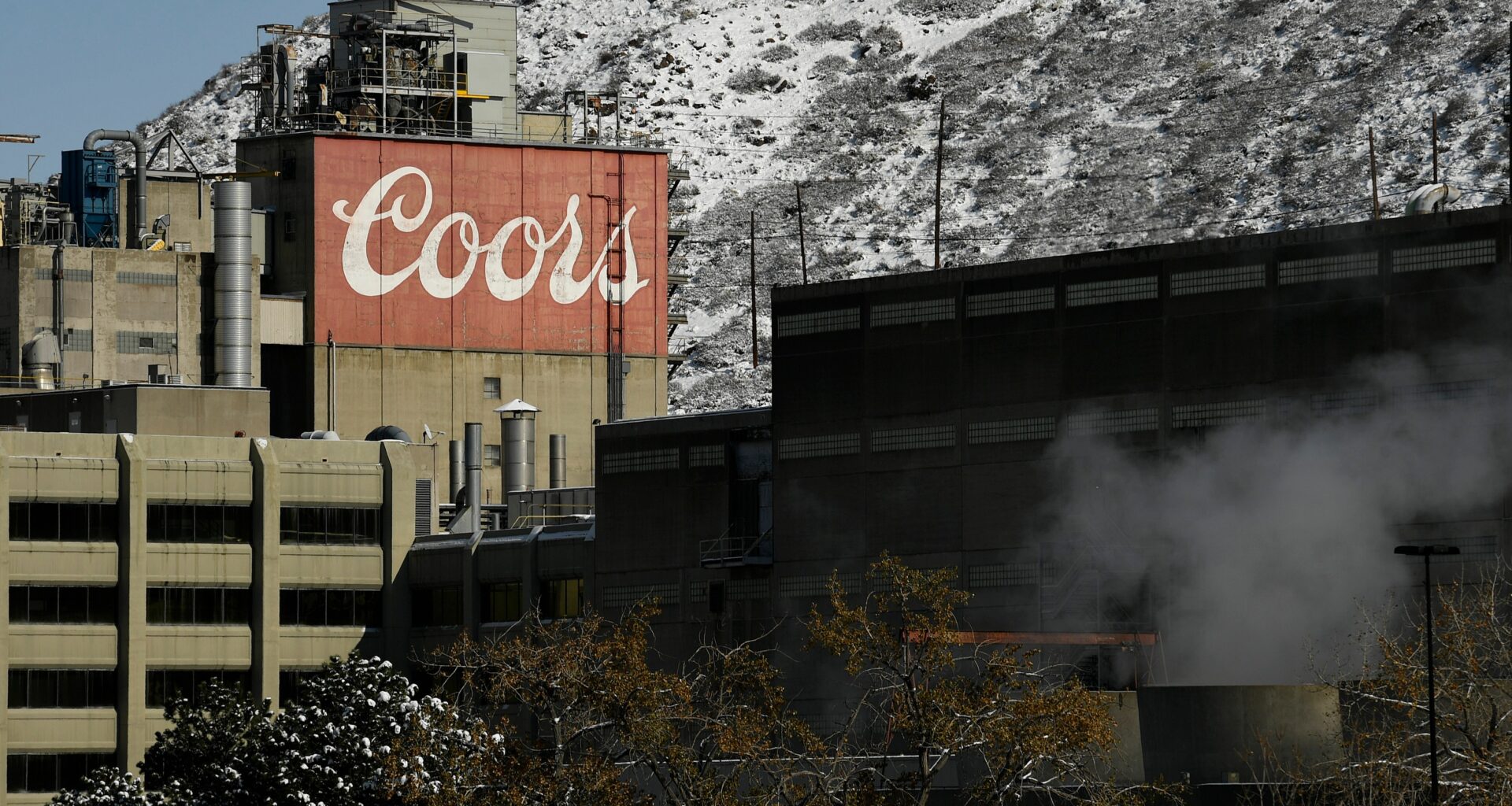
Beer consumption was already on a downward path, and higher prices could accelerate that slippage. Lower sales could mean lower production at the Coors Brewing plant in Golden, which is the largest in the company’s network.
Molson Coors shares, which trade under the ticker TAP, are down nearly 10% so far this year and 16% over the past year.
Get more business news by signing up for our Economy Now newsletter.