Benzinga and Yahoo Finance LLC may earn commission or revenue on some items through the links below.
The escalating U.S.-Canada trade dispute isn’t just about economics—it is about national sovereignty and political survival, explains Economist Justin Wolfers.
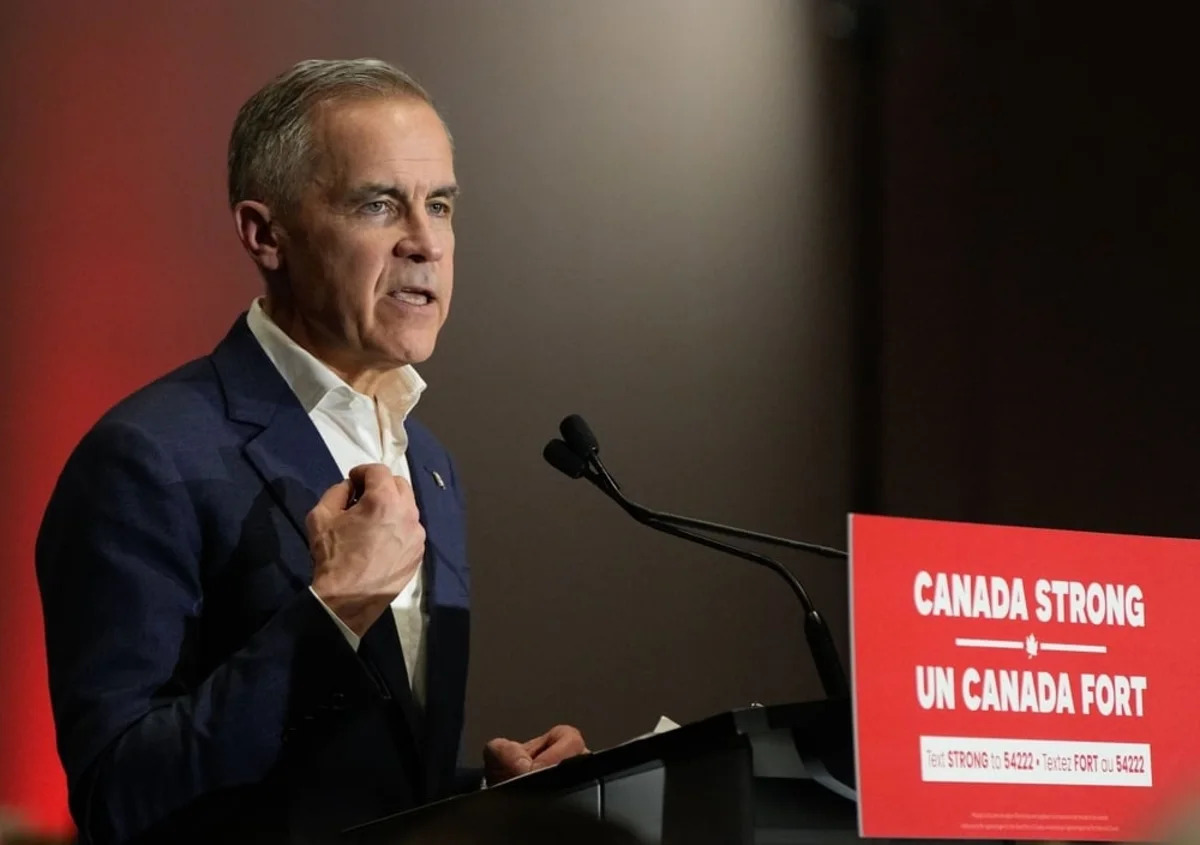
He argues that because a comprehensive trade pact already exists, President Donald Trump’s threats are forcing Canadian Prime Minister Mark Carney into a corner where retaliation is his only option.
An Unnecessary Dispute
“We’re in a trade war,” Wolfers said on CNN, highlighting the deep irony of the current standoff. The U.S. and Canada already have a binding trade agreement: the USMCA, negotiated during Trump’s first term.
Don’t Miss:
Trump’s sudden decision to scrap it and demand a new agreement is exactly what makes this fight “so much harder to resolve,” Wolfers explained.
In response to U.S. levies, Canadian Finance Minister François-Philippe Champagne announced matching retaliatory tariffs ranging from 15% to 50% on roughly $20 billion of American goods.
Sovereignty Over Economics
Trump controversially suggested making Canada the 51st state, sparking unprecedented outrage across the border. While some Americans might dismiss this as political trolling, Canadians view it as a direct threat.
“It’s not just a trade war for the Canadians,” Wolfers warned. “It’s also a question of survival.” This intense anger and feeling of betrayal leave Prime Minister Carney with zero political room to maneuver.
“The politics of the situation… really leaves Carney with no choice but to be seen to be standing up to President Trump,” Wolfers added.
Trending: Avoid the #1 Investing Mistake: How Your ‘Safe’ Holdings Could Be Costing You Big Time
Who Holds the Leverage?
While some argue Canada desperately needs its southern neighbor, Wolfers noted that the U.S. economy is “remarkably closed,” relying heavily on interstate rather than international commerce.
Domestically, the tariffs face heavy pushback. Senate Minority Leader Chuck Schumer labeled the actions “economic warfare” against a close ally, warning they will spike costs for American families.
With both sides dug in on steep tariffs, the standoff proves Canada’s refusal to back down is rooted in defending its national identity just as much as its economic interests.
How Has the Market Performed in 2026?
Story Continues
The S&P 500 index has advanced 11.94% YTD. Similarly, the Nasdaq Composite index was up 12.55%, and the Dow Jones gained 10.74% YTD.
On Tuesday, the SPDR S&P 500 ETF Trust and Invesco QQQ Trust ETF, which track the S&P 500 and Nasdaq-100, respectively, closed higher. The SPY was up 0.32% to $765.91, while the QQQ advanced by 0.62% to $710.72. Meanwhile, the Dow tracker, State Street SPDR Dow Jones Industrial Average ETF Trust, ended 0.30% higher at $535.24.
In premarket trading on Wednesday, SPY was down 0.043%, QQQ fell 0.096%, and DIA was 0.026% higher.
See Also: Skip the Regrets: The Essential Retirement Tips Experts Wish Everyone Knew Earlier.
Image via Shutterstock
Read Next: Think you’re saving enough for your kids? You might be dangerously off — see why
Building Wealth Across More Than Just the Market
Building a resilient portfolio means thinking beyond a single asset or market trend. Economic cycles shift, sectors rise and fall, and no one investment performs well in every environment. That’s why many investors look to diversify with platforms that provide access to real estate, fixed-income opportunities, precious metals, and even self-directed retirement accounts. By spreading exposure across multiple asset classes, it becomes easier to manage risk, capture steady returns, and create long-term wealth that isn’t tied to the fortunes of just one company or industry.
Arrived
Backed by Jeff Bezos, Arrived Homes makes real estate investing accessible with a low barrier to entry. Investors can buy fractional shares of single-family rentals and vacation homes starting with as little as $100. This allows everyday investors to diversify into real estate, collect rental income, and build long-term wealth without needing to manage properties directly.
Frontieras
As electricity demand accelerates alongside AI and domestic energy production becomes a growing priority, Frontieras is developing patented technology that converts coal into fuels, chemicals, and low-emission energy products without combustion. Through its Regulation A offering, investors can gain exposure to an emerging energy infrastructure company focused on modernizing American industrial and power resources.
FarmTogether
Farmland has historically held its value through market volatility and delivered returns uncorrelated to stocks and bonds. For accredited investors, FarmTogether offers direct access to high-quality U.S. farmland starting at $15,000 — fully managed, with no landlord headaches.
Fundrise
Private real estate and private credit can add income and stability to a stock-heavy portfolio. Fundrise offers access to diversified private real estate and credit strategies through an easy-to-use platform, with professionally managed portfolios designed to generate passive income and long-term growth.
Qnetic
As electricity demand rises alongside AI, data centers, and renewable energy, long-duration energy storage is becoming increasingly important. Qnetic is developing a kinetic energy storage system designed to provide long-lasting, chemical-free electricity storage, offering investors exposure to the infrastructure supporting a more resilient and reliable power grid.
EquityMultiple
For accredited investors looking beyond stocks and bonds, EquityMultiple provides access to vetted commercial real estate deals starting at $5,000, with only ~5% of opportunities passing their due diligence process.
© 2026 Benzinga.com. Benzinga does not provide investment advice. All rights reserved.