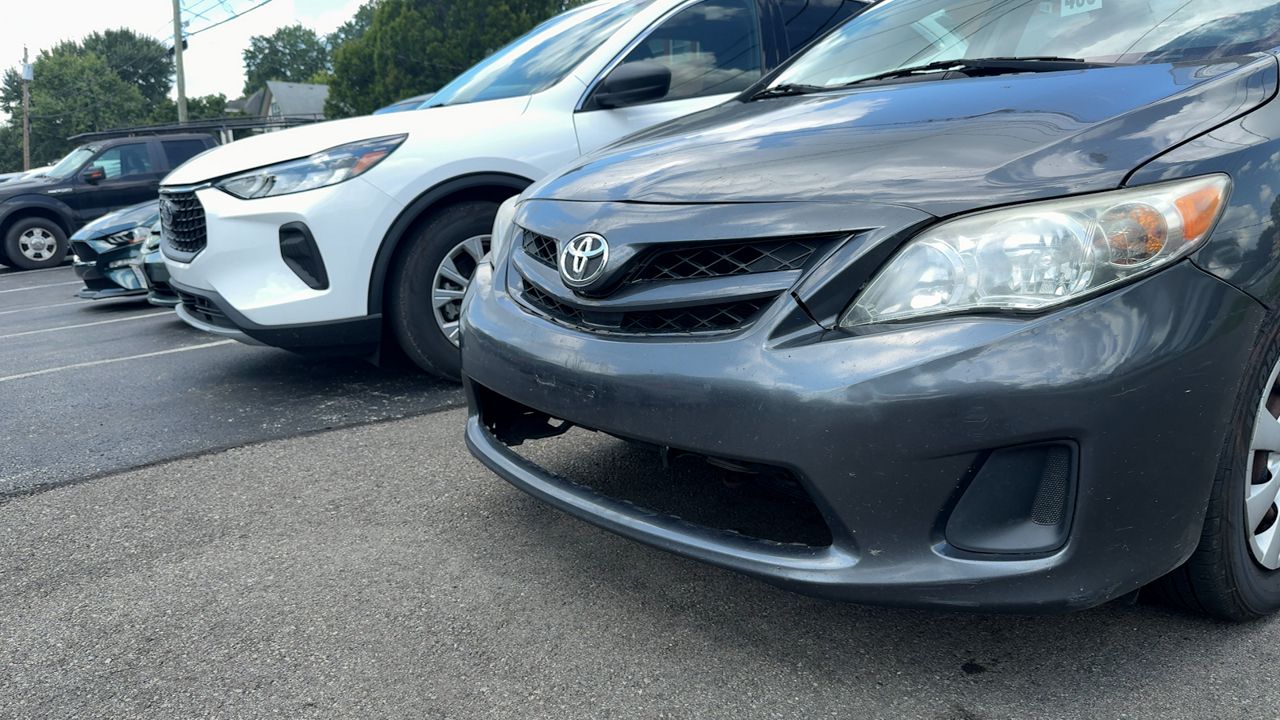
CINCINNATI — Pending tariffs between the United States and Canada could raise costs for Ohio auto repair shops and consumers.
Canada has announced retaliatory tariffs on hundreds of types of goods that could go into effect Sept. 8, targeting industrial and agricultural products, including some made in Ohio.
President Donald Trump has announced a potential 50% tariff on Canadian auto parts if the two countries do not reach an agreement.
Dane Donovan, owner of Donovan’s Auto and Tire Center, said international trade issues have a direct effect on the automotive industry because vehicles rely on parts from several countries.
“The parts from your vehicle will come from many different parts of the world, Canada, Mexico and overseas and whatnot,” Donovan said.
Donovan said parts prices have already changed significantly over his 27 years in the industry.
“When I started this business or in this industry 27 years ago, a spark plug would be $2.99,” Donovan said. “It’s now sometimes they’re up to $29.99.”
He said the concern is not limited to tariffs on individual parts. Higher transportation costs also affect what repair shops pay for inventory.
“A lot of the suppliers are having to raise their diesel gas prices,” Donovan said. “And diesel gas prices have caused transportation of these parts to us to skyrocket as well. So it’s a massive problem that we see on a daily basis.”
Donovan said the effects of tariffs are not always immediate because repair shops and suppliers may still have existing stock. But he said that also means any relief from a potential agreement between the United States and Canada would not be immediate.
“We will eventually see them in the months coming,” Donovan said.
Ian Sheldon, a professor of agriculture at Ohio State University, said disruption in the automotive industry could affect other parts of Ohio’s economy, including sectors not directly targeted by tariffs.
“I think there’s sort of this cascading effect that’s going to affect parts of the Ohio manufacturing sector going forward,” Sheldon said. “And it all relates to this highly integrated automobile sector.”
Sheldon said research shows tariffs imposed on other countries can still lead to higher prices for consumers in the United States.
“I’ve seen estimates that on average, every American household has probably paid somewhere between $1,000 and $1,200 additional dollars in higher prices as consumers because of the tariffs that have been put in place,” Sheldon said.
Donovan said he is working to keep prices competitive with his business and customers, as the potential impact remains uncertain.