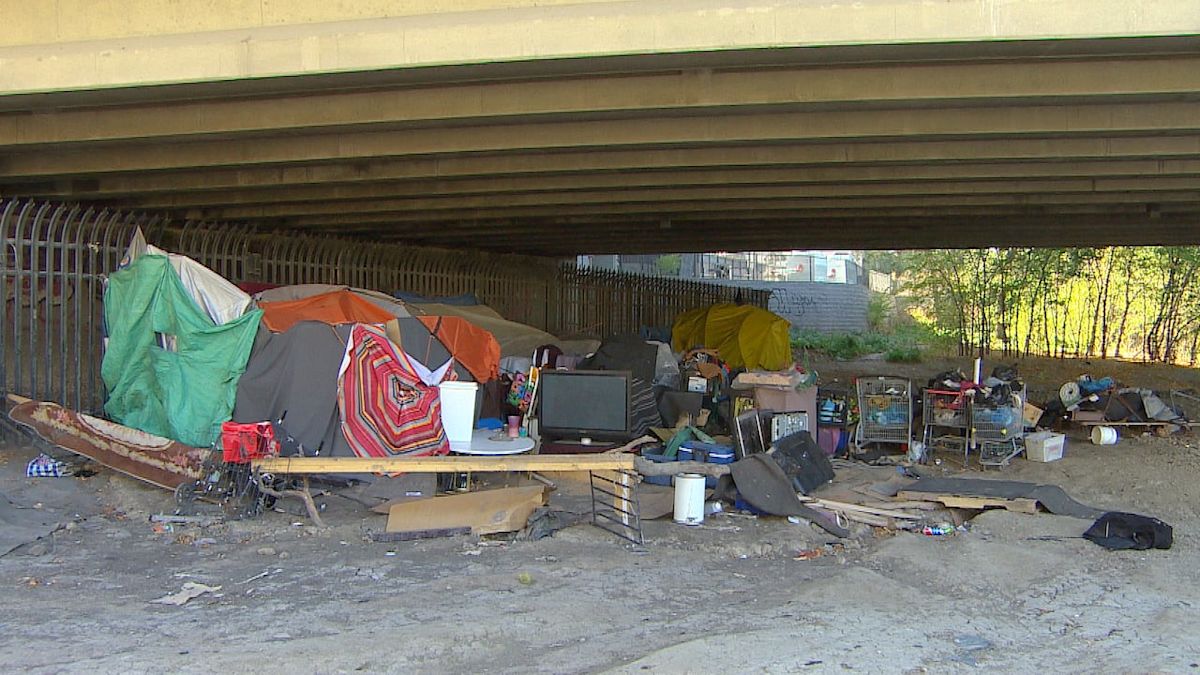
The City of Winnipeg says the number of people living in encampments has dropped significantly over the past year, but some councillors say the figures don’t capture the full scope of homelessness on city streets.
City staff told councillors during a closed-door information session Friday that there were 72 encampments housing about 245 people at the end of July.
That’s down from approximately 100 encampments and 700 people identified in September 2025.
The city also says more than 260 people have been housed directly from encampments through the province’s Your Way Home strategy, with 85 per cent of those people still housed.
Fort Rouge-East Fort Garry Coun. Sherri Rollins, who called for the council information session, says the city’s figures don’t tell the whole story.
Rollins says the city’s tracking doesn’t include people sleeping rough in places, such as bus shelters. She has also heard from residents who are becoming frustrated when they report encampments to 311 and don’t see a quick response.
“We have a failed policy on encampments,” Rollins said, arguing the city doesn’t have enough resources to carry out the policy.
She says Winnipeg’s current $200,000 funding for the program is inadequate and doesn’t match what other cities spend.
Daniel McIntyre Coun. Cindy Gilroy says moving people from encampments into housing doesn’t eliminate underlying problems such as addiction. Many transitional housing facilities have strict policies against drug use, so residents go outside, she said.
“I’m seeing this as more of an addiction and mental health than housing, because you can be housed but still have some of the issues that we’re having around addiction still going on in our streets,” Gilroy said.
Gilroy repeated her call for a designated encampment site, which she says would allow the city and province to better target supports to people while helping to reduce problems such as drug use on city streets.
Mayor Scott Gillingham defended the city’s approach, saying the reduction in encampments represents meaningful progress.
He said more than 200 people have been moved from encampments into housing but acknowledged a lack of available housing is limiting further progress.
“There’s not enough housing units available,” Gillingham said. “The city is trying to partner with the province to get more housing units available, but that has become a choke point.”
The city’s encampment enforcement protocol has two dedicated full-time staff members, with roughly 35 staff supporting the policy across all departments.
The city also funded $550,000 for mobile outreach through Main Street Project.
Chris Brens, the city’s community development manager, said it is prioritizing specific sites and responding to reports.
“We are doing our best, then, to prioritize specific sites and respond as fast as possible,” he said, “but also acknowledging the frustration that maybe we may not be moving as fast as we can.”
The city’s presentation lists housing availability, resources, co-ordination between governments, and shelter space among its ongoing challenges.
A more detailed report on the city’s encampment policy is expected to come to council next month.