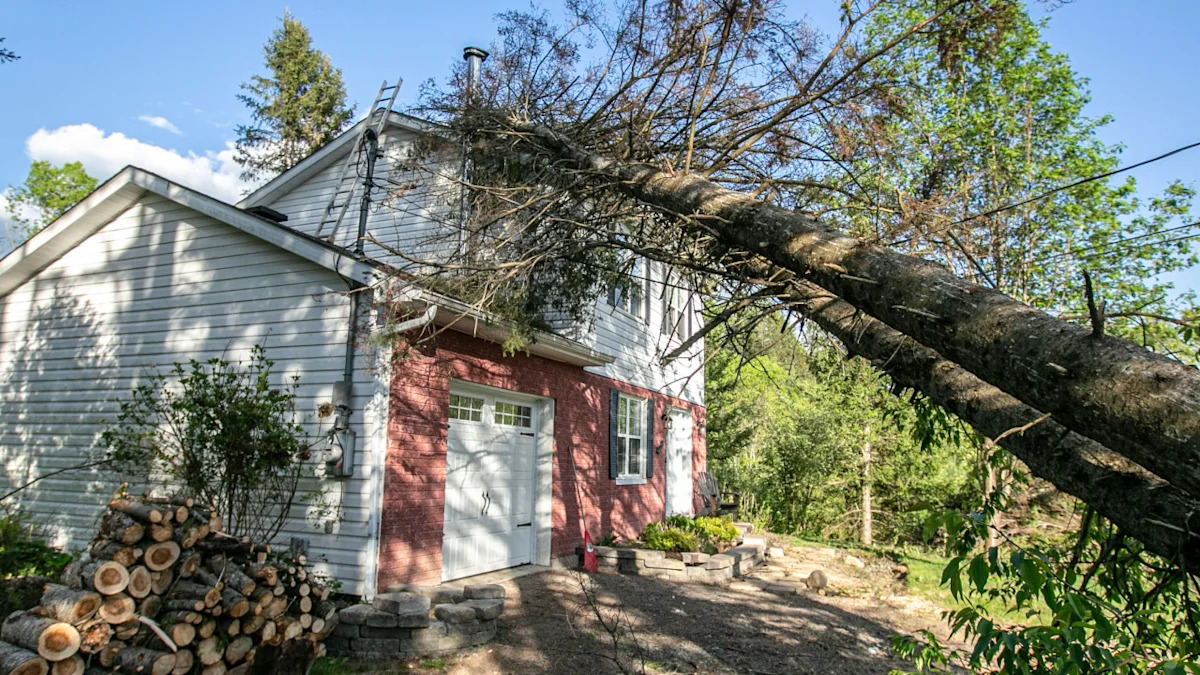
 Saint-Hippolyte, Quebec storm in 2022
A string of powerful thunderstorms that tore through Ontario and Quebec between June 30 and July 3 caused $439 million in insured damage, according to a revised industry estimate released by the Insurance Bureau of Canada (IBC). Ottawa was hit hardest: The city recorded 118 millimetres of rain on Canada Day, breaking its all-time July daily rainfall record and local officials reported more than 4,500 flooded basements from sewer backups and drainage failures.
For homeowners across the region still dealing with soaked basements and insurance claims, the number is more than a headline. It’s a preview of where premiums, and coverage decisions, are headed.
Don’t Miss Why the number keeps climbing
IBC says insured losses from extreme weather in Canada have averaged more than $3.7 billion a year over the last decade, up from $1.4 billion the decade before that and $883 million in the decade before that — an increase of roughly 320% since the late 1990s and early 2000s, after accounting for inflation. In 2024, Canada logged its costliest year on record for insured weather losses, at more than $9 billion.
IBC vice-president Maximilien Roy put it plainly: extreme weather “is not a future threat” for Canadian communities. He said recovery from storms like this one isn’t enough on its own, and called on governments to invest in reducing flood risk before the next storm hits. That cost eventually works its way into premiums, deductibles and which coverage options insurers are willing to offer in higher-risk areas.
The coverage gap many homeowners don’t realize they have
Here’s the detail that catches a lot of Canadians off guard after a storm like this one: A standard home insurance policy typically does not cover sewer backup or overland flooding — the two most common causes of a flooded basement. Both are optional add-ons that have to be purchased separately, and without them, a basement full of sewer backup or rainwater runoff may not be covered at all.
A federal flood insurance program meant to help homeowners in high-risk areas access affordable overland flood coverage has also been delayed. First promised in 2019 and reaffirmed in the 2024 budget with a target launch of April 2026, it has missed that deadline with no new timeline announced.
Read more: 3 essential money moves to make once you’ve saved $50,000
What to do before the next storm
With premiums tracking a decade of rising claims, the most useful thing a homeowner can do is close the gaps in their own policy rather than wait for a bigger fix:
Ask your insurer directly whether your policy includes sewer backup and overland flood coverage — if it doesn’t, find out what adding both would cost
Install or test a backwater valve to stop sewage from flowing back into your home during heavy rain
Make sure any sump pump has a battery backup, since storms often knock out power exactly when the pump is needed most
Keep floor drains, window wells and downspouts clear, and make sure downspouts direct water at least a couple of metres away from your foundation
Move valuables and irreplaceable documents off basement floors and onto higher shelving
Ask your insurer about discounts for installing these mitigation measures — several offer them, and the discount can help offset the cost of the new coverage
The bottom line
Extreme weather losses in Canada have been climbing for two decades, and IBC’s own numbers suggest that trend isn’t reversing soon. Premiums will likely keep reflecting that. The coverage gaps around sewer backup and overland flooding are avoidable, and they’re worth closing now, while the storm is still fresh in mind, rather than after the next basement floods.
What To Read Next
The most expensive financial mistakes are often the ones you don’t see coming. Join 19,000+ Canadians who get the money moves, risks and opportunities shaping their finances — delivered free each week. Subscribe now.
This article originally appeared on Money.ca under the title: $439 million in Ontario, Quebec storm damage highlights coverage gaps most Canadian homeowners don’t know they have
This article provides information only and should not be construed as advice. It is provided without warranty of any kind.