FAIRBANKS, Alaska (KTUU/KTVF) – Alaska had its lowest area burned by wildfire in 31 years in 2026, according to climate specialists who reviewed the season during a webinar hosted by the Alaska Center for Climate Assessment and Preparedness.
“So, 2026 lowest area burned in Alaska in 31 years,” said Rick Thoman, climate specialist with the Alaska Center for Climate Assessment and Preparedness.
A cold winter set the stage
A brutally cold winter, the coldest in Fairbanks in about 100 years, pushed green-up back nearly a week and kept the ground locked in frost. Rain events through June and July doused lightning-sparked fires before they could spread. The Yukon also saw its lowest fire activity in more than a decade.
Thoman said the low fire activity came down to timing and weather rather than any lasting change in fire risk.
“It’s really just a chance of luck,” Thoman said. “This year, I think, is a good illustration of that. We had the lightning. If snowmelt had been at a normal time, if we’d have had normal temperatures during the spring instead of a record cold March and a very cold May, this could have turned out to be quite a big wildfire season.”
Fires were easy to catch in July
Heidi Strader, a meteorologist with the Alaska Interagency Coordination Center Predictive Services, said more than 30 lightning-caused fire starts were recorded in July, mostly in western Alaska, but the fires did not grow.
“They could virtually stomp them out with feet and with beaters,” Strader said. “And a load of retardant or water being dropped on the fire pretty much was extremely effective.”
Dry conditions set up the Mukluk Fire
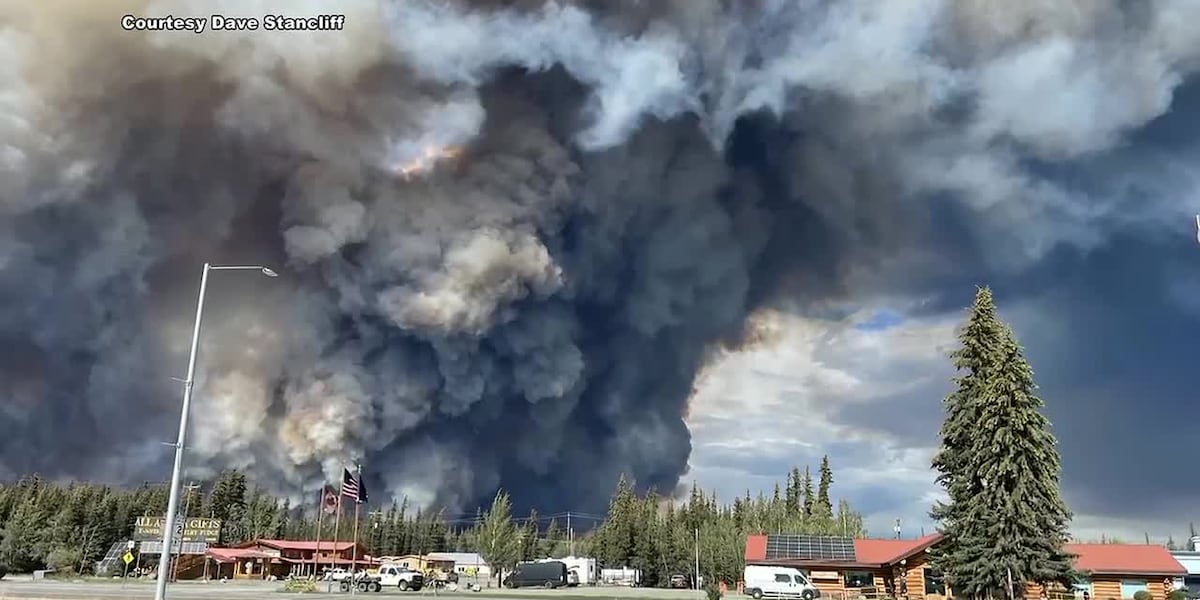
Dry conditions in the upper Tanana Valley set the stage for the destructive Mukluk Fire near Tok in August, one of the more damaging fires in state history. Jonathan Chriest, a meteorologist with the Alaska Interagency Coordination Center Predictive Services who also serves as an incident meteorologist, said the fire ignited August 17 during record-dry fuels and near red-flag conditions and moved through the wildland-urban interface in Tok.
“This is one of the more destructive fires in Alaska history,” Chriest said.
Thoman said the Mukluk Fire was not sparked by lightning.
“The meteorology of that fire, very much like the 2019 McKinley Fire in the Susitna Valley, sparked by a downed power line and then driven by strong winds,” Thoman said.
Thoman said the Tok area missed out on rain that fell elsewhere in the Interior.
“August in Fairbanks was near normal rainfall, but in the upper Tanana Valley, they just consistently missed out on rain all summer long,” Thoman said.
Canada’s Northwest Territories faced one of its worst seasons
While Alaska was spared through a combination of luck and timing, Canada’s Northwest Territories faced one of its worst fire seasons on record. Nearly 4 million acres burned, and two communities faced weeks-long evacuations.
Mike Smith, with the Canadian Forest Service, presented on conditions in the Yukon and Northwest Territories. He said Fort Simpson and Wrigley were both placed under evacuation orders starting in late June.
“Fort Simpson people were out for about three weeks,” Smith said. “Wrigley folks were out of home for about a month.”
Smith said 2026 ranked as the third-worst year for total area burned in the Northwest Territories, based on records dating back to 1971.
Thoman said the contrast between the regions was stark.
“There’s the least amount of area burn since 1977,” Thoman said. “That’s going back a long ways, whereas this was the fourth consecutive year with more than 2 million acres burned in the Northwest Territories.”
A link to the recorded webinar can be found here.
See a spelling or grammar error? Report it to web@ktuu.com
Copyright 2026 KTUU. All rights reserved.