
It’s Thursday, April 30. Here are the top stories we’re following today.
Canada’s GDP rises 0.2% as manufacturing sector regains momentum
Canada’s gross domestic product edged up by 0.2 per cent in February and preliminary figures suggest the economy grew in the first quarter, reversing a contraction that ended 2025. The new data, released by Statistics Canada on Thursday, showed February’s growth was primarily driven by goods-producing industries, which expanded by 0.4 per cent.
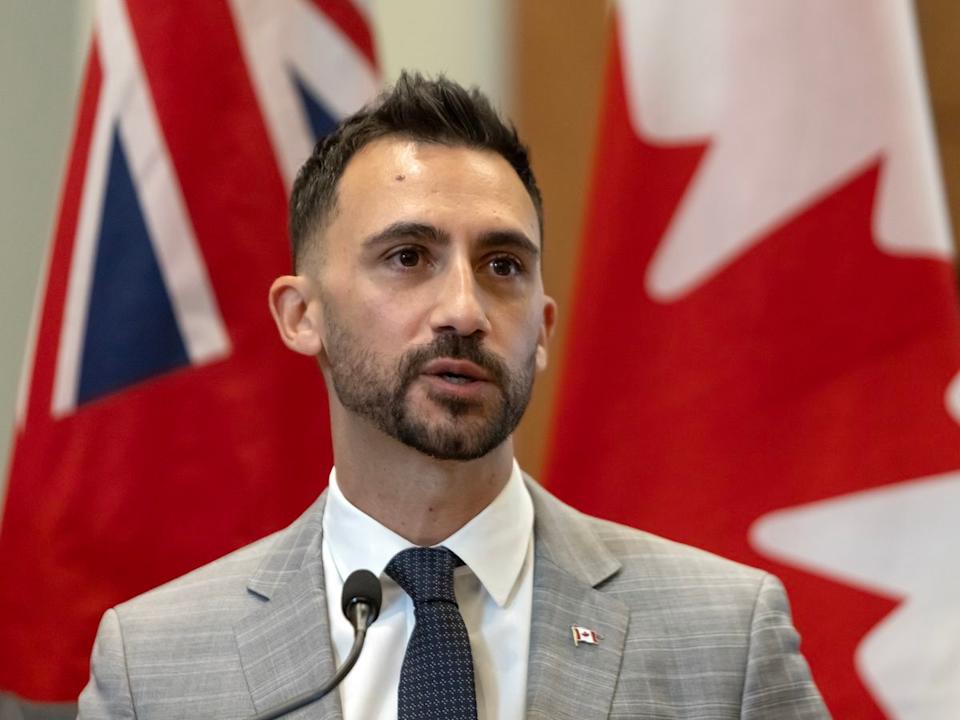 Ontario Minister of Energy and Mines Stephen Lecce speaks at the Prospectors and Developers Association of Canada conference at Toronto’s Metro Toronto Convention Centre on March 3.
Ontario lays foundation for first new nuclear reactor in decades
A heavy-duty crane on the north shore of Lake Ontario earlier this month picked up a 2.1 million-pound object resembling a giant bottle cap and laid it at the bottom of a 35-metre shaft to form the foundation of the province’s first new nuclear reactor in decades.
 Grant Fagerheim, chief executive of Whitecap Resources Inc., in his Calgary office on March 31.
Whitecap’s cash flow almost doubles, but profit falls on hedging losses
Whitecap Resources Inc.‘s first-quarter cash flow surged on higher production, though the light oil producer’s profit fell sharply due to a large accounting loss on hedging contracts.
There are three options to determine how much you need to pay each quarter: the no-calculation option, the prior-year option and the current-year option.
Here’s how and when you have to pay tax in instalments to the CRA
Tax instalments are required if your balance is more than $3,000 and was more than $3,000 in either 2025 or 2024, writes Jamie Golombek.
Canada’s auto sector is down 6.8 per since from February 2025.
Factory rebound could be head fake, warn economists who say Canada is losing ground to tariffs
Canada’s economy expanded 0.2 per cent in February, but growth looks set to tail off in March to close out the first quarter, giving the Bank of Canada a reason to keep interest rates steady for now, economists say.