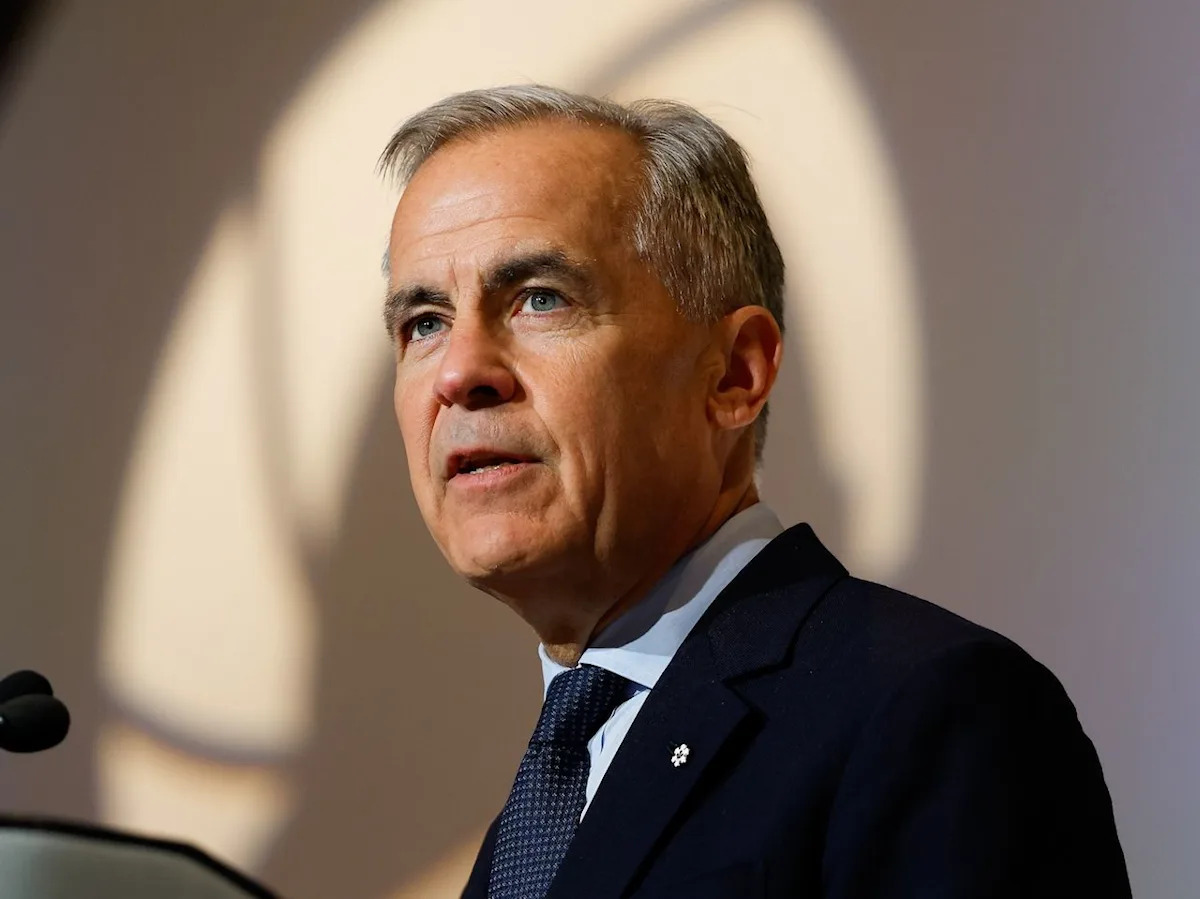
It’s neither sovereign, nor wealth, so it’s a mystery why Prime Minister Mark Carney has chosen this frame for his new $25 billion special project, the “Canada Strong Fund.”
One would typically expect a country announcing such a thing to have actually gone to the trouble of clearing debt and generating true sovereign wealth. The federal Liberals are conveniently skipping a few such steps.
The macro context in which Carney is announcing this is not flattering. Nearly 12 months since his election, Canada has managed only modest net job gains while shedding over 100,000 full-time jobs in the downturn of early 2026. The sharpest monthly drop in more than four years, 84,000 jobs lost in February 2026 alone, was concentrated in private-sector industries like manufacturing, retail, and resources. Canada also became the only G7 economy to contract in the most recent quarter, underpinned by continued weakness in business investment and productivity, and one of the highest unemployment rates in the group.
The specifics of this remarkably light-on-details proposal deserve some attention.
Typically, a sovereign wealth fund is employed when a country has a surplus and wants to avoid frivolous spending. Sovereign wealth funds are like endowments: take a chunk of excess wealth, invest in profitable ventures to generate return, reinvest a portion, and spend a portion. More precisely, they fall into a few categories: stabilization funds, savings funds like Norway’s GPFG, and strategic investment vehicles like Singapore’s Temasek. On the limited details available, the Canada Strong Fund looks closest to the third type, which is most prone to political direction of capital toward favoured ends.
Real sovereign wealth funds are typically drawn from resource royalties where the wealth-generating asset is owned by the state running the fund. Ottawa doesn’t own that asset. Control of resources belong to the provinces under Section 92A of the Constitution, so what’s being borrowed against is future federal tax revenue.
Ottawa does have a habit of forgetting about Alberta, except for when there’s money to be milked or vaguely-defined corporate villains to be ritually flayed on the altar of climate action.
Even setting the constitutional problem aside, wagering borrowed capital is inherently costlier and riskier. A debt-funded vehicle is a leveraged bet by the Crown, and one that is worse than not running the fund at all if it underperforms its cost of capital, because the liability persists either way. And it joins a crowded field of state-directed capital vehicles — the Canada Infrastructure Bank, the Business Development Bank, Export Development Canada, the Canada Growth Fund — whose mandates the government has now promised to “review” in lieu of explaining what gap this one fills.
Not only does Canada lack a healthy surplus, the country is actually buried so deep in the debt pit that the surface is a dim and distant glimmer.
The smarter move would be to generate that wealth in the first place by getting government out of the way. With sound fundamentals, a competitive private sector can carry the risk and deliver wins for the public purse.
Our broader productivity gaps come from regulatory drag, an uncompetitive tax structure, and weak domestic competition. To boot, much of Canada’s headline GDP growth this past decade came not from productivity, but now-slowing population growth.
Adding $25 billion in federal debt, even if somewhat offset by federal asset sales, only worsens the burden of public-debt-per-capita.
These factors require a bit more work to resolve than more borrowing and spending.
One could make the mistake of calling this bread and circuses. There would actually have to be bread to go around. A record number of Canadians are using food banks, a fact that repeats and worsens nearly every quarter.
Perhaps economic management-as-performance is the true circus.
To the crux of the matter, do Canadians care about real economic literacy or just a passable pretense?
One of my recent favourite lines at cocktail parties, when federal politics inevitably rolls around, and someone brings up Carney, is to innocently ask “So what exactly did he do as Governor of the Bank of Canada?”
Most steadfast supporters proceed to define what a central bank does.
I nod. They may even note that his term covered the 2008 financial crisis and its aftermath.
Well, as a central banker, Carney, like every central banker, encouraged debt.
His ultra-low interest-rate policy and forward guidance helped stabilize markets during the global financial crisis. But the broader growth model that crystallized in that decade, defined by debt-financed household consumption substituting for productivity growth, is the one Canadians have been stuck with ever since.
The model worked, in the narrow sense that it kept the lights on through a global crisis. It also locked in the debt overhang that now constrains monetary flexibility, the speculative housing dynamic that distorts every other investment decision, and the consumption-driven mirage we still pay for.
The same packaging that turned Carney’s easy-money housing bubble into a political credential is now starring centre-stage: borrowed billions sold to Canadians as nation-building while the economy falters.
Canadians have seen this show before. The question is no longer whether we will applaud the ringmaster. It is whether we will finally demand the tent come down. Thanks to the government’s carefully crafted majority, this is the show we’ll be watching for the foreseeable future.
That doesn’t mean the next several years have to be wasted ones. There is a version of this idea worth pursuing. Unleash the resource sector, let the provinces collect what’s theirs, and let real surpluses build a fund with principal that isn’t borrowed. That is what sovereign wealth actually looks like. A year of Carney’s policy has left the country’s C-suite critics embittered, which is no small problem for an economy that needs them to perform. Engage their complaints honestly, rather than absorb the Trudeau-era reflex of treating the productive economy as a problem to be managed.
Margareta Dovgal is a public policy commentator, focused on the intersection of resource economics and Canadian sovereignty.