
People who live in a Powers Street apartment block have to leave their homes to get home care because the Winnipeg Regional Health Authority has deemed the building unsafe for staff to enter.
Several tenants, who all said they were too afraid to be identified because of what they believe is gang activity in the 12-storey highrise, told CBC News they’ve seen an increase over the past few months in violence in and around the building. The violence includes stabbings, and they also reported drug use in the hallways, sex in public and people living in stairwells at 145 Powers St.
It’s gotten so bad that for the past month and a half, the WRHA has been asking people who get home care to go across the street to the nearby Indigenous Family Centre on Selkirk Avenue for their appointments with health providers.
That’s “not ideal for clients” but necessary to keep staff members safe, the head of the union representing 2,500 home-care workers within Winnipeg said.
Margaret Schroeder, president of the Canadian Union of Public Employees Local 204, said she isn’t aware of any specific incident that led to the change and has never heard of such an arrangement at any other building in the city.
“It’s become unsafe, with the new clientele that they’ve been allowing to move into the building,” Schroeder said.
“There have been some concerns. So, in order to keep the staff safe, they have changed how they’re going to deliver the care.”
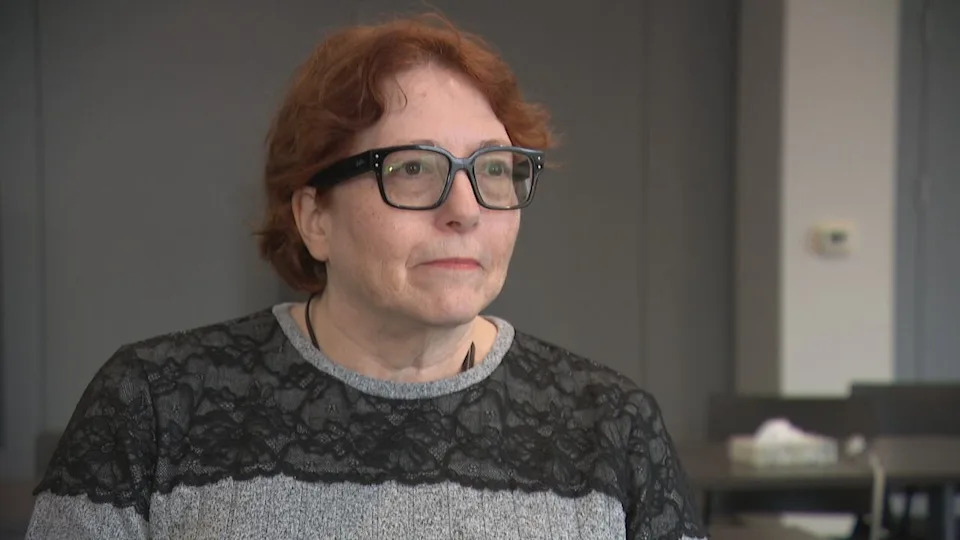
Margaret Schroeder, president of CUPE Local 204, says the situation is ‘not ideal for clients’ but necessary because of safety concerns. (Justin Fraser/CBC)
Manitoba’s housing, addictions and homelessness minister said the province is working with social service agencies to house homeless people in various properties, including buildings owned and operated by the non-profit Winnipeg Housing Rehabilitation Corporation. The corporation runs the Powers Street apartment block.
Bernadette Smith called the situation concerning.
“We know that there’s, from what we’ve heard, some criminal activity that’s been going on in there,” Smith said.
Safety concerns have also been raised by home-care workers at another Winnipeg Housing Rehabilitation Corporation property.
The WRHA said 31 people at the 55-plus Canadian Polish Manor at 300 Selkirk Ave. are still getting care in their homes, but workers are using a different entrance to reduce interactions with people trying to follow them inside.
Some people with a history of homelessness are also being housed at that building.
Smith said the government is “not going to tolerate criminal activity and criminal behaviour,” whether it’s gang activity, drug dealing or anything else.
“And we’ve said that to all of our service providers, and we’re working really hard to help residents and tenants change their behaviour, get them stabilized,” she said.

Bernadette Smith — Manitoba’s minister of housing, addictions and homelessness — says the situation at the building is concerning. (Bryce Hoye/CBC)
Her government’s Your Way Home strategy has come under some criticism from housing advocates and other social housing tenants for focusing too heavily on housing chronically homeless people. They’ve argued it’s putting the safety of other precariously housed people, including families and low-income seniors, at risk.
Mitch Bourbonniere, an outreach worker with an organization called OPK and the Downtown Community Safety Partnership, supports that strategy but isn’t surprised there’s been “growing pains.”
He has a family member who lives in a different social housing building,
“I can only speak from my personal experience of my loved one,” Bourbonniere said.
“And what they go through in their block is that they get people kind of milling about the building. And as soon as someone who lives there is entering, they dash in, and they occupy the stairwells, they occupy the hallways. And there’s been some very disturbing behaviours that affect everybody in those buildings.”
He said there can be a dynamic that leads to crime when new vulnerable tenants move into a building, especially if they’re living with addiction or mental illness.

Two police officers arrive at the Powers Street building Wednesday. Apartment residents say they have seen an increase in violence in and around the building over the past few months. (Justin Fraser/CBC)
“It does attract some of the outsiders from the building,” Bourbonniere said. “It attracts drug dealers and gang members, but it also attracts other folks that are struggling with addiction and mental health that are living unsheltered in the community. And so, it creates a friction and a feeling of unease and not having safety in the building for everyone.”
The front doors are locked at 145 Powers St., and there are security guards, but tenants said that doesn’t seem to be making a difference.
Winnipeg Housing Rehabilitation Corporation executive director James Heinrichs confirmed the home-care arrangement but had no further comment.
Smith said getting people housed and stabilized will take time.
The WRHA said it plans to restore home-care services within 145 Powers St. when the situation improves.