
The Auditor General of Canada says Indigenous Services Canada “fell short” in transforming how it delivered long-term funding to First Nations communities and organizations.
In a report released Monday, Karen Hogan found the federal government “did not effectively implement, monitor or assess” the New Fiscal Initiatives for First Nations program.
“What I want to see is better collaboration and co-creation with the department and First Nations communities,” said Karen Hogan at a news conference in Ottawa.
Hogan said the program had the ability to be “really transformative” on how it delivered long-term funding to First Nations, but is “underdeveloped right now.”
The New Fiscal Initiatives for First Nations was created in 2019 to provide “long-term, predictable and flexible funding” to First Nations for public health, education and income assistance programs.
It came after a memorandum of understanding was signed between the Assembly of First Nations and the federal government in 2016 to reshape how this type of funding was delivered to communities.
The report found that by the end of 2024-2025, $6.5 billion had been distributed to 160 First Nations through 10-year grants.
As of September 2025, 191 First Nations, tribal councils, health and education authorities were receiving funding through 10-year grants.
However, Indigenous Services Canada “did not assess whether the 10‑year grants were helping to address the disparities and inequities between First Nations and other Canadians,” according to the report.
“Last year, at my mid-mandate, I talked about the government needing to really transform the way it interacts with First Nations communities,” Hogan said.
“I was hopeful that the New Fiscal Initiatives would be different, and I think that it fell short in meeting its mark.”
2 key responsibilities
The report said the department also did not did not monitor consistently the continued eligibility of grant recipients.
The report said the First Nations Financial Management Board assesses certain financial performance measures and produces monitoring reports. The audit found 39 per cent of the recipients’ files reviewed (14 of 36) had the required monitoring reports for all years.
The audit also found that Indigenous Services Canada had not assessed the grants’ impacts on closing socio-economic gaps despite the large amount of data the department already has.
The report says the government failed to meet two key responsibilities, both meant to increase First Nations’ financial management capacity and accountability.
First, it did not replace its Default Prevention and Management Policy, and second, it did not establish a “mutual accountability framework” between the government, First Nations, and their citizens.
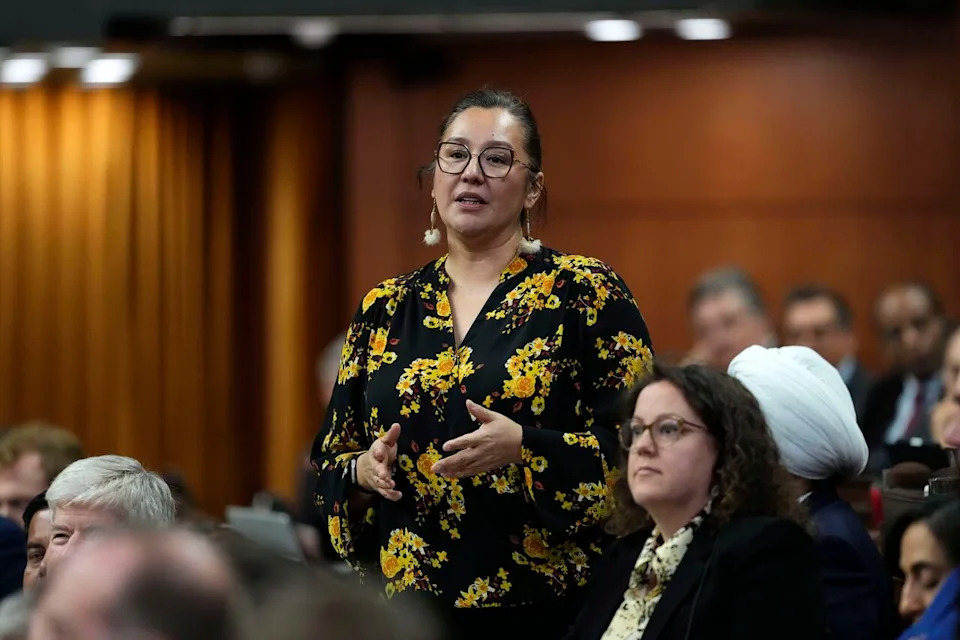
Indigenous Services Minister Mandy Gull-Masty says the federal government is taking steps to address the issues identified in the auditor general’s report. (Justin Tang/The Canadian Press)
Indigenous Services Canada Minister Mandy Gull-Masty released a statement Monday in response to the report, stating the department has “achieved significant progress” on these two commitments.
Gull-Masty said the department is “continuing to work with First Nations partners to advance a renewed approach to accountability that reflects their priorities and realities,” and is “taking steps to address the challenges identified in the report.”
Indigenous Services Canada agreed with the two recommendations in the report: to provide additional support to First Nations and grant recipients “to increase their administrative and financial capacity to prepare” the annual monitoring statements, and to use existing data to “measure, assess, and annually report” how the grants are closing gaps between First Nations and non-Indigenous people.