
As gardeners and lawn enthusiasts look forward to April’s showers bringing May’s flowers, many are considering which plants will make the cut in Calgary’s tumultuous climate.
Many garden centre favourites can struggle to thrive throughout a rainy (and occasionally snowy) early summer, a drought-prone late summer, and temperature fluctuations brought about by chinooks — all at a high altitude and within a relatively short growing season.
Not to mention the ever-present possibility for water restrictions.
It’s survival of the fittest, but plants that are native to Alberta, though tougher to find at your local garden centre, are well-suited to the task.
“Native plants are really well-adapted to grow in our area,” said Latifa Pelletier-Ahmed, co-owner of ALCLA Native Plants in Carstairs.
“From a horticultural point of view, it’s advantageous because you can have plants that are chinook-tolerant, drought-tolerant — so we have more water-wise gardening.”
Not only do native plants contribute to a lower-maintenance garden that thrives year after year, they also have major benefits for the local ecosystem. ALCLA Native Plants grows and sells native plants and seeds, but Pelletier-Ahmed said there’s also an educational component to the work they do.
“A big piece of it is supporting wildlife and pollinators,” she said.

A monarch butterfly at the Wilder Institute/Calgary Zoo on April 20, 2026.
“Approximately 90 per cent of insects have a specific relationship with native plants. The most famous example is the monarch butterfly. The western population has declined by 99.9 per cent since the 1980s, and a big part of that is the loss of milkweed on the landscape.”
The female butterfly can only lay her eggs on specific types of plants, and some native bees can only feed on certain flowers.
“A lot of other insects have these specific relationships,” Pelletier-Ahmed said. Those relationships continue up the food chain, with the entire ecosystem ultimately supported by native plants.
“It’s something that anyone can do to support wildlife,” she said. “The whole food web of life gets supported, whereas now a lot of this is fragmented because of habitat loss.”
Native plants and smart watering the key to eco-friendly gardening
Canadian prairie grasslands are actually one of the world’s most endangered ecosystems, and aren’t very well-protected, she said.
“A lot of them are on private land as well . . . so educating folks can not only get them excited about preserving their own land or their own family’s land, but also to help to restore,” she said. “We get more and more folks wanting to have wildflower meadows instead of front lawns or on their acreages to support wildlife.”
Some of Pelletier-Ahmed’s garden favourites are bee balm, wild bergamot, wild strawberries, and native clump-forming grasses like giant wild rye.
But native plants aren’t the only contributors to a drought-resistant garden. Horticulturist Kath Smyth has mastered the art of keeping as much stormwater on her property, and out of the storm drains, as possible — and she shares her expertise through her work with the Calgary Horticultural Society.
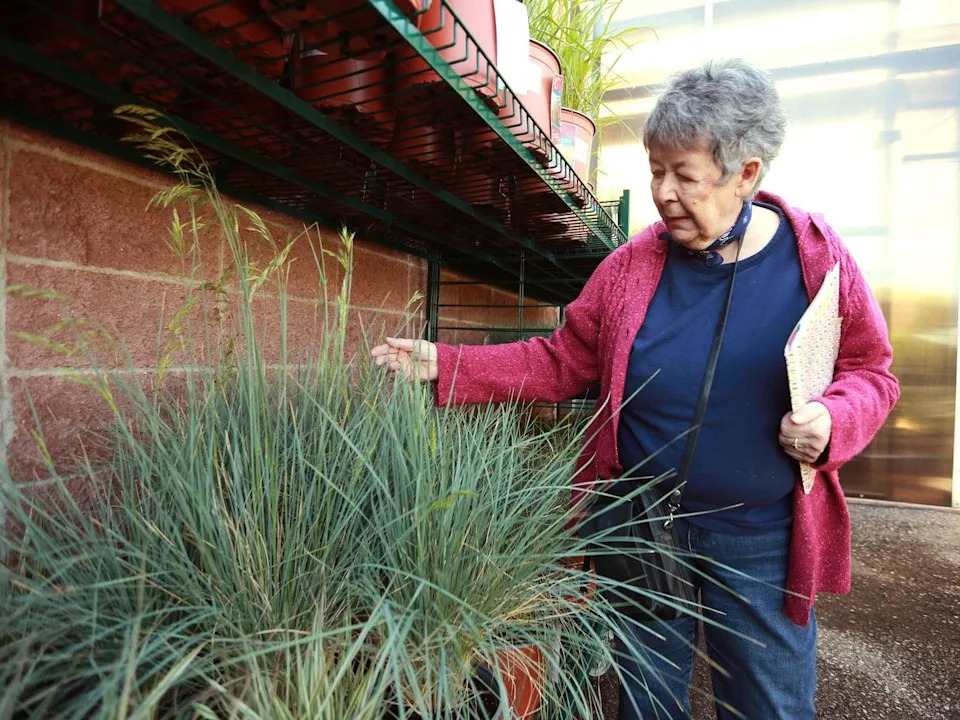
Kath Smyth, from the Calgary Horticultural Society, and a well-known avid gardener, shows some water-wise (drought resistant) plants and flowers available at Greengate Garden Centre in southeast Calgary on Thursday, April 30, 2026.
“Nine years ago, I got rid of all of my lawn,” she said. “I had no lawn in the backyard anyway, and in the front garden it became smaller and smaller because I just kept planting. My whole mission was to keep the water on my property, and by planting reasonably strong trees and shrubs, you do that — and then your perennials go in and around it.”
The root systems of plants, she said, are extremely efficient at trapping water and holding onto it. She also has a rain barrel, and strategically directs all her downspouts to make best use of the runoff throughout her garden.
“Part of my garden at the back has to cross the foot path and go into my garden, but I’ve just run my downspout along the side of the fence and mounted it and it drains into weeping tile,” she said. “I’ve created a rain garden, if you will. The water goes down underneath and allows the water to trap, and I use rock to direct the flow.”
Having well-draining soil is key, she said, but mulch and ground cover plants also help to prevent water from evaporating.
“After a while, you start to practice some of the things that help, and always have,” she said. “My grandpa always had a big barrel in his garden somewhere with the downspout running in . . . He kept his watering cans beside it. I never saw my grandpa use a hose to water his vegetable garden, and it was a big one.”
For her, building drought resilience into her garden means working with the climate we have. It also means less stormwater is polluting the rivers.
“Our rivers are important to us, and they always have been in Calgary,” she said. “We have to be the stewards of that, if you will.”
Use potted flowers to bring the colour to your garden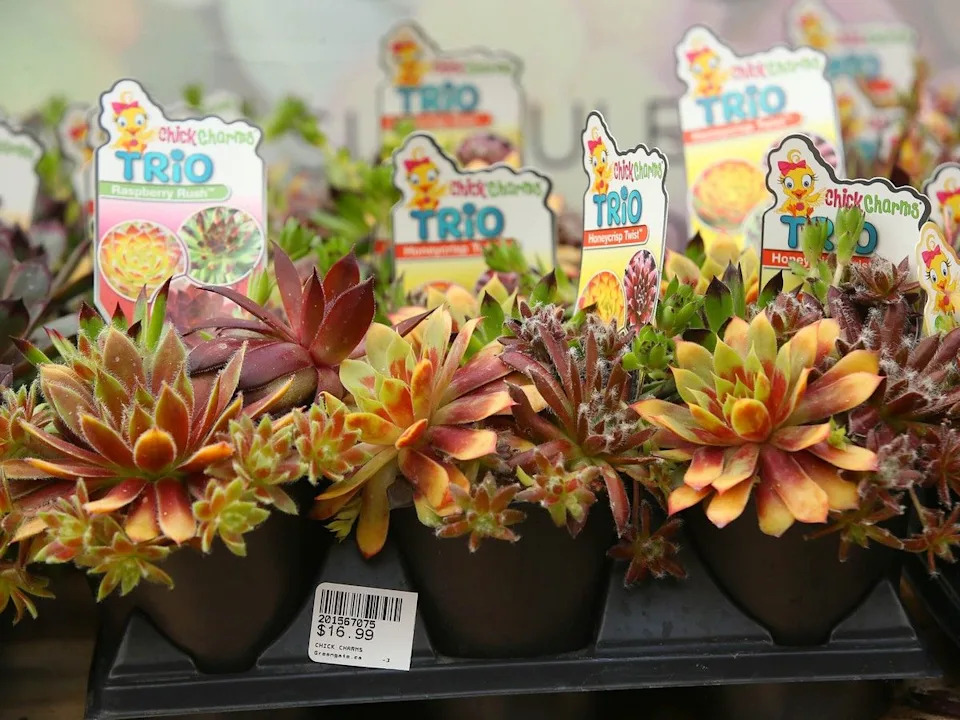
Some drought resistant plants and flowers for Calgary’s growing zone.
She’s also a proponent of utilizing native plants, both for their resilience and for the environmental impact. Though her garden is primarily made up of trees, shrubs and perennials, she still fills two large planters with annual flowers for her front porch.
“The garden centres are still selling really beautiful annuals and all of that, and I’m not going to put them down. I think that there’s nothing prettier than annual pots and doing some of that,” she said. “You don’t have to sacrifice the pretty.”
The Horticultural Society also partners with the City of Calgary on their YardSmart program, which aims to equip Calgarians with the resources to design a yard that conserves water, thrives in Calgary’s climate, and is pollinator-friendly.
“YardSmart serves a number of very important purposes, one being that it reduces outdoor water demand in the summer months, so it takes pressure off of our water system,” said Jennifer Makar, the city’s leader of environmental programs for climate and environment.
“It also helps improve storm water quality, and it also decreases the storm water volume, so that helps keep our rivers healthy,” she said. “It helps reduce localized flooding. It also helps with biodiversity, because a YardSmart yard tends to be very pollinator-friendly, so that is valuable to our ecosystems. It also has climate benefits as well, by improving climate resilience.”
The program, she said, has been growing in popularity over the years.
“I think as people start to see their friends and neighbours have YardSmart yards, they soon realize that they’re easy to maintain, they’re beautiful, they’re healthy for the environment,” she said. “People are seeing the value and we’re seeing more uptake.”
The program’s online resources include plant guides, garden bed design guides and tips, brochures and how-to videos. Right now, Makar said, is the perfect time of year to start planning.
“We designed the YardSmart program to be easy to implement,” she said. “If you’re a beginner gardener, you’re new to gardening, you don’t know where to start, YardSmart is really great for that.”
Catch up with the day’s headlines, curated by our editors and delivered to your email inbox at lunchtime on every business day. Sign up now for the Calgary Herald Noon News Roundup.