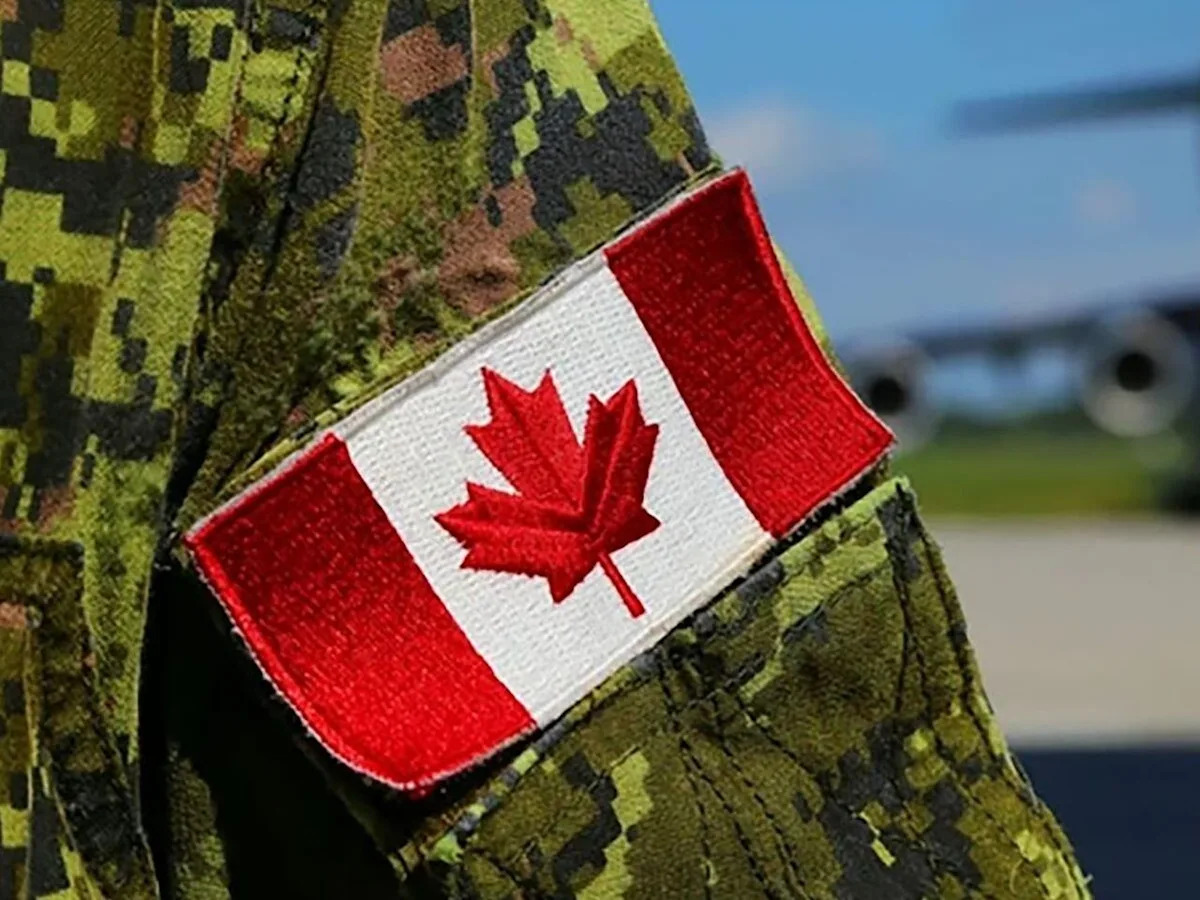
This weekend, the U.S. paused its participation in an organization most Canadians have likely never heard of: the Permanent Joint Board on Defence. It was established in 1940, following U.S. President Franklin Delano Roosevelt’s pledge that the U.S. would defend Canada if it were attacked, and Prime Minister William Lyon Mackenzie King’s promise that “enemy forces should not be able to pursue their way, either by land, sea or air to the United States across Canadian territory.” The board met some 42 times during the Second World War and most recently convened every six months — until now.
Today, Canada stands accused of violating Mackenzie King’s oath. In a post on X, U.S. Under Secretary of War Elbridge Colby wrote, “A strong Canada that prioritizes hard power over rhetoric benefits us all. Unfortunately, Canada has failed to make credible progress on its defense commitments.”
In other words, we’re not maintaining a strong enough military to keep the bad guys out of America’s backyard — and we’re saying things Washington does not want to hear. Colby pointedly included a link to Prime Minister Mark Carney’s speech to the World Economic Forum in Davos in January, in which Carney called on middle powers to “live the truth” instead of pining for the old-world order, by banding together in the face of hostile or indifferent superpowers — including, by implication, the United States.
At the time, Carney’s speech rallied Canadians, fed up with U.S. President Donald Trump’s constantly changing tariffs and threats about making us a 51st state. It also got the world’s attention, crowning Carney as the leader of the anti-Trumps, notably the European countries who have similarly lost patience with Trump’s bluster about taking over Greenland while he exhibits a comparatively friendly attitude toward Russia.
Since then, Carney has stuck plenty of other sticks in Trump’s eye, including his recent appearance at the European Political Community in Yerevan, Armenia — a first for a non-European leader. Retired Vice-Admiral Mark Norman is therefore not surprised at the latest U.S. response. “This is politically motivated and fits perfectly into the ongoing tactics of the current administration to undermine Canada in as many ways as possible,” he told National Post.
Norman adds that it puts our government in a tough spot. “If they are honest about it, it sounds like yet another painful hit they couldn’t manage.” To minimize the political impact, he says, Ottawa will downplay the significance of the historical arrangement — but it does so at its peril.
Like it or not, Canada’s defence is geographically wedded to that of the U.S. And there are far bigger joint commitments than this Board which we must maintain. Chief among those is the North American Aerospace Defense Command (NORAD), responsible for the shared monitoring and defence of North American airspace and maritime approaches, detecting and tracking potential aerospace and ballistic threats. While enshrined in a treaty, its existence is not guaranteed, especially given Trump’s affinity for executive orders.
In a written statement on Monday, Defence Minister David McGuinty said “Canada will work with trusted partners who are ready to work with us, always remaining ready to come to the table for constructive discussions about the best ways to strengthen mutual defence and security.”
But he did not mention the U.S. specifically, implying that Canada could be looking at partners across the pond — something we are currently doing when it comes to our fighter jets. Ottawa is currently weighing whether to continue with its purchase of American F-35 fighters or Swedish-made Gripens — and U.S. Ambassador Pete Hoekstra has already said that NORAD would have to be altered if we didn’t buy American.
Pulling out of the Permanent Joint Board is yet another bully move, likely intended to sway that decision. But it’s also a shot across the bow this government needs to take seriously. We can go out dancing with middle powers — but we live with the elephant next door.
Postmedia News
Tasha Kheiriddin is Postmedia’s national politics columnist.