
Premier Danielle Smith’s referendum question could get slammed to a halt by Ottawa.
“This is a very dangerous bluff,” Prime Minister Mark Carney said Monday, in a powerful put-down of Smith’s referendum question.
That’s the quote everybody noticed. More consequential was his statement that Ottawa will review Smith’s two-pronged question to see if it conforms to the federal Clarity Act.
“We have an obligation as the federal government to look at the question and determine whether it’s consistent with the Clarity Act,” Carney said in Ottawa.
“Ultimately, if there are questions around that, questions about the clarity of the question . . . that would be a role for Parliament.
“I’m not saying that’s the case, but we’re just in the process of doing our due diligence.”
Under the act, Parliament can declare a question improper and therefore refuse to deal with it. There could also be legal action to declare the question invalid.
That has already happened twice. Why not now?
Related
Smith seems to think her question is shielded because it only asks if people want a later binding referendum on independence. Legal experts were consulted on how to keep the question out of court.
But if clarity is the test, this question might not do so well: “Should Alberta remain a province of Canada or should the Government of Alberta commence the legal process required under the Canadian Constitution to hold a binding provincial referendum on whether or not Alberta should separate from Canada?”
“Look, is it helpful to ask these fundamental questions?” Carney asked.
“No, it’s not helpful. Of course it’s not.
“Is it the democratic will of Albertans? Did they vote for this in the last provincial election?
“No, they didn’t. It wasn’t on the ballot, wasn’t in the mandates or platforms of any of the governing party and the official Opposition.”
Carney also cited Britain’s Brexit example, which seems ever more relevant.
“I saw first-hand what happened in the United Kingdom when the view was, vote for this, it’ll be soft and then we’ll negotiate,” the PM said.
“And they’re still — 10 years later — trying to undo what people didn’t think they were voting for but ended up having.”
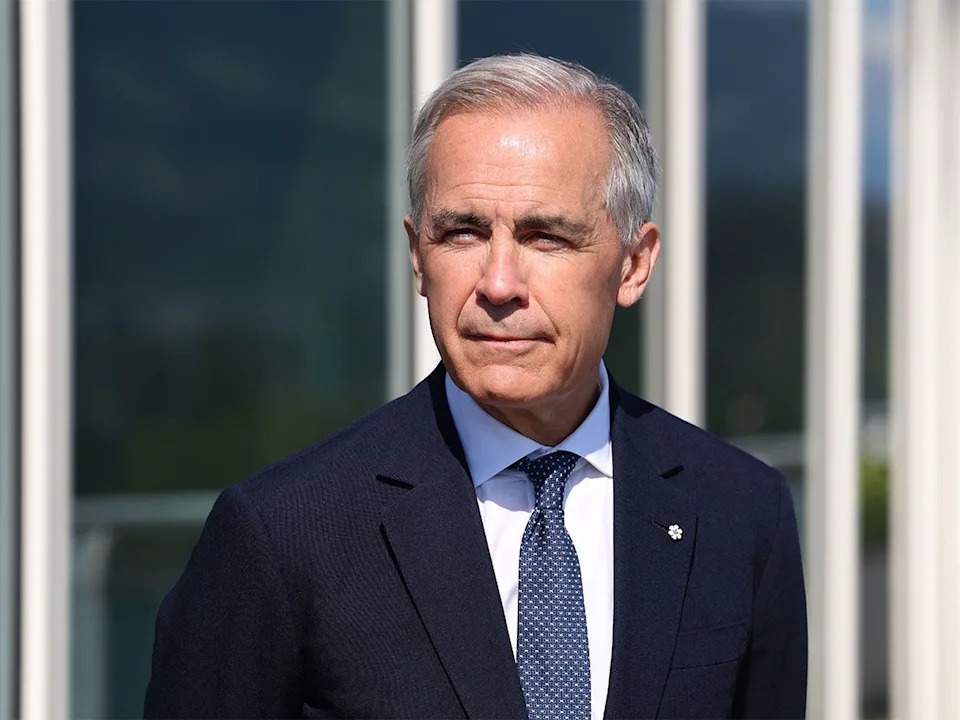
Prime Minister Mark Carney in Vancouver, B.C., on May 20, 2026.
Carney said he’ll join the federalist campaign, not with speeches but with pro-Alberta economic actions.
Smith says she’ll vote to remain in Canada and promises to campaign across the province all summer.
The premier has drawn a line in the sand with her own caucus. MLAs are expected to toe the pro-Canada line. Some may not.
Also, Smith is in league with Liberal Carney, who collaborates with her but thinks her referendum question is dangerous.
In the long-running Alberta-Ottawa barn dance, there’s rarely been a weirder clash of contradictions.
A new Angus Reid poll shows deep discontent with how Smith has handled the referendum issue through three attempts to get it to a vote.
Fifty-six per cent of all Albertans say she’s done “very poorly.” Twenty-eight per cent of UCP supporters agree.
Also, 58 per cent say she’s only pushing ahead to appease the separatists in her own party. Thirty-three per cent of UCP voters think that’s true.
Nearly 20 per cent of Albertans believe she wants Alberta to leave Canada, despite her pro-Canada declarations.
Another 40 per cent feel she doesn’t care what happens, as long as she stays in power.
Sixty-four per cent of her party members want the binding vote on separation.

Stay Free Alberta delivered the signature documentation to Elections Alberta headquarters in Edmonton on Monday, May 4, 2026, surrounded by a sea of supporters with Alberta flags.
Smith is now in the bizarre position of campaigning against the wishes of those people, while also infuriating many federalists.
Questioned about this, she says the people who signed referendum petitions are the ones responsible.
Smith insists that she can’t ignore the wishes of 700,000 people who wanted to have a referendum.
In her math, that includes the 301,000 who are alleged to have signed the separatist petition.
Those signatures have not been counted and verified, if they even exist. It’s possible that the leak of data on three million Alberta voters led to many signatures, essentially corrupting that whole campaign.
Smith caused this mess because of the separatist threat to her party. She changed the law to make things easier for the separatists. She pulled one ruling out of court.
Now that the premier’s in a jam, she doesn’t get to pin her decisions on honest people who cared enough to sign a petition.
Don Braid’s column appears regularly in the Herald