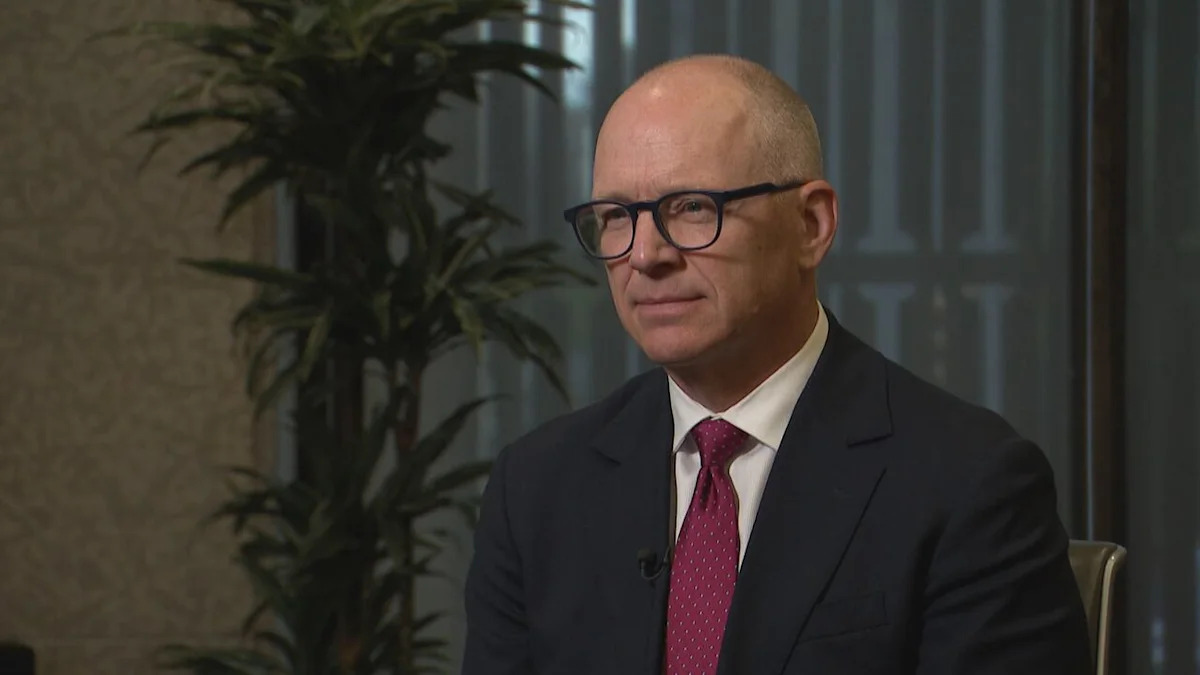
A poll of Winnipeg voters suggests roughly half the electorate doesn’t want to see Scott Gillingham serve another term as mayor — but fewer than one in 10 believe anyone else can do much better trying to alleviate the city’s homelessness and addictions crisis.
A Probe Research poll of 600 Winnipeg adults, conducted on behalf of the Winnipeg Free Press in late May and early June, found 46 per cent of voters in the Manitoba capital wanted Gillingham to be re-elected this fall.
Only 19 per cent of survey respondents wanted Gillingham to serve a second term, while 36 per cent weren’t sure.
In response to a separate poll question, only eight per cent of voters said they believe the next mayor and council will make headway on major issues facing the city, most notably crime, homelessness and addictions.
Another 35 per cent said another mayor will make a minor difference, while 34 per cent said another leader would make no difference and 23 per cent were not sure.
Gillingham said Winnipeggers are frustrated with what they see on the city’s streets.
“There’s too much addiction on our street. There’s too many people who are struggling with homelessness. There are too many people who are using drugs,” Gillingham said in an interview in his office Wednesday.
“The province, the feds and the city have got to do more to get addicts off the street and into housing with supports and into detox. We need more detox beds. We need more long-term treatment.
“We can’t just let people struggle on the streets and their addiction. I think that is certainly a disservice to our community, and it’s a disservice to those who are struggling.”
Gillingham, who was first elected mayor in 2022, said the Probe poll results are discouraging because city council has made progress in areas such as reducing crime, increasing the supply of housing and lobbying Ottawa for bail reform.

Winnipeg has tried to reduce homeless encampments, such as this one located along Waterfront Drive. Critics say more has to be done to find supports for homeless people. (Prabhjot Singh Lotey/CBC)
He nonetheless said he shares the concerns Winnipeggers have with the misery out on the streets.
“There could be a sense for sure of concern and frustration, of not wanting that to be our city. I don’t want that to be our city, either,” Gillingham said.
Fort Rouge-East Fort Garry Coun. Sherri Rollins, who quit the executive policy committee in early 2025 over differences with Gillingham, said she does not blame the mayor for Winnipeg’s worsening social situation.
“I’m absolutely not putting it just on the foot of the mayor — this is bigger than that. And Winnipeggers shouldn’t, either,” said Rollins, who described the homelessness and addictions crisis as dire.
“We know that as a city we are not doing our part, that we are underfunding the outreach. And we know as a province, we don’t give the city the available resources in primary health that other cities have, to the tune of tens of millions,” she said.
Rollins said despite her misgivings about Gillingham, she considers him the only viable candidate in a field of eight.
The other seven registered candidates — Mazher Alam, Johnny Calderon, Chris Clacio, Umar Hayat, Joshua Pagdato, Mike Vogiatzakis and Don Woodstock — have not held public office.
“I firmly believe he will be mayor. I believe voter turnout will be very low,” Rollins said.
Mary Agnes Welch, a partner with Probe Research, said she believes the poll shows Winnipeggers are holding out hope someone other than Gillingham will run, something she said appears increasingly unlikely.
She said the poll also reflects a “really deep skepticism that any level of government, particularly city hall, with no money and not a great track record on these things, can get us out of the doldrums that we are feeling right now as Winnipeggers.”
Welch said every Probe poll conducted in Winnipeg reveals deep concerns about addictions, homelessness and social disorder.
“Those are the things that are making us wonder about, really, the future of our city,” she said.
The Probe poll of 600 Winnipeg adults was conducted between May 25 and June 8. The sample was made up of 284 Winnipeg residents randomly recruited by live telephone operators, 88 recruited through text messages, 110 through interactive automated voice calls and 118 from members of Probe’s proprietary online panel.
All respondents completed the survey using an online platform. The survey has an error margin of four percentage points, with a certainty of 95 per cent. The sample was weighted by age, gender, region of the city and education to reflect the background demographics of Winnipeg’s population.