“When you come to Canada,” Mark Carney told newcomers in a speech addressing antisemitism, “you bring your faith, your tradition, your language, your story. You leave behind your wars and your animosities.”
It’s a pleasant, even pleasing fiction for millions of Canadians who imagine that a mythical “blank slate” exists for newcomers. The hard truth is that some peoples’ stories are welded to wars, and many of their traditions are centred on a desire to settle scores.
Many Canadians are guilty of this through their belief that being anti-American is the only organizing principle of Canadian life. Fortunately, Canadian anti-Americanism is a middle- and upper-class phenomenon that does not manifest in firebombs, machetes and religious extremism. This is not the case with some other nationalities.
If Canada wants a preview of what is likely coming in the next decade, it should look to the United Kingdom. The U.K. churns out high-profile figures who are not foreign-born, but who have fully embraced their ancestral grievances and become British thought leaders.
Take Ash Sarkar, for example. Born and raised in London, Sarkar has expressed great pride in the memory of her great-great-aunt, who fought colonial rule in British India, and has proudly described her as a “terrorist.” Clearly, these anti-British attitudes have become a potent intellectual hobby in the 21st century.
Alongside Sarkar is another homegrown malcontent named Bushra Shaikh, a British-Pakistani media personality. Her prolific online life is often spent arguing that descendants of those harmed by the British Empire should examine their place in modern Britain. Never mind that Shaikh has reportedly enjoyed state-sponsored tours of the Islamic Republic of Iran and been in contact with regime officials, whose narratives about international politics resemble hers.
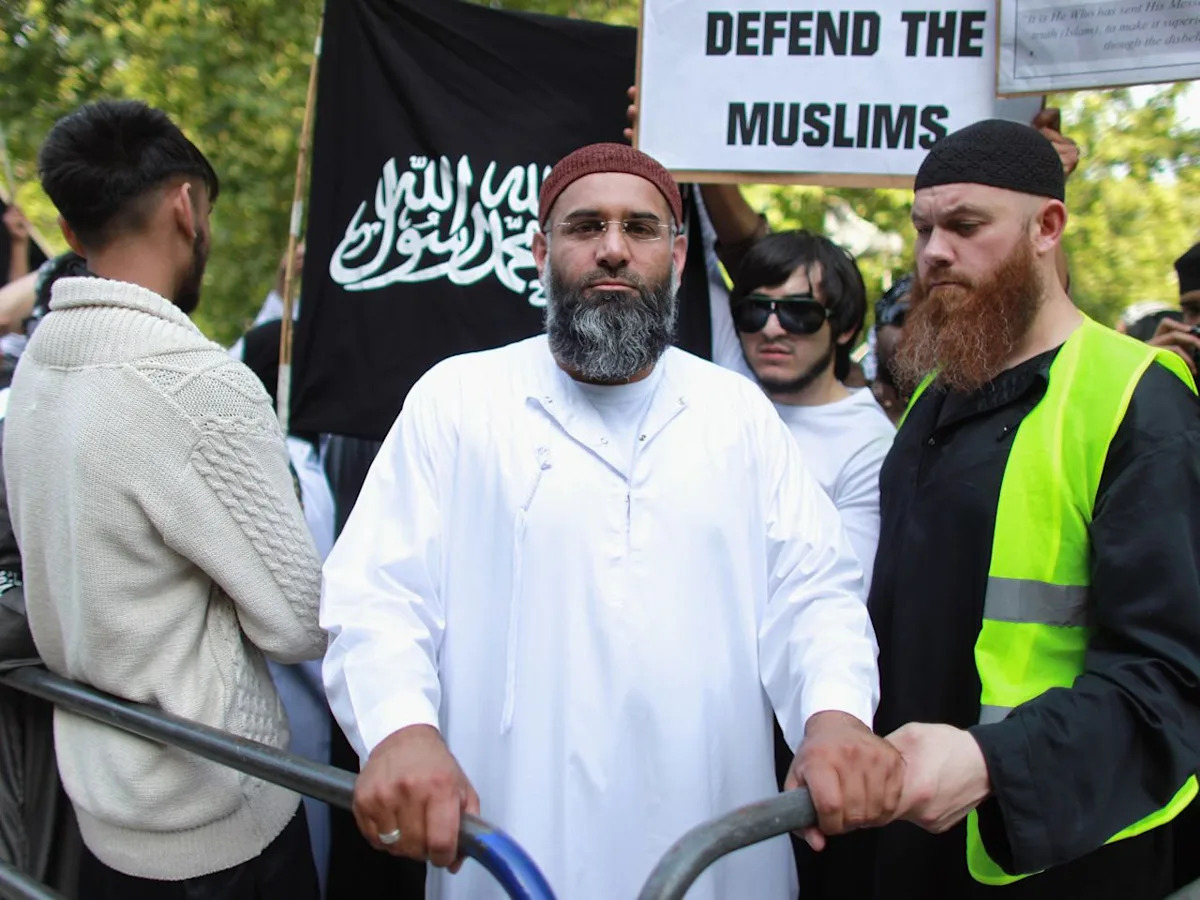
Then there is the infamous and formerly notable Anjem Choudary, who was born in London to Punjabi Muslim parents. After spending much of his university years apparently drunk and chasing women, Choudary morphed into one of the U.K.’s most virulent Islamist extremists. In 2024, Choudary was convicted of directing a domestic terror organization and was promptly jailed for life.
Do not underestimate the long-simmering grievances of many diasporas, whose once-bottled-up historic resentments are coming uncorked. Even among more palatable voices in Britain, the same strains are present. Mehdi Hasan, an Oxford-educated liberal who is often found on television panels, has asserted that Britain should pay reparations to its former colonies.
If anybody thinks Canada will somehow avoid this post-colonial hangover, they are deluded. It was only this past spring in British Columbia that NDP MLA Rohini Arora invoked her family’s history of empire when pushing decolonization, because “India and Pakistan … share the same colonizer” as Canada.
Birthplace alone does not settle or define allegiances, especially in this day and age. The cultural inheritance of the children and grandchildren of migrants is often more than just food. Just as Italian culture is more than pasta, Japanese culture is more than sushi and Somali culture is more than bananas and rice, these cultures all have shared, collective memories that are not easily forgotten.
The Irish diaspora is the most significant example in North America. Many Irish-Americans continue to show apathy and disdain for Britain. For decades, they funded and armed Irish Republican Army (IRA) terrorists during the Troubles in Northern Ireland.
From suitcases full of cash to jars passed around at dances, dollars raised in America went towards buying assault rifles and explosives, all in the name of ending British governance back home. The Kennedy political dynasty dedicated great time and effort to meddling in Northern Irish affairs, despite being born and raised in America. Even in modern times, crowds have been heard singing pro-IRA songs during boxing matches in New York City.
In Canada, we can see inherited grievances that go beyond mere anti-colonial seething. In 2023, a parade in Brampton, Ont., organized in part by the Khalistani lobby, which wants a Sikh homeland in Punjab, featured a float portraying the 1984 assassination of Indian Prime Minister Indira Gandhi, leading to a rebuke from India. And it happened again just this month, with another parade featuring Khalistani flags and glorifying the killing of Gandhi.
In the U.K., younger, British-born Sikhs of Punjabi descent are reportedly becoming more religious and more sympathetic to the Khalistani cause. Foreign nationalism is spreading throughout the West, and the radicalism of the pro-Palestinian movement is the best example of this, as it has increasingly turned Canadian Jews into stand-ins for Israel.
In 2019, Hamas official Fathi Hammad demanded that Palestinians abroad attack Jews worldwide. Since 2015, there has been a 417 per cent increase in antisemitic crimes in Canada. A country cannot import people en masse, without some kind of values test, and expect that their stories, as Carney described them, will not contain hatreds and wars that will evaporate at airport customs.
This is a problem that has turned deadly. Recently, Toronto police Const. Marc Pinizzotto was killed while executing a search warrant related to the March shooting of the U.S. Consulate. The consulate shooting has been allegedly linked to Iranian-backed networks, and to a man with ties to the Iranian regime, which is at war with Israel.
If the prime minister means what he says, he should follow it up with action, such as instituting a Canadian values test for newcomers. It’s true that not every migrant will become an extremist or give a second thought to history. However, highly motivated individuals can have an outsized effect and it is the government’s duty to ensure that extremism does not continue to gain a foothold in this country.
The once-mighty Great Britain, currently racked by ethnic and religious violence caused in part by irresponsible mass immigration, is our future if Canada doesn’t abolish its myths about “blank slates.” People do not always forget the past when they get off an airplane.
National Post