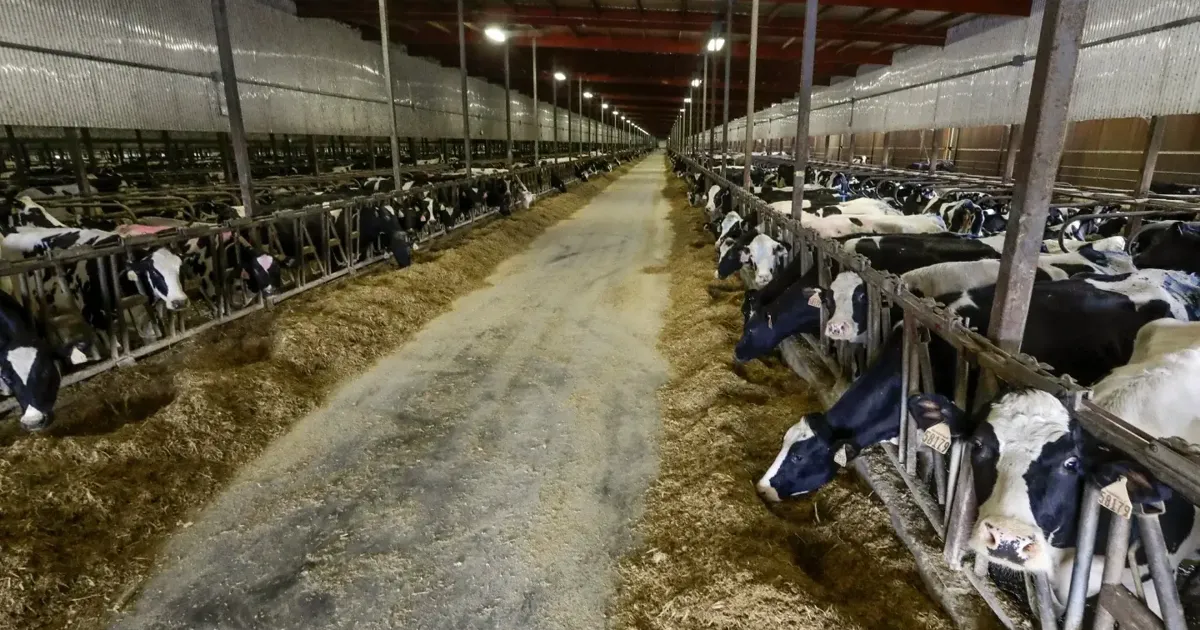
LOCAL dairy farmers have warned that any collapse of the industry could negatively impact the health of Trinidad and Tobago’s children and infant population, whose nutrition needs include accessibility to affordable milk and milk products.
President of the Trinidad Unified Farmers Association Shiraz Khan sounded an alarm yesterday over what he called a ‘serious threat’ to the country’s dairy industry, following an announcement by Nestle Trinidad it was reviewing options for its dairy and juice businesses in Trinidad and Tobago, including a possible exit, as part of a broader global strategic review.
Khan on Tuesday led a call for an urgent meeting between dairy farmers and Nestle, along with Government intervention.
Speaking to the Express yesterday, he called on Prime Minister Kamla Persad-Bissessar to treat the matter with urgency, recalling her stated commitment to the well-being of the nation’s children.
‘This could potentially cause malnutrition (among) some of the children of the nation. There are many families who rely on access to affordable and quality food items, including milk, for their children,’ Khan said.
He reported that T&T’s dairy production has steadily declined since 2000, due to factors including rising operational costs, animal theft, and lack of State resources including veterinary services and approved land tenure. Khan, who also operates a livestock farm in Carlsen Field, said some 200 farmers, including up to 70 dairy farmers and their families, would be impacted by any loss of business with Nestle.
He went on to reject any suggestion that T&T could import more pasteurised milk, if Nestle were to shut down its dairy operations.
‘There is an urgency to address our nutritional security. The solution is not to increase dependence on imports,’ the former president of the Sheep and Goat Farmers Association stated.
Khan said investing in local dairy farmers would add to local food security, while preserving livelihoods. He also questioned the quality of milk and dairy products that people may be exposed to, if local suppliers are shut down.
‘Why increase your imports, when we are already facing a massive annual import bill?’ Khan asked.
He added: ‘There is also a health cost. Imported dairy requires more preservatives, this is not always for the health of children.’
Meet with farmers
Khan called for an urgent meeting between Nestle, dairy farmers and the Government before the situation worsens. He said farmers were also anxious that they would be left without income or any gratuities if Nestle were to cut their contracts.
‘Farmers would have nothing to get, no compensation,’ Khan said.
‘They would not get any benefits, even though there are farmers who have worked with Nestle for over 60 years.’ He also pointed to changing geopolitical conflicts, which have affected global supply chains for the past several years. He strongly advised against further dependence on imported foods, and called for an aggressive policy to revive agriculture and dairy in T&T.
Khan said dairy farmers cannot pause their production until a resolution is reached, if Nestle should stop buying their milk. Many farmers would have to sell their livestock without Nestle as a buyer, he added.
Citing ‘extreme anxiety’ among dairy farmers, Khan called for a clarity as to whether the Valsayn plant may be sold.
Agriculture, Land and Fisheries Minister Ravi Ratiram, speaking during a meeting two weeks ago with a senior delegation from the multinational food company, said the Government remains committed to working closely with dairy farmers and other key stakeholders to ensure there are no disruptions to the dairy supply chain during the restructuring process.