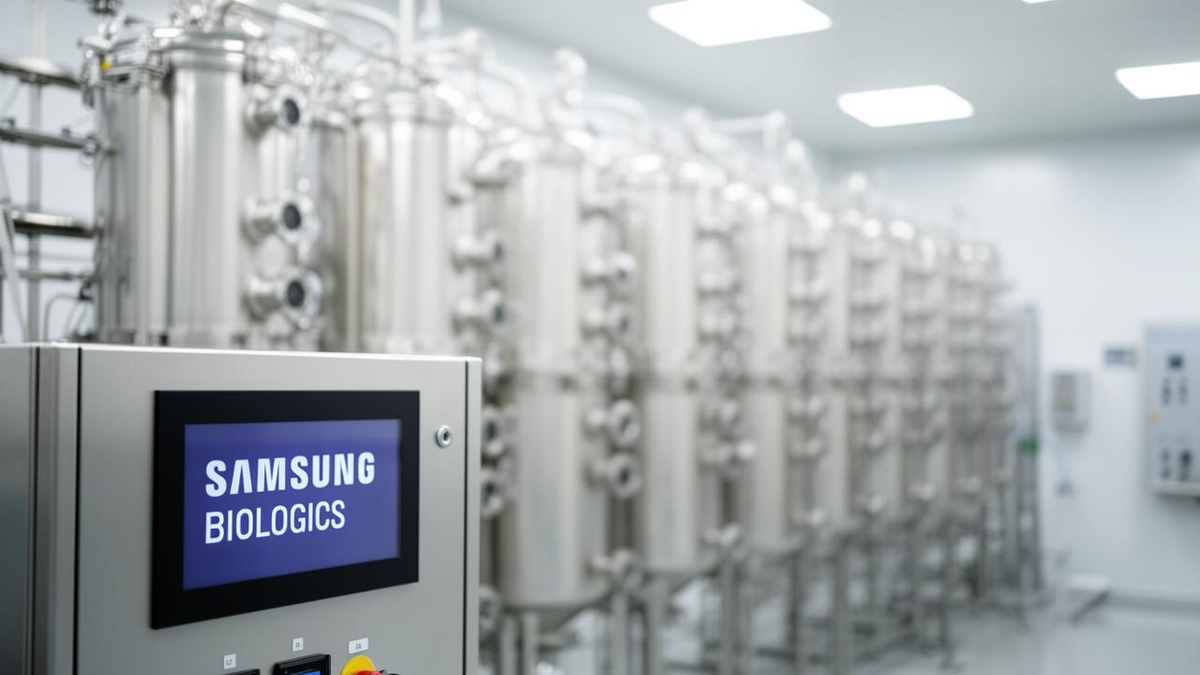
Samsung Biologics (207940) is investing approximately 2.7 trillion won (approximately $1.8 billion) to acquire PolyPeptide Group, a global peptide contract development and manufacturing organization (CDMO). This is the largest M&A deal in the history of South Korea’s pharmaceutical and biotech industry, marking a strategic decision to expand its business structure, previously centered on antibody drugs, into peptides—the core raw material for high-growth obesity and diabetes treatments.
Through this acquisition, Samsung Biologics simultaneously strengthens its three major growth strategies: production capacity (CAPA), business portfolio, and global production footprint. PolyPeptide is a leading company with six production facilities and R&D centers across five countries, including Europe, the United States, and India, along with over 1,500 specialized personnel and a track record of more than 1,000 peptide therapeutic development and production projects.
John Rim, President and CEO of Samsung Biologics, stated, “This acquisition is a strategic decision encompassing Samsung Biologics’ three growth axes—production capacity, business portfolio, and global footprint—and will contribute to enhancing corporate and shareholder value.”
A Strategic Bet on the Obesity Treatment Market
This acquisition targets the global obesity treatment market, which is projected to grow to a maximum of 200 trillion won (approximately $134.8 billion) over the next decade. According to Morgan Stanley, the global obesity drug market is expected to expand to as much as $150 billion by 2035. Goldman Sachs Research has projected up to $150 billion between 2030 and 2035, while Morgan Stanley has forecasted up to $190 billion by 2035.
Peptides are the core raw material for glucagon-like peptide-1 (GLP-1) class obesity and diabetes treatments, with Eli Lilly’s ‘Mounjaro’ and Novo Nordisk’s ‘Wegovy’ being prime examples. Last year, global sales for Mounjaro and Wegovy reached $39.1 billion and $18.6 billion, respectively.
Peptide drugs involve complex synthesis processes requiring advanced process control and strict quality management, and it is reported that approximately 62-64% of developers utilize specialized CDMOs. Market research firm Business Research Insights forecasts the global peptide CDMO market will grow from $5.52 billion in 2026 to $29.14 billion by 2035, at a compound annual growth rate of 20.3%.
Securities Industry Positively Assesses “New Growth Axis in Obesity CDMO”
The securities industry has uniformly issued positive assessments of the acquisition. Analysts suggest that acquiring a proven global CDMO, rather than developing technology in-house, has accelerated market entry speed.
Huh Hye-min, an analyst at Kiwoom Securities, commented, “In a situation where demand for peptide CDMOs centered on obesity and diabetes is surging, they chose a strategic M&A to secure proven technology and a client base rather than developing it themselves.” She added, “Cross-selling is possible by offering peptide services to existing antibody drug clients and proposing antibody CDMO services to PolyPeptide clients, so new customer acquisition effects are also expected.”
Han Seung-yeon, an analyst at NH Investment & Securities, analyzed, “This acquisition is a deal that aligns with all aspects of the CAPA, regional, and modality expansion strategy pursued as a pure CDMO company following the Epis division,” and described it as “a strategic acquisition to make a full-fledged entry into the global obesity CDMO market.” He further noted, “There is also the possibility of building a large-scale domestic peptide production facility after internalizing PolyPeptide’s production technology,” forecasting that “in the mid-to-long term, Samsung Biologics’ growth axes will expand to two pillars: antibodies and peptides.”
Hong Ga-hye, an analyst at Daishin Securities, predicted, “With the acquisition of PolyPeptide, they have simultaneously secured peptide modality and production bases in the U.S., Europe, and India,” adding, “They can immediately enter the high-growth market centered on GLP-1 while inheriting existing production facilities and a client base, enabling revenue contribution immediately after the acquisition.”
Who is PolyPeptide Group?
PolyPeptide Group, spun off from global pharmaceutical company Ferring in 1996, has been a leader in the peptide therapeutic development and production field alongside Switzerland’s Bachem. The company holds experience in over 1,000 peptide therapeutic development and production projects, with its expanding portfolio focused on obesity and metabolic diseases driving performance improvement.
The proportion of revenue from metabolic diseases expanded from 22% in 2021 to 57% in 2026, and the company is currently executing 47 metabolic disease projects, including 10 commercialized products for global big pharma. Clinical-stage projects have also been secured from 25 pharmaceutical companies, including seven Phase 3 projects. The revenue share from commercialized products has also increased from 41% in 2021 to 61%, indicating improving profitability.
The company has set targets of over 640 million euros in revenue and a 25% EBITDA margin by 2028. Samsung Biologics expects to inherit the CDMO contracts PolyPeptide is currently executing, ensuring stable orders immediately after the acquisition. Notably, PolyPeptide has a history of producing raw materials for Novo Nordisk’s ‘Wegovy,’ which is expected to further strengthen cooperative relationships with existing client Eli Lilly.
Peter Wilden, Chairman of the Board of PolyPeptide Group, said, “Combining Samsung Biologics’ overwhelming production capacity and operational know-how will secure a firm competitive advantage in the global peptide CDMO market.”
Acquisition Structure and Financing
Samsung Biologics has secured a commitment for the 56% stake held by the largest shareholder and will conduct a public tender offer for up to 33,016,411 PolyPeptide shares, excluding treasury shares, from September to November. The tender offer price is 44.31 Swiss francs (CHF) per share, approximately 40% higher than the April 10 closing price of 31.65 Swiss francs. The acquisition is confirmed if more than 66.7% of voting rights are secured, and the company plans to close the deal within the year and secure a 100% stake. The expected completion date is late December, pending antitrust approvals from competition authorities in the European Union (EU), Australia, and Brazil.
The total acquisition amount is 1.46 billion Swiss francs (approximately 2.7 trillion won), exceeding Samsung Biologics’ operating profit from last year (2.0692 trillion won). A Samsung Biologics official explained, “We plan to fund the acquisition using the company’s cash reserves and external borrowing.”
However, the securities industry has pointed out that acquisition financing could be a burden. NH Investment & Securities anticipates that external financing, such as borrowing and corporate bond issuance, will be necessary given the 2.7 trillion won acquisition price alongside the ongoing expansion of Plant 6, and noted that the possibility of a rights offering should also be kept open.
Earnings Contribution and Profitability Outlook
A meaningful earnings contribution is expected to begin in 2027. If the deal closes within the year, consolidated earnings are expected to be reflected from 2027. NH Investment & Securities estimates that while annual revenue will increase by approximately 700 billion to 800 billion won (approximately $539.4 million), the consolidated operating profit margin (OPM) will slightly decrease from the existing standalone level of around 45% to the high 30% to low 40% range.
Analyst Han Seung-yeon stated, “It is time to focus on securing structural growth rather than profitability dilution,” and predicted, “We can also expect commercial production orders from global pharmaceutical companies developing obesity treatments.” He added, “Currently, Samsung Biologics’ 2026 EV/EBITDA is 21x, with the valuation premium over competitor Lonza (19x) mostly resolved,” and noted, “Considering the revenue growth rate and profitability, the valuation attractiveness remains high.”
Effect of Expanding Global Production Footprint
Through this acquisition, Samsung Biologics will add six production and development sites across five countries: Malmö, Sweden; Braine, Belgium; Torrance and San Diego, USA; Strasbourg, France; and Ambernath, India. This is expected to enhance accessibility for multinational pharmaceutical companies in conjunction with the existing Rockville, USA production facility and provide a foundation to effectively respond to regional supply chain changes.
Samsung Biologics currently holds a total antibody drug production capacity of 845,000 liters, combining its Songdo Plants 1 through 5 (785,000 liters) and its Rockville, USA plant (60,000 liters). The company plans to expand total capacity to 1,385,000 liters by constructing Plants 6, 7, and 8 at its second bio campus by 2032. While PolyPeptide’s specific production capacity has not been disclosed, the company’s stance is to consider facility expansion in line with market growth.
A Samsung Biologics official stated, “We plan to combine PolyPeptide’s peptide technology with our large-scale commercial production support system, including Good Manufacturing Practice (GMP) standards, global supply chain operations, and regulatory agency response capabilities.” The official added, “If market demand increases, we will rapidly expand production facilities and respond to mass production demand by leveraging our accumulated experience in plant construction and capacity expansion.”