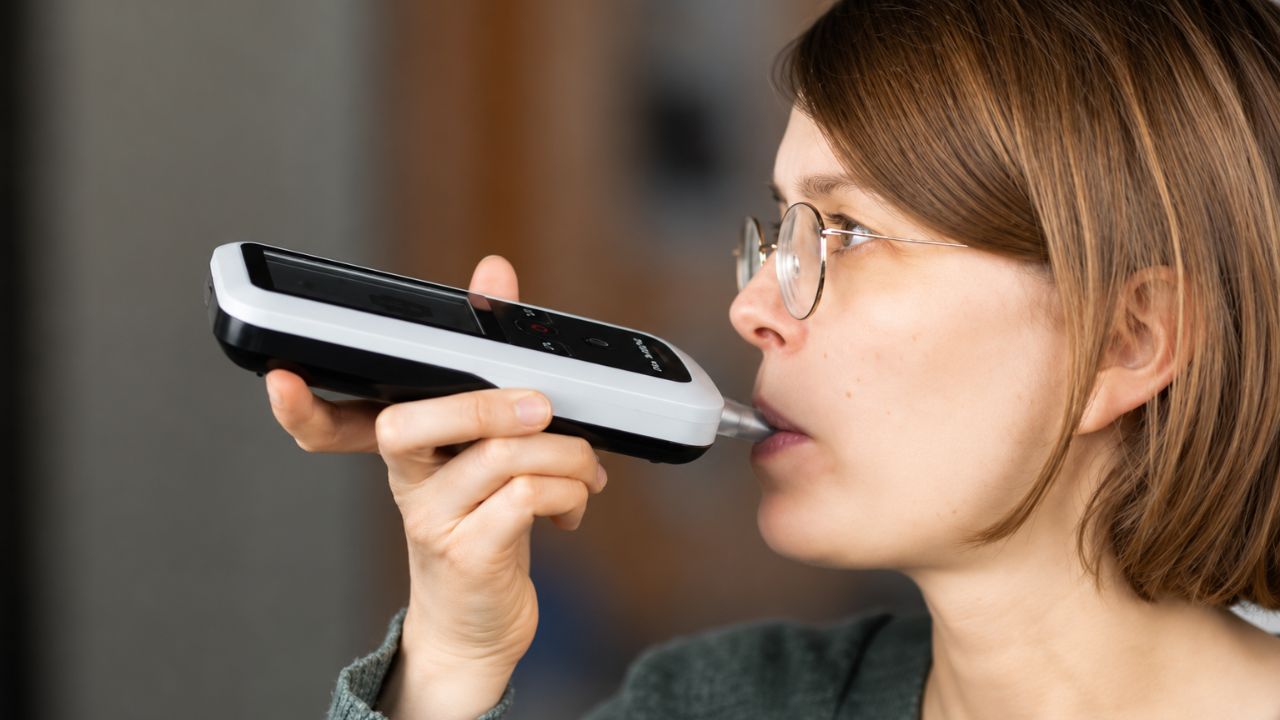
Ketosis sensor developed in Switzerland measures acetone in exhaled air and can indicate, in seconds, changes in the energy source used by the body.
A portable device developed in Switzerland aims to show through breath when the body reduces the use of carbohydrates and starts obtaining more energy from fat reserves. Connected to a mobile phone, the device identifies acetone in the breath, transforming an internal metabolic process into information that can be monitored outside laboratories.
The technology, called Alivion, was presented in an article published on July 22 in the scientific journal Device by researchers from the Swiss Federal Institute of Technology in Zurich. The study evaluated 312 breath samples collected from 12 adults subjected to different dietary routines and exercise modalities.
Ketosis sensor measures a real response from the body
Watches and apps usually indicate the so-called fat utilization zone through calculations based on heart rate. This method offers a projection but does not directly confirm which fuel is being used by the body at that moment.
ARTICLE CONTINUES BELOW
See also
A geophysicist sees structures thousands of meters underground without opening craters, using seismic waves, gravity, magnetism, and electricity to guide oil, mining, groundwater, and construction projects, with an average salary of R$ 16,900, reaching up to R$ 33,800 per month in 2026.

Goodbye earphones stuck in your ear: Bose launches earring-shaped earphones that don’t cover the ear, deliver private sound through OpenAudio, and let you listen to music without disconnecting from the world.

Electric cargo bike uses automotive radar, rear camera, and button-activated kickstand to carry up to 215 kg, achieve a range of 170 km, and display approaching vehicles on a 5.2-inch screen, while automatic transmission facilitates maneuvers, parking, and urban commuting with children, shopping, or heavy deliveries.

Archaeologists restore the Shamash Gate in Nineveh and find a 2-meter Assyrian stele carved in marble about 2,600 years ago, with a relief of King Ashurbanipal and cuneiform inscriptions, a rare discovery that helps reveal works carried out in the last decades of the Neo-Assyrian Empire in present-day Iraq.

Alivion takes a different approach, as it looks for a substance in the breath generated during the breakdown of fatty acids. In this way, the ketosis sensor tries to identify an actual chemical change, rather than deducing metabolism from the heart rate.
This difference can be relevant because two people subjected to the same training or diet do not always show the same responses. The device was designed precisely to make these variations more visible to the user.
Under normal conditions, glucose and stored glycogen provide much of the energy used by the body, especially in intense or shorter-duration activities. When this availability decreases, the liver starts to convert fat into substances known as ketone bodies.
Acetone emerges as one of the products of this transformation and, being volatile, leaves the body along with exhaled air. The greater its presence in the breath, the more evident the shift to a metabolism with increased participation of fats becomes.
This characteristic allows the ketosis sensor to monitor the process without relying on blood collection or bulky laboratory equipment. The reading is transmitted to the phone and can be obtained in a few seconds.
 Ketosis sensor developed in Switzerland measures acetone in exhaled air and can indicate, in seconds, changes in the energy source used by the body. Photo: Alivion AG/Disclosure
A filter solves the problem of breath humidity
The construction of the device faced a significant challenge: breath contains a large amount of water vapor, which can interfere with the material responsible for detection. Without a way to separate the substances, the humidity could distort the measurement of acetone.
To overcome the obstacle, the team installed a small tube filled with Tenax TA, a porous polymer that has a much greater affinity for acetone than for water, before the sensor. The compound retains the molecule of interest for a longer period, while the humidity quickly passes through the system.
According to the researchers, Tenax TA captures acetone with an intensity about 90 times greater than that recorded for water. This difference allows the metabolic marker to reach the detector in conditions more favorable for analysis.
Electrical change reveals concentration in breath
The central component of the device is made of a chemoresistive material, whose electrical resistance changes when it comes into contact with certain molecules. The arrival of acetone modifies the behavior of the sensor, creating a signal that can be converted into concentration.
The separation promoted by the polymer reduces the interference of other elements present in the breath. Thus, the equipment can relate the electrical response to the amount of acetone released at that moment by the user.
The operation does not show how many grams of fat were eliminated, nor does it replace a medical evaluation. The proposal is to indicate changes in the metabolic route adopted by the body.
During the evaluation, volunteers followed varied dietary strategies and performed different exercises, creating distinct metabolic conditions. Each sample obtained by Alivion was compared with measurements produced by laboratory instruments.
In concentrations associated with a metabolism still mainly sustained by carbohydrates, the difference between the results was 7.5%. According to the authors, this margin allows for the perception of relevant changes when acetone production begins to increase.
The group of participants, however, was small. Therefore, the team considers it necessary to repeat the tests with people of more diverse ages, physical conditions, and metabolic profiles.
Andreas Güntner, responsible for the research, stated to Chemical & Engineering News that the goal was to make this type of monitoring as practical as a regular weighing. The motivation came from the difficulty people face in understanding how their own body reacts to workouts and diets.
Even identical programs can produce different results, as the transition time between carbohydrates and fats varies among individuals. A portable ketosis sensor could offer more personalized data to adjust schedules, exercise intensity, or dietary strategies.
The technology does not eliminate the need for professional guidance, especially in medical treatments or restrictive dietary changes. Its possible role would be to provide additional information about the body’s functioning.
Possible applications go beyond diets
The researchers see utility for the device in different situations related to metabolic health. Among the possibilities mentioned are:
monitoring programs aimed at weight reduction;
observing individual responses to exercises;
evaluating interventions for metabolic disorders;
supporting the monitoring of treatments with GLP-1 medications;
analyzing low-carbohydrate diets;
studies with patients adopting ketogenic diets for medication-resistant epilepsy.
These uses still depend on new validations. The performance observed in the first experiments does not guarantee that the accuracy will be the same in all groups.
The team intends to verify if acetone reading can help in monitoring people using GLP-1 class medications for weight loss. In this context, the device could show how metabolism changes throughout the treatment.
The researchers also plan to evaluate patients following ketogenic diets to control forms of epilepsy that do not respond adequately to conventional medications. In these cases, confirming the maintenance of ketosis may have clinical importance.
Before any widespread adoption, the ketosis sensor will need to demonstrate safety and consistency in larger studies. It will also be necessary to establish how the data should be interpreted in each situation.
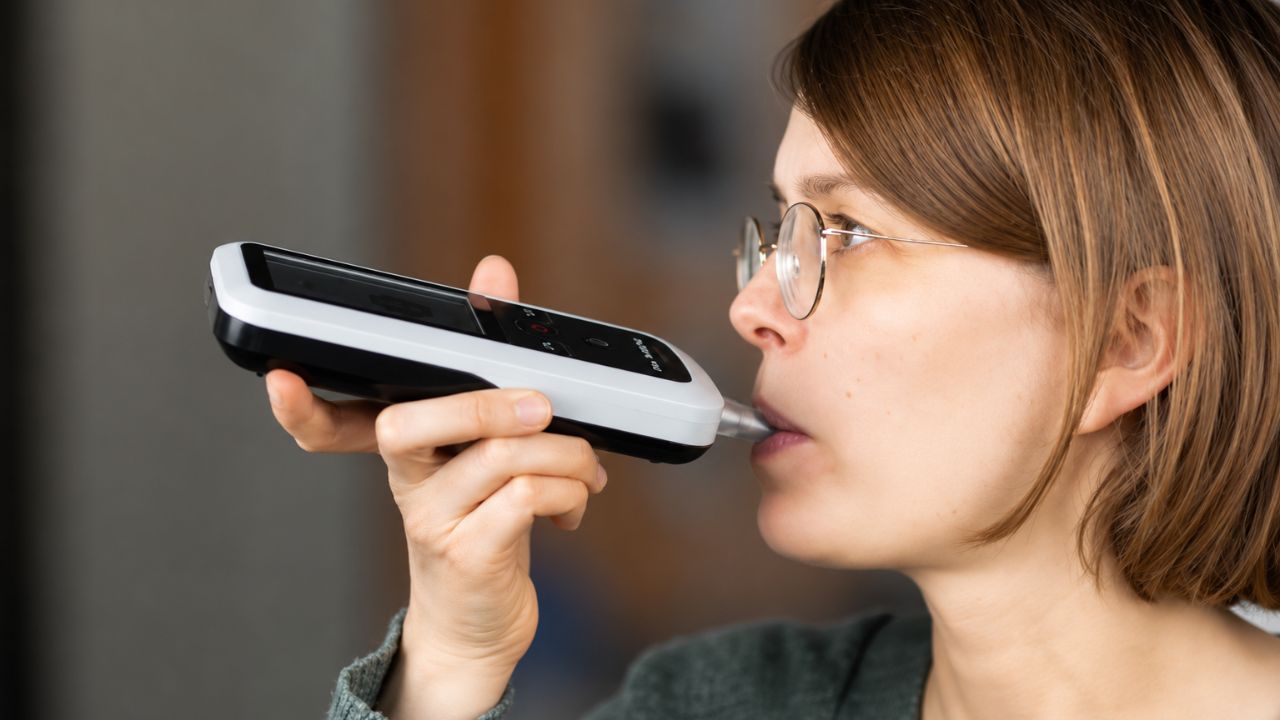 Ketosis sensor developed in Switzerland measures acetone in exhaled air and can indicate, in seconds, changes in the energy source used by the body. Photo: Alivion AG/Disclosure
Ketosis sensor does not equate to a direct weight loss meter
The presence of acetone indicates that the body is using fat in greater proportion, but it does not allow one to conclude in isolation that a person is losing weight. The body result depends on total energy consumption, diet, physical activity, and other factors.
An elevated reading also does not automatically mean that the metabolism is functioning more healthily. In certain contexts, ketosis may be planned; in others, it may require specialized evaluation.
For this reason, the data provided by Alivion should be considered as a momentary snapshot of the energy source being used. They do not replace exams, diagnosis, or monitoring conducted by professionals.
Ketosis sensor still needs to undergo larger studies
Alivion has shown that a simple breath sample can reveal metabolic changes in a few seconds, with results close to those of laboratory equipment in the evaluated conditions. The system also managed to reduce one of the main problems of this type of measurement: interference caused by humidity.
The combination of portability, connection with the cell phone, and direct detection of acetone differentiates the proposal from the estimates offered by wearable devices. Even so, the research remains in an initial phase, limited to 12 participants.
If the next tests confirm the performance, the ketosis sensor could become a tool to more individually monitor diets, exercises, and treatments. Until then, the equipment represents a demonstration that breath can provide quick information about how the body is producing energy.
With information from Revista Galileu