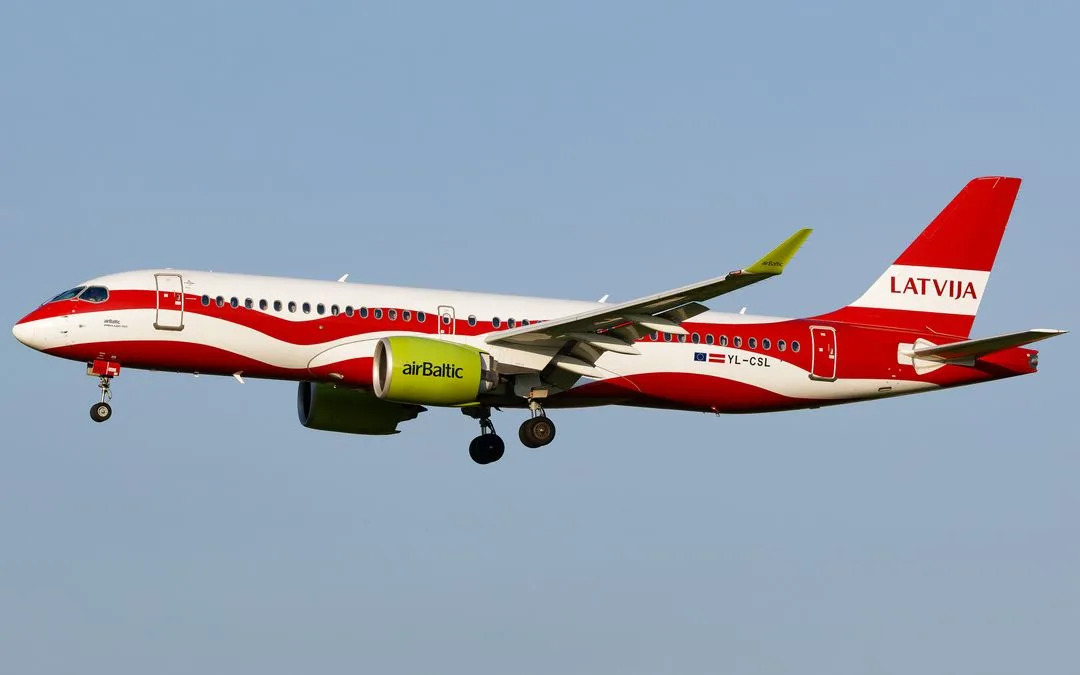
Latvian carrier airBaltic has established a new subsidiary in Switzerland to employ pilots operating from Zurich, marking another step in the airline’s push to expand its international wet-lease business.
The new entity, called airBaltic Crew Switzerland AG, allows the airline to hire flight crew under Swiss employment contracts. The move supports operations tied to airBaltic’s ACMI (aircraft, crew, maintenance, and insurance) services, which the carrier provides to other airlines during peak travel seasons.
Martin Gauss, President and CEO of airBaltic, said the company continues to grow its footprint across Europe. The Swiss subsidiary reflects the airline’s strategy of placing crew closer to the bases where its aircraft operate on behalf of partner airlines.

(Source: AeroXplorer / Dalton Hoch)
Why Switzerland
Zurich has become an important base for airBaltic’s wet-lease operations. The carrier has been supplying aircraft and crew to Swiss International Air Lines, part of the Lufthansa Group, helping the Swiss flag carrier cover capacity shortfalls.
By setting up a local employment vehicle, airBaltic can hire pilots who live in Switzerland and want to work under Swiss labor terms rather than relocate to Riga or accept contracts based in Latvia. This approach also helps the airline compete for talent in a tight European pilot market.
The Swiss subsidiary joins a growing list of similar entities airBaltic has set up across Europe. The airline already operates pilot bases in cities including Tampere and Gran Canaria, as well as other locations tied to its seasonal and ACMI operations.
ACMI Business Continues to Grow
ACMI, sometimes called wet leasing, involves one airline providing an aircraft along with the crew, maintenance, and insurance to another carrier. The customer airline pays for the service and handles fuel, airport fees, and ticket sales.
airBaltic has built one of the larger ACMI operations in Europe using its fleet of Airbus A220-300 aircraft. During 2024, the airline plans to allocate a significant share of its fleet to wet-lease flying, particularly during the winter months when demand on its own network drops.
Lufthansa Group carriers, including Swiss and Eurowings, have been among the main customers. The German aviation group announced earlier in 2024 that it would take a minority stake in airBaltic ahead of the Latvian carrier’s planned initial public offering, further tying the two companies together commercially.
Details of the New Entity
airBaltic Crew Switzerland AG will handle employment matters for pilots based at Zurich Airport. According to airBaltic, the entity operates as a personnel services company rather than an airline in its own right. It does not hold an operating license or conduct flights independently.
Pilots hired through the Swiss subsidiary will fly airBaltic’s A220 aircraft on routes assigned by the parent airline, including flights operated on behalf of ACMI customers.
The carrier says the setup gives it flexibility to scale crew numbers up or down depending on ACMI contracts and seasonal demand. It also lets airBaltic offer employment terms that match local expectations in the countries where it operates.
Broader Strategy
airBaltic has spent the past several years shifting from a purely point-to-point regional carrier into a hybrid operator that combines its own scheduled network with substantial third-party flying. The airline currently operates a fleet of around 50 Airbus A220-300 aircraft and has orders for more.
The carrier serves destinations across Europe, the Middle East, and the Caucasus from its main base in Riga, along with secondary hubs in Tallinn and Vilnius. Wet-lease flying now accounts for a meaningful portion of total operations, especially outside the peak summer season.
Gauss has previously described the ACMI business as a way to keep aircraft and crew productive year-round rather than parking them during slower periods. The strategy also helps airBaltic manage the seasonal swings that affect airlines based in northern Europe.
Pilot Recruitment
The European airline industry has faced pilot shortages since travel demand rebounded after the pandemic. Carriers have competed for experienced crews, and pay and working conditions have become key factors in recruitment.
By offering Swiss contracts, airBaltic aims to attract pilots who might otherwise pass on opportunities that require moving to the Baltics. The airline said the new subsidiary will begin recruiting in the coming weeks.
Pilots hired through the Swiss entity will still fly under airBaltic’s air operator certificate and operate the airline’s aircraft. The employment arrangement affects contract terms and tax residency rather than operational control.
Looking Ahead
airBaltic has stated its intention to pursue an initial public offering, with plans that have been discussed for several years. Building out a stable, well-distributed crew base across Europe supports the airline’s efforts to present itself as a scalable operator to potential investors.
The Swiss subsidiary is one piece of that broader picture. As airBaltic continues to add A220 aircraft and sign new ACMI contracts, more crew bases in more countries appear likely.