 FTSE 100 Live: London index sinks as Pru, HSBC and Stan Chart hit by China tax report Proactive uses images sourced from Shutterstock 12.12pm: Prudential, HSBC and Stan Chart tumble
The FTSE has dropped into the red, as Prudential has plunged 12.3%, with fellow Asia-focused heavyweights HSCB and Standard Chartered sinking lower too.
This follows reports that Chinese authorities have closed a longstanding regulatory loophole, according to a report on Caixin Global.
“Early enforcement cases in Beijing and Hangzhou show authorities applying a 20% tax rate to returns from Hong Kong policies, tax lawyers and insurance insiders told Caixin. The levies target dividend payouts and interest earned on prepaid premiums,” the story added.
11.21am: SpaceX rocket crashes into the moon
As Nasa confirms that a discarded part of a SpaceX rocket has crashed into the moon, Russ Mould at AJ Bell says “as visual metaphors go [just] hours after it had delivered its debut quarterly earnings feels almost too on the nose”.
SpaceX shares are down 11.25% in pre-market trading at just over $111, having fallen below its $135 IPO price in recent weeks.
Yesterday saw the shares fly 9% higher in the hours leading up to the results yesterday.
“The problem wasn’t so much the numbers themselves, as revenue beat expectations and losses were narrower than anticipated, but the heavy AI spending revealed in the results,” says Mould.
“A significant difference between SpaceX and some of the other free spending participants in the AI arms race is that it does not yet generate meaningful levels of cash flow.”
Kathleen Brooks at XTB says investors are “concerned about the massive surge in capex spending”, which rose sixfold to $18.4 billion, far exceeding estimates, with AI investment at $23.6 billion so far this year.
The Starlink satellite internet business generates most of the group’s revenues currently, along with renting out data centres.
On the earnings call, CEO Elon Musk suggested Starlink could build a terrestrial mobile network to compete with the likes of T-Mobile, AT&T and Verizon.
Musk said he wants to increase computing capacity from 2GW at the end of this year to “closer to 10GW [than 5GW]” by the end of 2027, which as the FT points out would be consuming as much power as New York city in summer.
Mould says this has “sparked some nervousness” for investors in US telecoms companies, with Verizon and AT&T down 2-3% in pre-market trading.
“Though Musk has lots of things on his to-do list at SpaceX, so there may be hopes in the boardrooms of these businesses that other areas take priority.
“Starlink is not necessarily why many shareholders are on board. Many will be prepared to face some turbulence in the hope Musk’s grander visions around colonising Mars, data centres in space and building lunar bases can be realised.”
Brooks also points out that Musk announced that all of SpaceX’s future AI infrastructure buildout will be fueled by Nvidia chips exclusively.
“This suggests that Musk has secured these key components for SpaceX’s AI data centres at the same time as there is a supply crunch. Thus, a shortage of chips should not impact SpaceX, or limit its ambitions to provide AI compute for the market.”
This news is good for Nvidia’s share price, which is 1.9% higher pre-market.
As we wrote earlier, tomorrow brings the next key test of SpaceX investor confidence as the first stock lockup expiry lands, with more than 900 million shares potentially up for sale by insiders.
10.41am: PMI suggests BoE rate hike now less likely
The PMI is “remarkably healthy” and provides “encouraging signs on easing inflation,” says Rob Wood, chief UK economist at Pantheon Macroeconomics, who says the composite PMI is consistent with 0.2% quarter-to-quarter GDP growth, he adds.
What’s more, the final services reading being revised upwards from the mid-month flash release was “surprising, given oil prices rising in July as US-Iran hostilities restarted”, he says.
“If the PMI can improve while oil prices are running above $85 then we should expect further gains in August if the latest moves to reopen the Strait stick.
“Price pressures should also ease further, after the encouraging downward revision to July’s reading.”
Wood says the weak employment signals from the report “would challenge our view that the MPC will keep rates on hold for the next two years”.
“But firms report continued strong wages pushing up output prices, as well as rising technology and energy-intensive material costs.”
While price pressures eased, they continue to signal above-target inflation, Wood points out, “still close to the average from 2025 of 55.5, when underlying services inflation was too strong to deliver at target inflation”.
If oil prices continue to ease and there are continued signs of firms struggling to boost margins, this provides support to the MPC’s less hawkish take on the outlook in last week’s decision.
Overall, the PMI “suggests rate hikes are becoming less likely”, he concludes.
9.59am: Encouraging inflation news
July’s PMI survey shows how services companies “moved back into growth mode during July as greater consumer spending and strong demand for technology services helped to boost overall business activity”, says Tim Moore, economics director at S&P Global Market Intelligence, who produces the report.
“More supportive market conditions meant that new work picked up for the first time in five months, although the rate of expansion was still sluggish in comparison to historic trends.
“Many firms cited geopolitical uncertainties and the Middle East conflict as factors limiting their growth trajectory, despite some signs of easing risk aversion among clients.
“A rebound in both activity and new business could not prevent a further decline in staffing numbers, with job losses seen for the twenty-second consecutive month.
“The current duration of falling employment is a joint-record in 30 years of data collection, now equalling those seen during the global financial crisis and in the wake of the dotcom bubble.
“On a positive note, business activity expectations picked for the second month running and reached the highest level since February.
“Stronger growth projections for the year ahead partly reflected hopes of de-escalating Middle East tensions and recent signs of easing inflationary pressures.
“While service providers continued to experience elevated cost pressures and logistics challenges in July, the latest increase in overall input prices was the slowest for five months and well below the peak seen in April.”
9.51am: Services PMI moves into growth
The UK services sector returned to growth in July, with the services PMI rising to 52.1 from 48.8 in June, beating the 51.8 ‘flash’ reading.
The composite PMI, covering services and manufacturing, improved to 52.2 from 49.3 and was slightly ahead of the 52.1 estimate. Readings above 50 indicate expansion.
Survey operator S&P Global said new orders increased for the first time since February, while employment continued to fall and cost pressures also eased.
Stronger demand and softer inflation lifted business confidence to its highest level since February.
9.43am: Some L&G analysis
L&G shares fell 1.2% in early trading but are up 0.6% now.
Analyst Darald Goh at broker Jefferies says the results appear at first view “a small beat vs consensus”, with IFRS earnings “modestly ahead” across all divisions and Solvency surplus generation also better.
However, much of the beat appeared to come from optimisation of the life insurer’s asset portfolio, he says, which reached £288 million – nearly twice his estimate.
On the plus side, L&G’s decision to raise annual guidance for asset optimisation from more than £300 million to above £400 million “implies some sustainability to this level”.
Similarly, management actions contributed £235 million to Solvency II surplus generation, around 25% more than the Goh expected.
But with annual guidance unchanged at more than £300 million, the Jefferies man says investors could view the underlying earnings and capital-generation performance as “rather mixed, or possibly a bit softer”.
Other negatives that Goh notes include that L&G’s solvency ratio was five percentage points below expectations, while conditions in the UK pension risk transfer market had weakened, with margins narrowing and the initial capital cost of writing new business increasing.
9.19am: Modest gains for FTSE and European peers
The FTSE 100 has given up some of its early gains, though the names at either end of the scale remain the same.
It’s a roughly similar story across mainland Europe, with gains between 0.1% and 0.4% for the major bourses.
The pan-continental Stoxx Europe 600 is up 0.2%, down a bit from earlier levels, with earnings driving the biggest moves as Next, drugmaker Sandoz and German healthcare group Fresenius leading, with London miners Glencore and Fresnillo assisting.
Novo Nordisk (NYSE:NVO) and Infineon are drags, falling 4.4% and 4.2% on their respective earnings, while HSBC is extending its post-results decline.
“The broader market message is constructive but not carefree,” says Patrick Munnelly at Tickmill.
“Lower oil, softer rate-hike pricing and strong AI earnings are a powerful mix. Yet valuations are high, positioning has rebuilt quickly, and July’s selloff showed how vulnerable the AI complex can be when investors question spending discipline.
“The next phase of the rally will depend less on excitement and more on proof: orders, margins, cloud revenue and monetisation.”
He notes the main UK story is “fiscal rather than geopolitical”, as the Times has a headline of ‘Treasury seeks to kick-start economy with £9bn-a-year borrowing bonanza’.
The paper says ministers hope to “exploit a change in the fiscal rules to spend billions more a year on housing, infrastructure and British start-ups”, with the £9 billion-a-year figure an estimate from the Resolution Foundation.
The basic idea, says Munnelly, “is that some extra investment spending can be treated as the purchase of a financial asset, which may avoid worsening the government’s target metric under the second fiscal rule: public sector net financial liabilities, or PSNFL.
“This is where the accounting becomes important for gilt investors. Spending structured as an asset purchase can net off against PSNFL, preserving apparent fiscal headroom.
“But it still adds to public sector net debt, or PSND, which is a better proxy for the stock of gilts that need to be issued.
“In simpler terms: it may not break the fiscal rule, but it can still mean more bonds for the market to absorb.”
Munnelly says the “wedge” between PSNFL and PSND is the “key issue”, though as the figures are from the Resolution Foundation rather than a direct Treasury leak, “it should not be treated as confirmed policy”.
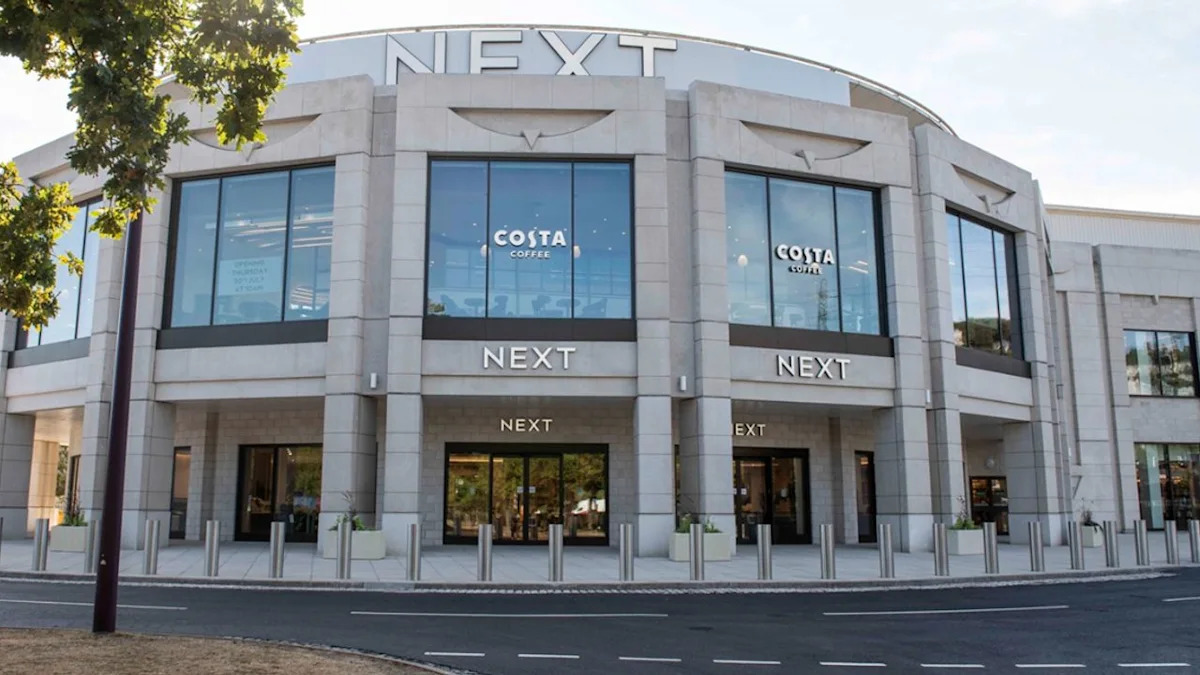
8.44am: Next boosted by marketplace and overseas marketing
Taking a look at Next’s numbers, analyst John Stevenson at Peel Hunt says the update “delivers a familiar theme, with another £25m boost to guidance from full-price outperformance in the UK, but particularly strong performance across international markets”.
He notes that UK full-price sales were entirely driven by 13.2% growth in the Label platform, which sells other brands’ gear, with Next own-brand online sales down 1% and store sales pretty much flat.
He says the heatwave created a “strong bounce after the weak first quarter”.
International growth was driven by higher levels of marketing spend, “with management noting that Next will increase spend where returns justify it”.
Stevenson says year-on-year comparatives for “will likely become more challenging from August” when Next laps the anniversary of the launch of the ZEOS European e-commerce distribution partnership with Zalando.
8.26am: US oil and gas company plans AIM IPO
Rare news this morning – a London IPO of all things.
The name of the company is 1947 Oil & Gas, which says it plans to join AIM this month, raising £50 million to fund the purchase of a Houston-based producer with interests in eleven shallow-water fields in the Gulf of Mexico.
The newly incorporated company will issue 500 million shares at 10p, giving it a market capitalisation of £65 million on admission.
The board is led by Tim Duncan, who founded Talos Energy and built it into the largest independent producer in the Gulf, reaching a peak market value of $2.6 billion.
Also involved are Jeff Currie, who spent 27 years as global head of commodities research at Goldman Sachs and later served as chief strategy officer at Carlyle, and Ivan Murphy, a founder of Cove Energy, which was sold for $1.5 billion.
1947 was the year of the Marshall Plan, when the US proposed financial aid to help rebuild war-torn Europe, and when President Harry S. Truman announced a new foreign policy doctrine during the Cold War. It was also when the future Queen Elizabeth II got married and the Roswell incident happend in New Mexico. All possible reasons for the choice of name.
8.13am: FTSE 100 start higher after Next and Glencore boost
The FTSE 100 has sashayed 62 points higher to 10,941 in initial trades, led by a 6.5% gain from Next after its second-quarter update.
Also helping fuel the advance are strong gains from miners, including Glencore, which is up 4.2% on the back of its interim numbers.
Precious metals miner Fresnillo is up 4.9% and copper-focused Antofagasta up 3.9%, with Endeavour, Anglo American and Rio Tinto close by.
Keeping an anchor on things, HSBC has dropped 2.4% as investors continue to digest yesterday’s first-half figures.
8am: Glencore rewards shareholders for market volatility
Glencore has announced an additional $1.5 billion of shareholder returns as it enjoyed a boost from higher commodity prices and volatile energy markets.
Underlying profit (adjusted EBITDA) jumped 86% to $10.11 billion on revenue that increased 49% to $174.4 billion.
The mining and commodities trading giant declared a special cash distribution of 8.5 cents per share, worth around $1 billion, alongside a new $500 million share buyback, which lifts total shareholder returns for 2026 to roughly $3.5 billion.
7.51am: Another Next guidance upgrade
Next has upgraded its profit outlook for the current year after second-quarter sales came in well ahead of previous guidance, helped by a rebound in overseas demand and strong online sales compensating for a decline in-store.
The FTSE 100 fashion and homewares retailer said full-price sales rose 9.2% in the 13 weeks to 1 August, versus its previous prediction of 4% growth in May.
Pre-tax profit guidance for the 2026/27 financial year was hiked by £25 million to £1.2 billion, representing year-on-year growth of 7.3%.
(This would not come as a huge surprise to investors or followers of a company that has issued 19 profit upgrades since the beginning of its 2024 financial year and had already raised its adjusted pre-tax profit guidance twice to £1.218 billion before today.)
7.32am: L&G beats and raises
Legal & General Group beat first-half profit expectations and said full-year earnings growth would be above its medium-term target range as its asset management business delivered a sharp improvement.
The FTSE 100 life insurer reported core operating profit of £918 million, up 7% and around 4% ahead of the company-compiled consensus of £883 million.
Core operating earnings per share rose 11% to 12.1p, above the top end of its medium-term guidance of 6-9%. Growth for the financial year is also expected to exceed the top of this range.
L&G declared an interim dividend of 6.24p per share, up 2% and in line with expectations
FTSE 100 Live: Blue-chips set to rise as Next, Legal & General and Glencore report
The FTSE 100 is expected to open higher on Wednesday as oil prices continued to retreat on growing hopes that an agreement could restore shipping through the Strait of Hormuz.
London’s blue-chip index has been called 30 points higher, adding to the previous session’s gain of 21.68 points at 10,879.38 by the close, leaving it just 0.3% below its record high.
Brent crude fell another 0.63% to $78.86 a barrel this morning, taking its decline since Friday to more than 10%. Oil prices have dropped as investors increasingly price in a diplomatic solution to the disruption in the Gulf.
Qatar said a draft proposal had been circulated, while US Treasury Secretary Scott Bessent suggested an agreement could be reached this week.
Reports indicate that an interim 60-day arrangement could allow Gulf-bound vessels to use Iranian waters and outbound ships to travel through Omani waters without fees.
Lower energy prices have helped ease inflation concerns and supported both equities and bonds.
Overnight, the S&P 500 and Dow Jones both notched new record highs, climbing 1.8% and 1.7% respectively, while the Nasdaq gained 2.6% as semiconductor stocks surged.
This morning, Asian markets are following Wall Street higher, led by a 4.2% jump for South Korea’s Kospi and a 3.5% rise for Japan’s Nikkei, while Shanghai, Mumbai and Hong Kong added 1.6%, 0.4% and 0.3%.
SpaceX fell 7.5% in afterhours trading following its first results since listing, while AMD also slipped despite forecasting third-quarter revenue ahead of consensus.
UK results this morning include Legal & General, Next and Glencore, while US results later include Eli Lilly, Disney, Shopify, Uber and AppLovin.