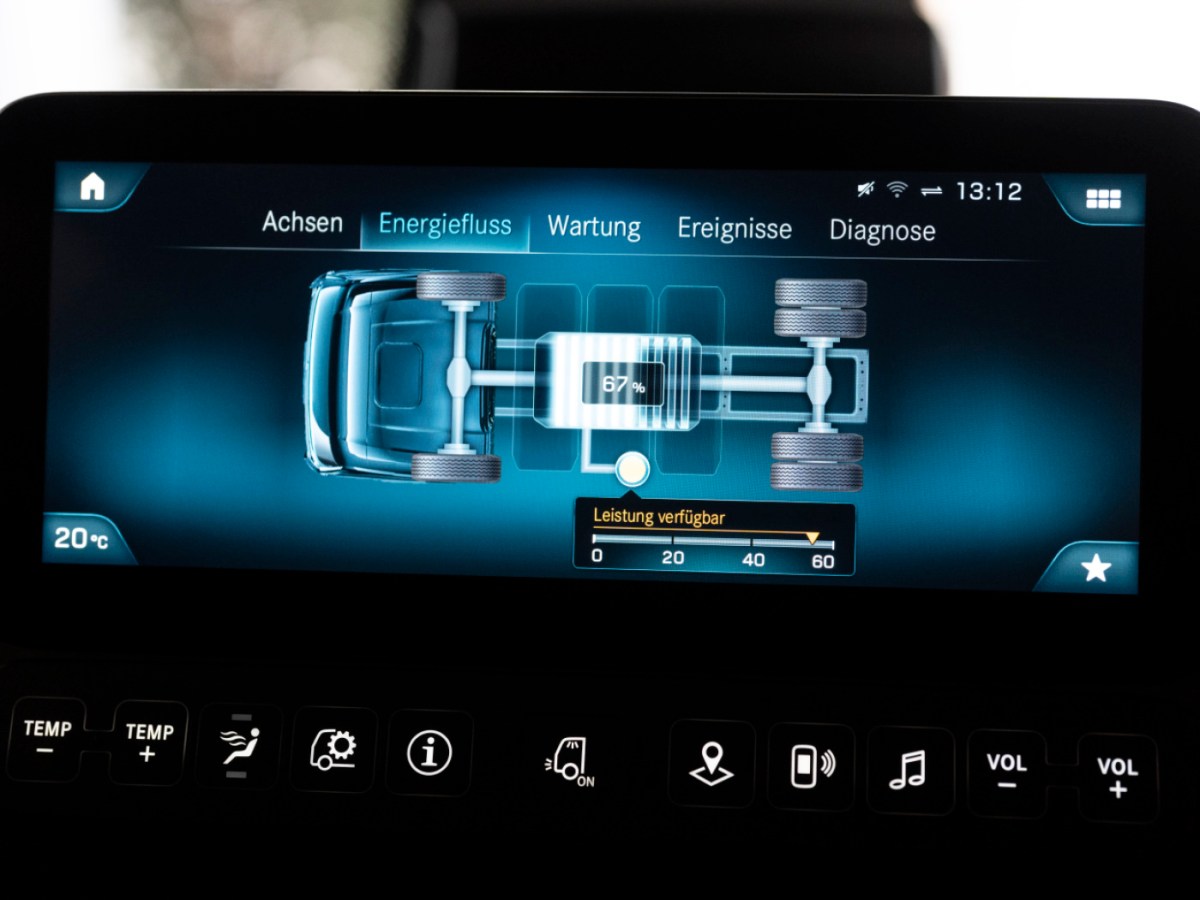

More and more electric lorries: Switzerland is the European leader
Keystone-SDA
One in four new lorries registered in Switzerland is now fitted with electric transmission. This makes the Alpine state a European leader in electrified road haulage, reports L’Agefi.
Listen to the article
Listening the article
Toggle language selector
English (US)
English (British)
Generated with artificial intelligence.
This content was published on
August 14, 2026 – 11:57
According to figures for the first half of 2026, zero or low-emission vehicles account for 25% of new registrations, overtaking pioneering nations in Scandinavia, the Netherlands and Austria.
Although electric lorries still account for less than 4% of the total fleet of around 50,000 vehicles on the road, growth has been steady and continuous since 2022.
More

More
Emissions reduction
Cars in Switzerland: lower emissions, but plug-in hybrids pollute more than expected
This content was published on
Jul 1, 2026
Switzerland has met its targets for reducing carbon dioxide emissions from new cars. At least on paper.
Read more: Cars in Switzerland: lower emissions, but plug-in hybrids pollute more than expected
The main driver is the exemption from the performance-based heavy goods vehicle tax (TTPCP), according to the L’Agefi newspaper. This is a levy calculated on the basis of kilometres travelled, weight and the vehicle’s emissions category.
The exemption translates into huge savings for hauliers. Volvo calculates that one of its e-trucks can save over CHF550,000 by 2035, assuming 100,000 kilometres per year.
Tax breaks
A spokesperson for the Geneva-based International Road Transport Union (IRU), which represents the interests of hauliers, the TTPCP is one of the highest kilometre-based charges in Europe.
But Switzerland has managed to implement a system that allows for a transition over a sufficiently long period, enabling companies to plan their fleet renewal with confidence.
In comments made to the Geneva-based newspaper, the IRU also pointed to decades of policies aimed at shifting transalpine traffic from road to rail Some 66% of journeys take place within the country’s borders – an ideal scenario for electric vehicles.
“With over 1,300 vehicles, we are in a position to play a leading and pioneering role for the entire sector,” Peter Ballmer, an executive at the Lucerne-based Galliker Transport, told L’Agefi. The company has already put 109 electric lorries on the road by 2025 and plans to reach a total of 214 alternative-fuel vehicles by 2027, with the stated aim of electrifying 650 lorries over the next ten years.
This would correspond to a reduction of 48,000 tonnes of CO₂ per year. The company will invest over CHF120 million between 2026 and 2030 on charging infrastructure alone.
Canton Aargau-based Schoeni Transport has also begun the transition, using 15 electric lorries out of the 250 vehicles deployed in domestic transport, powered by a charging network supplied by solar panels.
But one operator points out that an electric lorry costs significantly more to buy, with a price ranging between CHF280,000 and CHF320,000. This is almost double the cost of a diesel truck, while installing charging points costs an extra CHF60,000-CHF80,000.
More

More
Climate adaptation
Traffic in Switzerland increases as costs rise
This content was published on
Jul 17, 2026
Transport in Switzerland generated costs of around CHF117 billion in 2023.
Read more: Traffic in Switzerland increases as costs rise
+ How we produce English news
Translated from Italian, reviewed by an English Department journalist.
Articles in this story